
ELS; MBN360 ENTERTAIMENT
Ghanaian playwright, novelist and filmmaker Kofi Dzogbewu is preparing to bring his new stage work, The Madman at Table 7, to audiences. The play uses an ordinary Ghanaian food joint and a man labelled mad to examine silence, denial and ambition in contemporary society.
In a recent interview, Dzogbewu reflected on a creative path that began long before his degrees in psychology and English from the University of Ghana and a subsequent law qualification. “I don’t think I ever really chose storytelling after studying law,” he said.
“Storytelling has always been a part of me. I simply got to a point where I decided to take it seriously”Kofi Dzogbewu, Playwright and Author
University studies sharpened his craft. English courses exposed him to creative writing, while psychology taught him to look beyond surface behaviour. “When someone does something strange, my first instinct as a storyteller is not to ask what is wrong with this person,” Dzogbewu explained. “I want to ask why is this person behaving this way, what has happened to them, what do they believe in?.”

That perspective shaped Kanyo, the central figure of The Madman at Table 7. Dzogbewu refused to reduce the character to comic relief. “I wanted Ganyo to be a person first. His behaviour, his observations, the way he interacts with people around him all have meaning,” he said. The audience must decide whether Kanyo misunderstands society or whether society understands itself less than it thinks.
The play’s tagline questions whether madness is a sickness or a form of clarity in a society built on silence and denial. Dzogbewu stressed that the question is not meant to deliver a simple answer. “Sometimes society labels people because what they are saying makes us uncomfortable,” he noted.
“Ganyo says things that people would rather ignore. But instead of engaging with what he’s saying, the easier response is to say, oh, leave that man, he’s mad”Kofi Dzogbewu, Playwright and Author
He connected the theme to everyday Ghanaian experience. Citizens often discuss corruption, politics, religion and inequality privately but hesitate to confront them openly. “There is often a gap between what we say among ourselves and what we are willing to confront openly in public,” Dzogbewu said. “Ganyo occupies that uncomfortable space.”
Origin of the Play
The idea for the play emerged around 2019 or 2020 during a Ghana Association of Writers event focused on lockdown experiences. One story described a madman whose world contracted when streets emptied and familiar food vendors vanished.
The account stayed with Dzogbewu and prompted closer observation of people society considers mad. “There are things a person considered respectable cannot say,” he observed. “But if a supposedly mad person says them, everyone laughs and then dismisses them.”
Read also:
- Kim Kardashian Hospitalized With Esophagitis Linked to Father’s Cancer
- British-Ghanaian Rapper Sway Dies at 44 in Ghana
- Moliy Bags Dancehall Song of the Year at Caribbean Awards
- President Mahama’s 400-Bed Mother and Child Block for Korle Bu Takes Shape
- Godwin Attram replaces Desmond Ofei as Black Stars assistant coach
An ordinary food joint provided the ideal setting. It is a place where people gossip, debate politics, discuss religion, complain about the country and watch daily life unfold. Dzogbewu wondered what would happen if the person everyone dismisses as mad was the one truly observing them all.
Ambition threads through the new play just as it does through his novel ADZE, which draws on Ghanaian and wider African mythology to explore envy, identity, spirituality and the consequences of forces people do not understand.
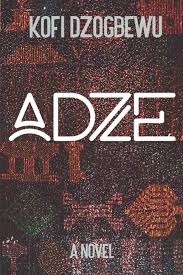
While ADZE works through the supernatural, The Madman at Table 7 grounds similar tensions in everyday life. Both works, Dzogbewu said, examine what happens when an individual exists in tension with the society around them.
Distinct between Novel Writing and Playwright
Writing for the page and the stage requires different disciplines. Novels allow extended interior monologue and descriptive freedom. Theatre demands physical action and immediate clarity. “Somebody has to say something. Somebody has to do something,” he said.
“The audience has to understand what is happening through what they see and hear.” He usually begins in prose and allows the material to dictate its final form.
Frustration with the industry led him to establish Dzomoko Productions. Producers frequently described his scripts as too ambitious or commercially unviable, or required him to shoulder most of the production costs.
“I realised that if I wanted to tell certain stories, I couldn’t always wait for somebody else to decide that those stories were worth producing,” Dzogbewu said. The company now develops projects from page to performance and supports other Ghanaian writers through free workshops and productions, including the non-profit; Quit and Get Shot Film Series. Rights return fully to the creators.

Balancing the roles of writer, director and producer remains demanding. “The writer in me wants to protect the story, the director wants to interpret it and the producer is constantly asking, how are we going to pay for this?” he explained. He has learned to separate the distinct questions each role asks and, when acting in his own work, relies on an assistant director.
Production itself has delivered lessons no writing workshop fully provides: constructing sets, managing rehearsal time, handling publicity, meeting venue requirements and selling tickets, all while stretching limited resources. “Independent production has taught me resourcefulness,” Dzogbewu said. “Theatre is genuinely collaborative.”
Through The Madman at Table 7, Dzogbewu continues to probe the distance between private complaint and public silence, and the cost of ambition when it overrides human connection. The play invites audiences to listen more carefully to the voices society prefers to dismiss.