ELS; MBN360 EXTRATIVES/ENERGY
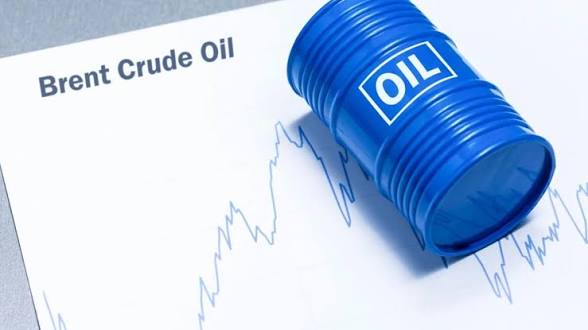
Ghana could face another round of pressure on petroleum prices as renewed attacks around Saudi Arabia add to an already tight global oil market, with Brent crude trading above US$104 a barrel.
The latest escalation matters for Ghana less because it threatens an immediate shortage of fuel and more because it could raise the cost of maintaining adequate supplies in a country that still imports a substantial share of its refined petroleum products.
Brent crude futures rose to US$104.68 a barrel, while US West Texas Intermediate reached US$101.06, after Yemen’s Houthi movement launched missile and drone attacks towards Riyadh.
The increase comes against a wider deterioration in Middle East supply security. Recent attacks have affected Saudi energy infrastructure, while disruptions around the Strait of Hormuz and Bab el-Mandeb have complicated international oil movements.
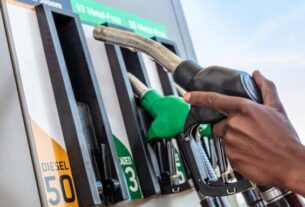
For Ghana, the immediate transmission mechanism is straightforward: higher international crude and refined-product prices eventually increase the cost of imported fuel, particularly diesel, unless domestic supply or policy interventions absorb part of the shock.
Ghana’s Exposure Runs Through Imports
Ghana’s vulnerability is not simply the amount of crude produced domestically.
The country remains heavily dependent on imported refined petroleum products because domestic refining capacity has historically been inconsistent.
The Ministry of Energy and Green Transition’s medium-term plan identifies inadequate refining capacity, refinery shutdowns, maintenance problems and working-capital constraints as factors behind Ghana’s continued reliance on petroleum-product imports.
That makes developments in international markets particularly important.
When crude prices rise, Ghanaian importers face a higher dollar cost for cargoes. Shipping and insurance costs can also increase when vessels must navigate routes perceived as riskier.
The pressure can then move through the domestic pricing system into petrol, diesel and LPG prices.
This is already visible in the latest pricing environment. The NPA’s September 16 price floors were set at GH¢16 per litre for petrol, GH¢16.77 for diesel and GH¢10.97 per kilogramme for LPG.
A prolonged geopolitical premium would therefore arrive at a particularly sensitive point for Ghanaian consumers and businesses.
Local Refining Becomes An Energy-Security Buffer
The renewed international pressure also strengthens the economic case for Ghana to improve the reliability of its own refining system.
Sentuo Oil Refinery’s continued production is expected to provide an additional source of domestic petroleum products, while the government has outlined expansion plans for both Sentuo and Tema Oil Refinery.
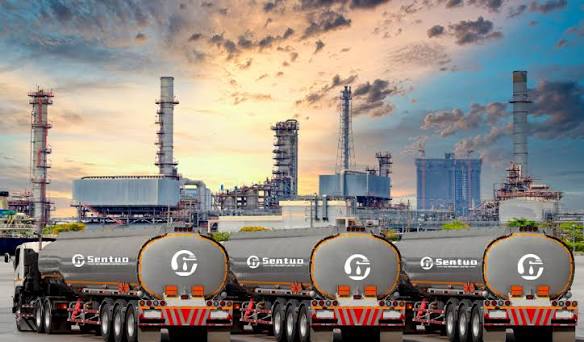
The government has said the expansion of the two facilities could eventually enable them to meet about 70% of Ghana’s domestic refined-product demand.
That would not insulate Ghana from global crude prices. Refineries still need crude, and the cost of that crude is determined largely by international markets.
But it can reduce another layer of vulnerability: dependence on imported finished products.
The distinction is important. Ghana may not be able to prevent a rise in the international price of oil, but greater domestic refining capacity could give the country more control over where and how refined products are sourced, stored and distributed.
That is becoming increasingly valuable as international supply chains face simultaneous geopolitical and logistical risks.
Supply Security And Price Security Are Different
The latest market developments also demonstrate why Ghana’s energy-security debate needs to distinguish between physical fuel availability and affordability.
A country can have enough fuel in storage while still experiencing sharp increases in pump prices.
Read also:
- Playwright Kofi Dzogbewu Explores Madness and Clarity in New Play
- Kim Kardashian Hospitalized With Esophagitis Linked to Father’s Cancer
- British-Ghanaian Rapper Sway Dies at 44 in Ghana
- Moliy Bags Dancehall Song of the Year at Caribbean Awards
- President Mahama’s 400-Bed Mother and Child Block for Korle Bu Takes Shape
That is because inventories provide a temporary physical buffer, but they do not eliminate the cost of replacing those inventories when new cargoes become more expensive.
Recent developments around Saudi Arabia illustrate the problem.
The East-West pipeline, which allows Saudi crude to reach the Red Sea without passing through the Strait of Hormuz, has also been affected by attacks, increasing concern about the resilience of alternative export routes.
For Ghana, this means the risk is not necessarily an empty filling station. The more immediate risk is a more expensive fuel supply chain.
Diesel Carries The Wider Economic Risk
The consequences could be particularly significant for diesel.
Diesel is embedded in Ghana’s productive economy, powering haulage, agriculture, construction, mining, generators and commercial transport. An increase in diesel prices therefore affects far more than motorists.
Higher haulage costs can raise the cost of moving food and manufactured goods. Businesses with diesel-powered equipment face higher operating expenses, while transport operators can pass increased fuel costs into fares and freight charges.
That creates a second-round inflationary effect.
This is why global oil-price movements matter even when Ghana’s physical fuel stocks remain comfortable.
The economic impact is transmitted through the cost of keeping goods, people and businesses moving.
Domestic Refining Cannot Remove The Global Shock
There is, however, a limit to what increased domestic refining can achieve.
Local refineries can reduce Ghana’s dependence on imported finished products, but they cannot make the international crude market irrelevant. If the cost of crude rises sharply, the economics of domestic refining will also change.
The Chamber of Bulk Oil Distributors has previously cautioned that increased domestic refining does not automatically translate into lower pump prices because refineries still acquire crude at internationally influenced prices.
That means Ghana’s objective should not be framed simply as producing fuel locally.
The stronger objective is to build a system in which more of the supply chain is under domestic control, while maintaining enough storage, refinery capacity and alternative supply arrangements to absorb external disruptions.
That is a much more durable definition of energy security.
The Bigger Test For Ghana
The latest oil-market reaction shows how quickly a geopolitical event thousands of kilometres away can become an economic issue for Ghana.
The Riyadh attacks did not create an immediate shortage of petroleum products in Ghana.
But they added another layer of risk to a market already dealing with disruptions around major Middle East shipping routes.
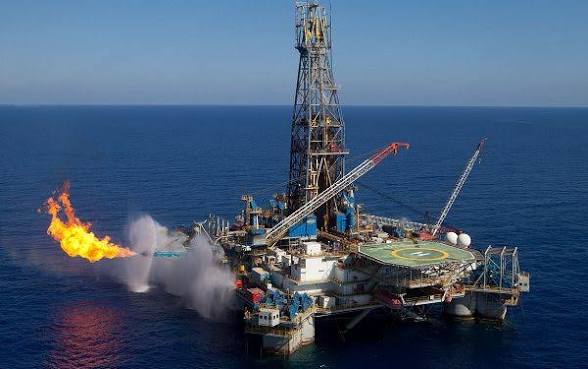
For Ghana, the lesson is therefore less about predicting the next movement in Brent and more about reducing the number of external variables that can destabilise the domestic fuel market.
Reliable local refining, adequate strategic storage, diversified crude and product supply, and a more resilient downstream infrastructure all become more valuable when international markets are under stress.
The country cannot control what happens in Riyadh, Hormuz or the Red Sea.
It can, however, determine how much of that shock ultimately reaches Ghanaian consumers and businesses.