ELS: MBN NEWS
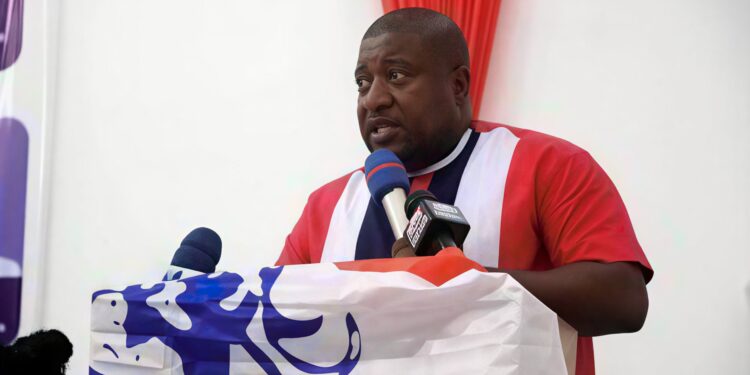
The National Organiser of the New Patriotic Party, Henry Nana Boakye has argued that the Supreme Court’s decision on the delegate voting system will not by itself eliminate vote buying in political party elections. Therefore he called for a specific legal framework that clearly defines electoral inducement and establishes penalties for offenders.
Mr Boakye explained that Ghana previously responded to political challenges through targeted legislation, citing the passage of the Anti-Vigilantism Act under former President Nana Akufo Addo as an example. Thus he suggested that a similar approach could be adopted to address the issue of vote buying within political processes.

“I think all political parties should come together. Civil society, NPP and NDC, let’s come together and put together a robust legislation against vote buying. It should be very detailed so that it becomes a criminal offence.”Henry Nana Boakye
The NPP official stated that expanding participation through a one person, one vote system would create wider involvement in internal elections. However, he argued that individuals with significant financial influence could still attempt to sway voters if proper safeguards were not introduced.
On recent political developments, Mr Boakye acknowledged that instances of inducement could occur across different political traditions. He referenced both the New Patriotic Party and the National Democratic Congress while stressing that the matter needs a national response.
The National Organiser noted that existing laws on bribery may not sufficiently address the specific nature of vote buying during party elections. He proposed the creation of legislation that would provide clear definitions and establish a direct legal basis for prosecution.
Additionally, Mr Boakye argued that political parties should avoid assuming that electoral reforms alone would solve challenges associated with financial influence. He explained that compliance with any new voting arrangement would require strong monitoring systems and effective enforcement measures.

The NPP representative further highlighted the importance of building consensus among political actors before introducing reforms. He stated that a collective effort involving political parties and civil society would provide a stronger foundation for addressing the issue.
Discussing the role of the Supreme Court’s ruling, Mr Boakye acknowledged that wider participation within political parties represents a positive democratic objective. He nevertheless emphasised that the success of the arrangement would depend on practical measures that protect the integrity of internal elections.
Delegate Voting Shift Faces Major Practical Hurdles
The National Organiser of the New Patriotic Party, Henry Nana Boakye explained that while the ruling supports wider participation, political organisations may face significant operational demands in applying the new arrangement.
Read also:
- Minority accuses government of undermining Ghana’s democratic institutions
- Reform UK’s Deputy Leader Under Investigation Over Alleged Interests Declaration Failure
- France Rejects Reform UK’s Proposal to Deploy Royal Navy in English Channel
- Ghana Reaffirms $12bn First Phase of Petroleum Hub Project
- King Promise Features on CKay’s New Album Banger Boy
Mr Boakye stated that he has not yet studied the full judgement and therefore could not comment extensively on the reasoning behind the court’s directives. He, however, indicated that his preliminary assessment pointed to possible difficulties surrounding the execution of the decision.
Referencing previous legal developments, the NPP National Organiser cited the Representation of the People Amendment Act, commonly known as ROPAL, as an example of a policy that faced implementation difficulties after receiving judicial backing. He explained that although the 2007 decision recognised voting rights for Ghanaians living abroad, the process has not been fully applied in national elections.
“On paper, it looks good that every person should be part of choosing who becomes a presidential candidate or parliamentary candidate. However, in practice, the implementation is going to be very difficult.”Henry Nana Boakye
The NPP official noted that similar questions could arise regarding the resources required to organise expanded internal elections. He questioned how political parties would finance nationwide voting exercises involving large numbers of members.

Discussing the financial dimension, Mr Boakye asked whether political parties would receive state support to conduct such elections or whether the responsibility would remain solely with the organisations. He explained that the Supreme Court’s full judgement would provide more clarity on any possible obligations created by the decision.
Furthermore, the National Organiser pointed out that political parties differ in their financial capacity and organisational structures. He argued that smaller political parties could face greater difficulties if they are required to conduct extensive internal elections without additional support.
On the experience of the New Patriotic Party, Mr Boakye explained that the party previously introduced wider participation mechanisms during internal elections. He stated that financial pressures associated with managing such processes contributed to changes in the party’s approach.
The NPP representative highlighted that political parties operate throughout the year and have several responsibilities beyond organising internal elections. He explained that maintaining polling station structures, electoral areas, regional offices and national operations already requires significant resources.
Additionally, Mr Boakye referred to recommendations from the Constitutional Review Committee established by the New Patriotic Party, which proposed steps towards a one person, one vote system. He suggested that a gradual transition could have allowed political parties sufficient time to prepare for the changes.
The National Organiser argued that a phased approach would have helped political parties adjust their systems and manage the financial and logistical demands involved. He stated that the ruling presents an opportunity for democratic growth while requiring careful planning to ensure effective implementation.
Mr Boakye added that the party would need to examine the full judgement and assess the responsibilities arising from it before making further comments. He indicated that a detailed understanding of the court’s position would guide future discussions on the way forward.