
ELS; MBN360 Extractives/Energy
Ghana’s Petroleum Hub Development Corporation (PHDC), together with Touchstone Capital Partners (TCP) and its international consortium, has reaffirmed progress on the first phase of the Ghana Integrated Petroleum Hub, a development expected to attract approximately US$12 billion in investment under Lot 1 of the project.
The confirmation reinforces government’s ambition to establish the country as a major petroleum, petrochemical and industrial centre in West Africa by combining refining capacity, gas infrastructure, manufacturing and logistics into one integrated energy ecosystem.
The first phase forms part of a wider long-term investment vision estimated at about US$60 billion, aimed at transforming the hub from a petroleum facility into an industrial city capable of supporting regional trade and economic growth under the African Continental Free Trade Area (AfCFTA).
Phase I comprises approximately US$12 billion of investment under the agreement between PHDC and the TCP-UIC Consortium.
From Refining Project to Industrial Ecosystem
The Ghana Integrated Petroleum Hub is designed to go beyond traditional refinery development by linking crude processing with downstream industries, energy infrastructure and commercial activities.
Under the planned development, the hub will eventually include three large-scale refineries with an initial combined capacity of 900,000 barrels per day, expandable to 1.5 million barrels per day.
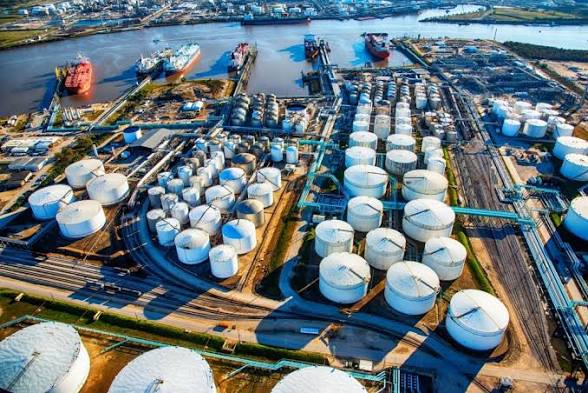
Additional facilities are expected to include five petrochemical complexes, petroleum storage infrastructure, LNG receiving and gas-processing facilities, gas-to-power generation plants, marine terminals, deep-water jetties and industrial parks.
The integrated model reflects a broader global shift in energy development, where resource-producing countries are seeking to retain more economic value by processing raw materials domestically and building industries around them.
For Ghana, the significance lies in reducing dependence on imported refined petroleum products while creating a platform for petrochemical manufacturing, exports and industrial expansion.
Strengthening Energy Security and Regional Position
Ghana remains a crude oil producer but continues to rely heavily on imported refined fuels due to limited domestic refining capacity.
This dependence exposes the economy to international market shocks, foreign exchange pressures and disruptions in global supply chains.

A successful Petroleum Hub could provide additional refining capacity, improve supply security and strengthen Ghana’s position as a petroleum trading centre within the region.
The project’s inclusion of gas processing and gas-to-power infrastructure also aligns with Ghana’s efforts to expand domestic gas utilisation and support electricity generation.
However, the long-term value of the hub will depend on securing reliable crude feedstock, attracting credible investors and ensuring that supporting infrastructure develops alongside refining capacity.
Read also:
- Eco-Conscious Coordinator Calls for Stronger Oversight of Mining Activities
- 9,000 Miners Registered for Responsible Mining Scheme, Ministry’s Spokesperson Discloses
- Ghana’s Inflation Fight Scores Major Victory As July Inflation Drops to 4.6%
- Inusah Fuseini opposes proposal to extend presidential term.
- Haruna Iddrisu critiques Parliament’s approach to oversight role
Jobs and Industrial Transformation
Beyond petroleum processing, the project is expected to create opportunities across multiple sectors of the economy.
Project estimates indicate that the completed programme could generate about 780,000 direct and indirect jobs by 2036 through construction, operations, logistics, manufacturing and associated supply chains.
The potential impact extends to industries that depend on petrochemical inputs, including plastics, fertiliser production, manufacturing and industrial services.
The programme represents an integrated development ecosystem in which energy, petrochemicals, logistics, manufacturing, digital infrastructure, finance, education and healthcare reinforce one another rather than standing as isolated assets.
For Ghana to maximise these benefits, strong local participation will be critical.
Developing technical skills, strengthening local businesses and ensuring Ghanaian companies participate in the supply chain will determine whether the hub delivers broad economic value.
Financing and Implementation Remain Key Milestones
While the Petroleum Hub presents significant economic opportunities, securing financing remains one of the most important steps in moving the project from ambition to execution.

Touchstone Capital Partners has indicated that its role includes coordinating international investment partnerships, structuring financing arrangements and engaging technical partners, including engineering firms, technology providers and development finance institutions.
The financing strategy follows a staged approach involving project preparation, feasibility assessments, risk allocation and investment mobilisation.
However, large-scale energy infrastructure projects require careful financial planning because construction costs, market conditions, regulatory certainty and commercial agreements all influence investor confidence.
Ghana’s Downstream Ambition
The reaffirmation of the US$12 billion first phase comes at a time when Ghana is seeking to reposition its energy sector from one focused largely on resource production to one driven by industrial value creation.

The Petroleum Hub represents an opportunity to connect upstream petroleum resources with downstream industries, creating a stronger domestic value chain.
The success of the project will ultimately depend on execution discipline, transparent partnerships and the ability to convert investment commitments into operational infrastructure.
If implemented effectively, the hub could become one of Ghana’s largest industrial developments, strengthening energy security, supporting manufacturing and positioning the country as a key petroleum and petrochemical gateway in Africa.