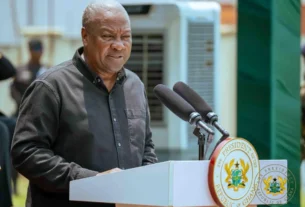

ELS: MBN360
Paa Kwesi Schandorf
The Spokesperson for the Ministry of Lands and Natural Resources, Paa Kwesi Schandorf, has revealed that the government’s Responsible Mining Initiative has registered significant progress with 9,000 miners trained and 700 cooperatives formed since the programme began. He explained that the initiative has been designed to create a structured approach to mining while ensuring that local communities play an active role in protecting natural resources.
Mr Schandorf made the disclosure while discussing measures being implemented by the ministry to promote responsible mining and address the challenges associated with illegal mining activities across the country. His remarks came on a day when government and the ministry are commemorating the first anniversary of the helicopter crash that claimed the lives of eight people.
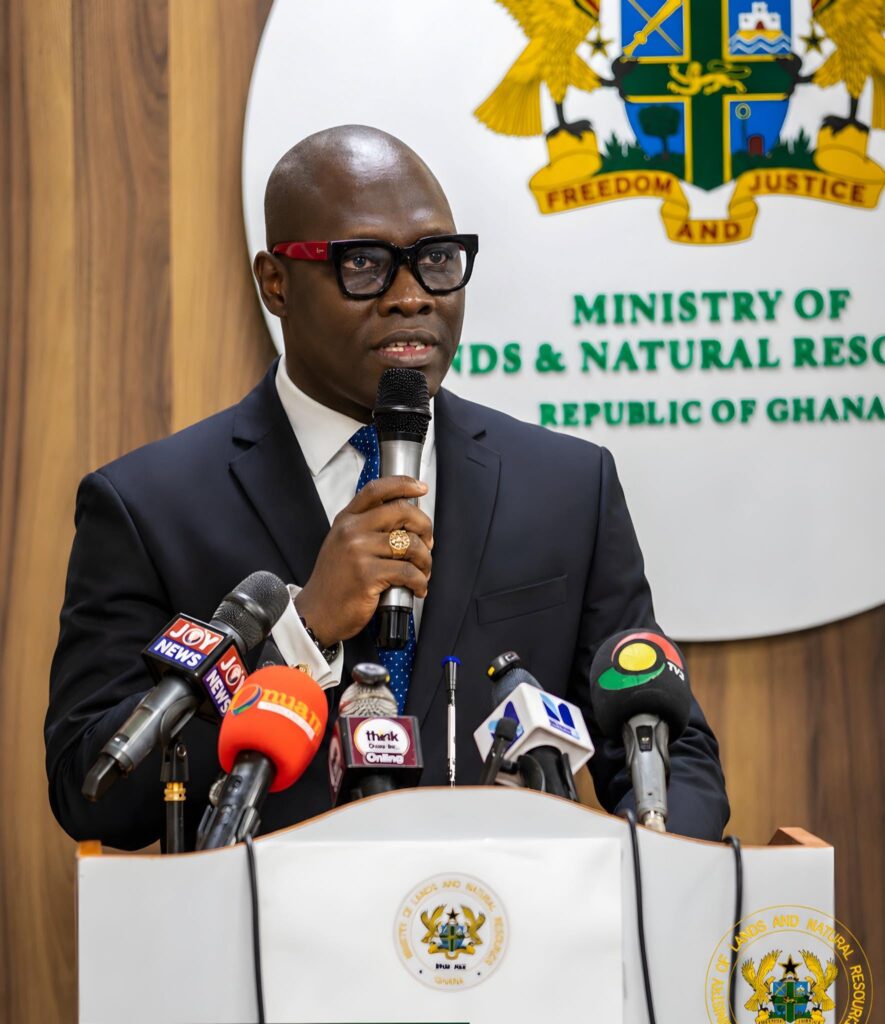
“Today is truly a very solemn day, and the most befitting tribute we can pay to the memories of the fallen heroes is to mount a very potent, competent and concrete fight against the menace of illegal mining.”Paa Kwesi Schandorf
Referencing the progress made so far, Mr Schandorf outlined that the ministry has focused on preparing miners and communities before allowing the cooperatives to begin full operations. He explained that the registration stage has been done carefully because authorities want to ensure that local residents and traditional leaders are fully involved in the process.
The Spokesperson highlighted that lessons from the previous Community Mining Scheme influenced the current approach being adopted by the ministry. He noted that earlier arrangements faced challenges because some individuals obtained mining licences without meaningful involvement from the communities where mining activities took place.
“The difference this time around is that if a cooperative is formed in a particular community, it should have the absolute buy in of the locals, their active participation and the blessings of the local authorities.”Paa Kwesi Schandorf
Furthermore, he explained that the delay in commencing operations for the registered cooperatives are linked to the ministry’s commitment to completing proper checks. The process, he noted, is intended to prevent future disagreements between mining operators and communities.
The initiative, according to the ministry, has reached an advanced preparation stage after months of training and registration activities. Mr Schandorf disclosed that authorities were working towards ensuring that most of the 700 cooperatives become fully operational before the end of the year.
He projected that the remaining steps would involve final stakeholder engagements and resolving issues that could affect smooth implementation. The spokesperson stressed that the ministry is taking time to establish a system that would deliver responsible mining outcomes for both communities and the country.
Costly Reclamation Efforts Continue As Authorities Pursue Sustainable Mining
The Ministry of Lands and Natural Resources disclosed that the Responsible Mining Initiative remains a major investment aimed at transforming small scale mining and reducing the impact of illegal mining on Ghana’s environment. The ministry explained that the programme requires significant financial commitment due to the cost involved in training miners, supporting cooperatives and restoring damaged lands.
The Spokesperson for the Ministry, Paa Kwesi Schandorf, outlined that the 700 registered mining cooperatives are at an advanced stage of preparation, with most of the required processes completed before full operations begin. He noted that authorities are concentrating on stakeholder engagement to ensure communities support the activities before implementation.
Read also:
- University Administrators Demand Pay Based on Professional Worth — GAUA General Secretary
- Minister upholds revocation of Adamus Resources mining leases following independent committee review
- AKSA Energy deal: Evidence of conspiracy enough to prosecute implicated officials – Ayikoi Otoo
- Mahama’s Jamaica Visit Cemented Shared History and Trade Future, Bawah Mogtari.
- Ghana needs security experts at Defence Ministry, not civilians – Elvis Darko

According to Mr Schandorf, each cooperative has reached about 95 percent readiness, with the remaining processes focused on securing local approval and strengthening community participation. He projected that a significant number of the cooperatives would begin operating fully before the end of the year.
The Spokesperson explained that the ministry’s careful approach is aimed at avoiding challenges that affected previous mining initiatives. He indicated that ensuring community involvement remains essential because local residents would play a major role in monitoring mining activities within their areas.
“The programme is a cost intensive enterprise, however it is worth it because at the end of the day, you are training miners appropriately on how they should do mining responsibly and offering alternative livelihoods.”Paa Kwesi Schandorf
Discussing the financial demands of the initiative, Mr Schandorf disclosed that the programme requires more than GH¢10 million due to the number of cooperatives being supported and the resources needed for effective implementation. He noted that the investment was necessary because responsible mining requires proper training, monitoring and technical support.
Additionally, the ministry acknowledged that illegal mining activities continue in some parts of the country despite ongoing interventions. Mr Schandorf explained that the fight against illegal mining requires sustained efforts because environmental restoration and behavioural change cannot be achieved instantly.
Referencing comments from the Minister for Lands and Natural Resources, Emmanuel Armah Kofi Buah, the spokesperson explained that the fight against illegal mining should be viewed as a continuous process. He noted that progress is being recorded through initiatives such as the National Alternative Employment and Livelihood Programme and other interventions designed to address the causes of illegal mining.
On the Changes of Rivers Within The Country
The ministry further highlighted improvements recorded in some water bodies affected by mining activities. Mr Schandorf pointed to assessments conducted by the Water Resources Commission which track changes in water quality across major rivers including the Ankobra, Pra and Birim.
He explained that although the rivers have not returned completely to their original state, available data shows gradual improvements in turbidity levels. The spokesperson noted that further assessments would provide additional information on the impact of ongoing measures.
“The waters have not been completely purified, but when you compare the situation, you are seeing marginal improvements and it gives an impression that the activities are beginning to produce some results.”Paa Kwesi Schandorf
Turning to land restoration, Mr Schandorf revealed that reclaiming degraded mining areas remains one of the most expensive aspects of the government’s environmental recovery efforts. He explained that restoring a single hectare of damaged land can cost more than $48,000 while thousands of hectares across the country require attention.

The ministry has therefore partnered with private sector organisations to support reclamation activities. Mr Schandorf mentioned that companies such as Newmont and Zijin Mining Company have provided assistance towards restoring affected lands.
He also highlighted the reclamation of about 800 acres in the Manso Nkwanta area as one of the recent interventions carried out through collaboration with industry partners. The spokesperson explained that such partnerships were necessary because the scale of environmental damage requires collective action.
Meanwhile, the government continues to combine enforcement measures with alternative livelihood opportunities as part of efforts to address illegal mining. The ministry believes that supporting responsible miners while restoring damaged ecosystems will strengthen the country’s long-term approach to managing natural resources.