

ELS: MBN360
Deputy Minister for Health, Hon. Dr Grace Ayensu-Dankwah
Deputy Health Minister, Prof. Dr Grace Ayensu-Danquah, has stressed that Ghana’s National Strategic Plan for Heavy Metal Reduction in Food must deliver measurable results by 2030, calling for stronger accountability, adequate funding and enhanced technical capacity to reduce food contamination and protect Ghanaians from heavy metal exposure.
At the launch of the plan, Prof. Ayensu-Danquah outlined specific expectations for each stakeholder group involved in its implementation, from industry and academia to development partners, civil society, the media and consumers, framing the initiative as a shared national responsibility rather than a government undertaking alone.
Addressing industry stakeholders directly, the Deputy Minister called for proactive adaptation of good manufacturing processes, arguing that such measures would not only reduce contamination risk but also secure market financing and strengthen consumer trust in Ghanaian food products.
Academia And Development Partners Urged to Sustain Support
Prof. Ayensu-Danquah called on academia to continue investing in generating Ghana-specific evidence to inform ongoing efforts to address heavy metal contamination in food.
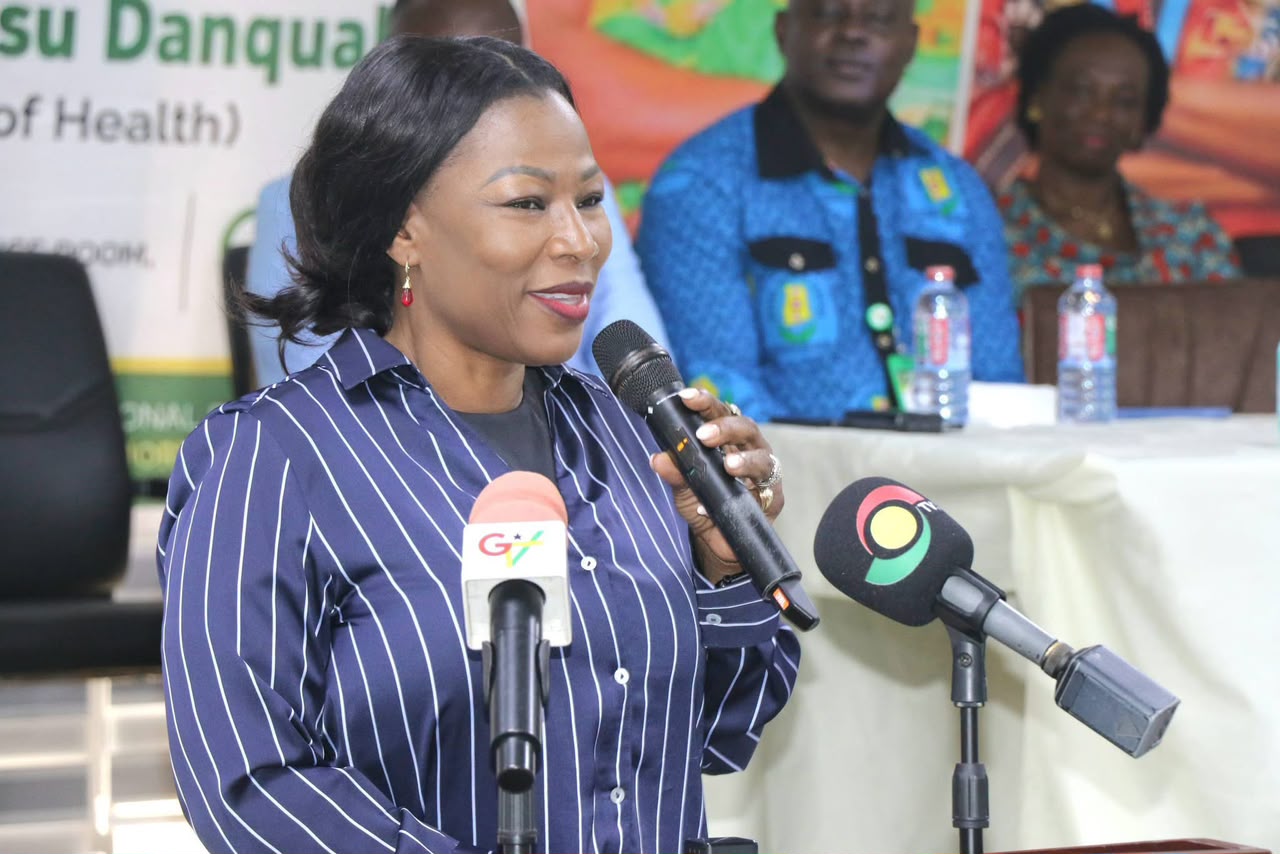
She further urged development partners to maintain sustained technical and financial support throughout the implementation period, recognising that achieving measurable results by 2030 would require consistent, long-term investment rather than short-term intervention.
Warning Against Irresponsible Public Reporting
Turning to civil society and the media, the Deputy Minister called for responsible public communication regarding heavy metal contamination issues, cautioning that inaccurate or sensationalised reporting does not protect public health but instead erodes consumer confidence.

“Reporting does not protect public health, it erodes consumer confidence,”Prof. Dr Grace Ayensu-Danquah
Prof. Ayensu-Danquah further encouraged Ghanaian consumers to remain engaged and informed on matters relating to food safety and heavy metal contamination, stressing that public awareness plays an important role in holding the broader system accountable for results.
She reminded regulatory authorities that they remain answerable directly to consumers for the outcomes the national plan is expected to deliver.
Read also:
- Ato Forson Wins Young Delegates as Asiedu Nketia Loses His Core Base
- Minority Questions Clarity of Education Ministry, GES Roles and Edupac Deal
- Tinkler calls for focus as Kotoko face in-form Samartex on Sunday
- “Our confidence is very high”- Hearts of Oak Head Coach ahead of Bechem Clash
- President Mahama targets industrial park, textile factory at Agbogloshie
Accountability Must Be Substantive, Not Symbolic
Central to the Deputy Minister’s address was a firm insistence that accountability mechanisms underpinning the plan must be genuine and substantive rather than merely symbolic.
She outlined specific requirements for effective accountability, including clearly defined performance indicators, regular reporting cycles, public discourse on progress made, and independent review processes to verify outcomes.
“Accountability must be real, not ceremonial, this means defined indicators, regular reporting, public discourse of progress and independent review,”Prof. Dr Grace Ayensu-Danquah
Prof. Ayensu-Danquah stressed that government bears responsibility for ensuring that the necessary budgetary allocations, technical capacity and institutional arrangements are firmly in place to support effective implementation of the strategic plan.
Without these foundational elements, she suggested, even a well-designed policy document would struggle to translate into meaningful results.
Measuring Success Beyond the Launch Document
The Deputy Minister was explicit that the true measure of the national strategic plan’s success would not lie in the quality of the document launched, but rather in the tangible, measurable outcomes achieved by 2030.
She specified that these outcomes should include reduced heavy metal contamination levels, strengthened laboratory testing capacity, improved industry compliance with established standards, and ultimately, demonstrable improvements in the health of Ghanaians.
“The true measure of this national strategic plan will not be the quality of the document we launch today, it will be the measurable results that emerge by 2030,”Prof. Dr Grace Ayensu-Danquah

In her concluding remarks, Prof. Ayensu-Danquah argued that Ghana’s ambition should extend beyond simply possessing a strategic plan on heavy metals, toward building a genuinely stronger, functioning system.
She described this system as one capable of preventing contamination at its source, detecting emerging risks early through credible surveillance mechanisms, enforcing food safety standards consistently across the industry, and demonstrably reducing the population’s overall exposure to heavy metals through food by the 2030 target date.