
ELS: MBN360 Extractives/Energy
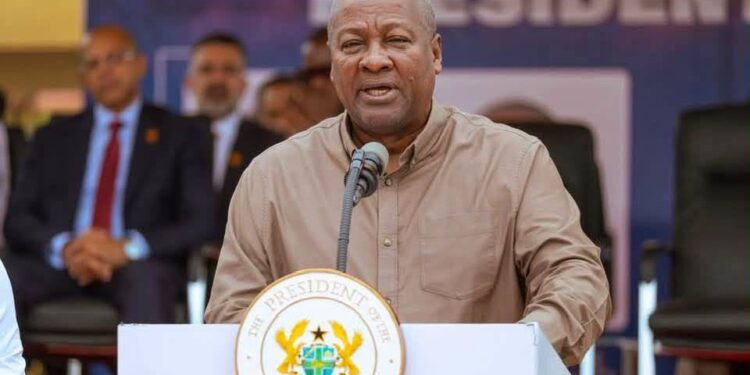
President John Dramani Mahama has pledged that Ghana’s allocation of crude oil from the Jubilee Field will be supplied to the Tema Oil Refinery (TOR) to support continuous operations, deepen local value addition and strengthen the country’s fuel security, signalling a more direct link between Ghana’s upstream production and its domestic refining ambitions.
The commitment was made during the commissioning of TOR’s rehabilitated Crude Distillation Unit (CDU) in Tema, where the President outlined a broader strategy to transform the refinery from a periodically dormant state-owned asset into a commercially competitive player capable of supporting both domestic fuel demand and regional petroleum trade.
TOR is currently processing about 28,000 barrels of crude oil per day, but government has directed the Ministry of Energy and Green Transition, together with the refinery’s board and management, to prepare a roadmap for expanding capacity to 100,000 barrels per day.
We do not intend merely to keep TOR operating. We intend to make TOR more competitive, more efficient and more commercially viable.President Mahama
From dormant asset to strategic refinery
The President acknowledged that TOR had endured years of operational decline, mounting debt, deteriorating equipment and weakening public confidence, becoming for many Ghanaians a symbol of unrealised industrial potential.
Rather than abandoning domestic refining in favour of imported petroleum products, he argued that strategic national institutions must be reformed and modernised.
Nations that aspire to greatness do not abandon strategic institutions like TOR whenever adversity strikes. They reform them, modernise them, restore them and prepare them to compete again.President Mahama
The remarks position TOR not simply as a fuel-processing facility but as a core industrial asset within government’s broader economic transformation agenda.
Jubilee crude takes centre stage
One of the most consequential announcements from the ceremony was the assurance that Ghana’s share of Jubilee crude would be directed to TOR.
The pledge is significant because access to reliable feedstock has historically been one of the refinery’s biggest operational constraints.

According to the President, TOR has received three cargoes of one million barrels each since May, sourced from Nigeria’s Bonga Field, Côte d’Ivoire’s Baobab Field, and Ghana’s Jubilee Field.
He stressed that the Jubilee crude supplied to the refinery was purchased on commercial terms.
We fully paid for the Ghanaian crude. It was not given to us on credit.President Mahama
This represents a clear statement of the government’s commitment to ensuring that our petroleum resources add value here at home.
The emphasis on payment is important because it signals an attempt to avoid the perception that TOR’s revival is being sustained through opaque subsidy arrangements or unpaid crude allocations.
Operational turnaround gains momentum
President Mahama disclosed that TOR resumed crude processing on December 19, 2025, following rehabilitation of its Residual Fluid Catalytic Cracker (RFCC) unit.
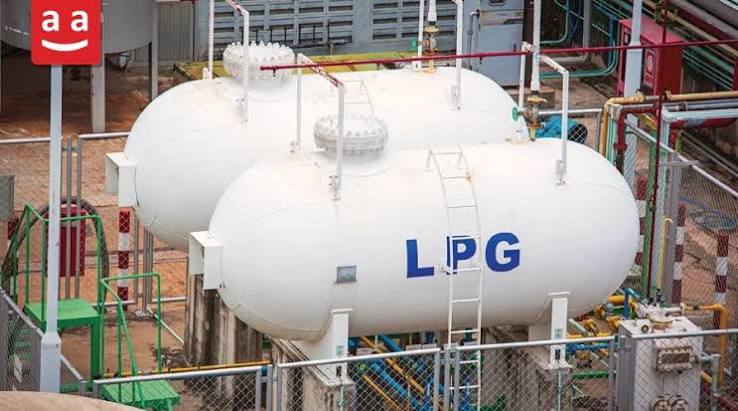
Since then, the refinery has processed about 2 million barrels of crude oil, producing gasoline, gas oil, aviation turbine kerosene, liquefied petroleum gas (LPG), kerosene, residual fuel oil and premixed fuel.
Perhaps the most politically significant claim was that the rehabilitation and operational turnaround were achieved without direct funding from the Government of Ghana.
If sustained, that would mark a notable departure from earlier periods when TOR’s financial challenges frequently required state intervention.
Read also:
- Eco-Conscious Coordinator Calls for Stronger Oversight of Mining Activities
- 9,000 Miners Registered for Responsible Mining Scheme, Ministry’s Spokesperson Discloses
- Ghana’s Inflation Fight Scores Major Victory As July Inflation Drops to 4.6%
- Inusah Fuseini opposes proposal to extend presidential term.
- Haruna Iddrisu critiques Parliament’s approach to oversight role
Why the 100,000-bpd target matters
The proposed expansion to 100,000 barrels per day is ambitious and would significantly alter the scale of Ghana’s refining operations.
At that level, TOR could process a much larger share of Ghana’s crude production and potentially serve parts of the West African market.

Government argues that higher refining capacity would reduce dependence on imported refined products, conserve foreign exchange, strengthen fuel supply security, create jobs, and support industrial development.
The President framed the CDU recommissioning as only the first step in a broader effort to build an integrated petroleum industry linked to regional trade and African industrialisation.
A stronger angle: continuous operations, not ceremonial commissioning
The real story here is not that a refinery unit was commissioned; it is that government is trying to solve the problem that has repeatedly undermined TOR, continuous operations.
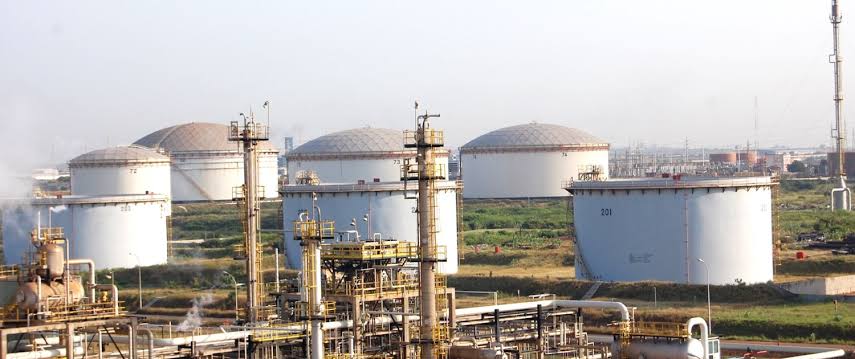
A refinery that runs intermittently cannot achieve efficiency, attract investment or compete with imported products.
By linking Jubilee crude supply directly to TOR’s operational strategy, government appears to be attempting to create a more stable feedstock framework that supports sustained refining rather than short-term restarts.
This is a more credible industrial approach than treating refinery revivals as isolated political events.
The bigger challenge is commercial discipline
The ambition is understandable, but the difficult part lies ahead.
Expanding to 100,000 barrels per day will require substantial capital investment, modern technology, working capital, reliable crude supply and strong governance.

The President’s commitment to protecting TOR from political interference may ultimately be as important as the engineering upgrades.
State-owned refineries often struggle not because they lack equipment, but because commercial decisions become subordinated to short-term political considerations.
If TOR is to become genuinely competitive, operational efficiency, procurement discipline, maintenance planning and transparent financial management will matter more than headline capacity targets.
A meaningful shift in Ghana’s downstream strategy
This latest announcement suggests a deeper policy shift.
For years, Ghana’s petroleum debate focused heavily on upstream production and fuel imports. The new emphasis is on linking crude production to domestic refining and value addition.

That does not mean local refining will automatically make fuel cheap; crude is still priced internationally, and refining remains a commercial activity.
But it does mean a larger portion of the petroleum value chain could be retained within the domestic economy.
The pledge to dedicate Ghana’s Jubilee allocation to TOR, combined with the proposed capacity expansion and the focus on operational sustainability, makes this one of the clearest statements yet that government intends to rebuild TOR as a strategic industrial asset rather than merely keep it alive.
Whether that ambition succeeds will depend less on the commissioning ceremony and more on whether continuous refining, commercial discipline and long-term investment can finally replace the cycle of shutdowns and revivals that has defined TOR for much of the past two decades.