ELS: MBN360 NEWS
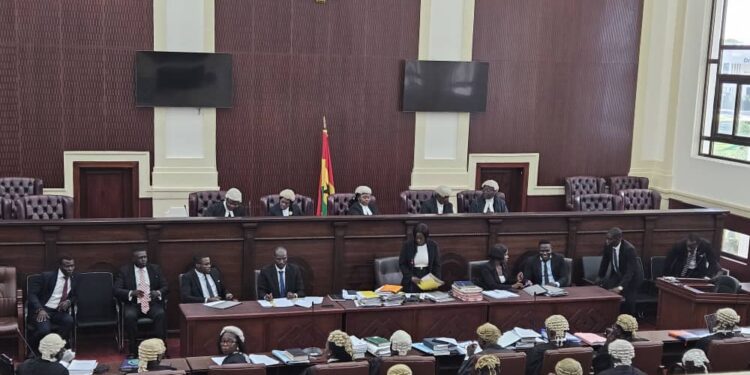
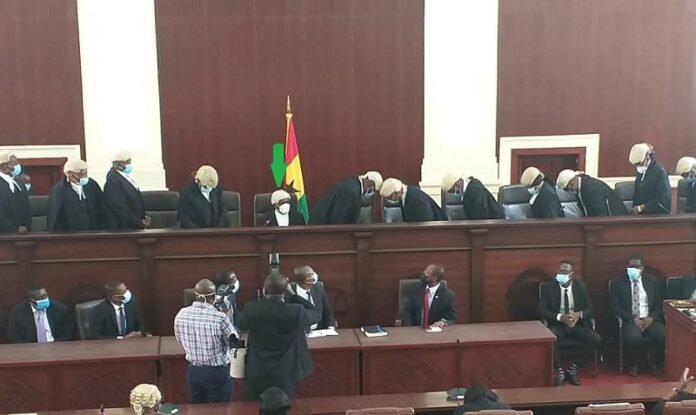
The Supreme Court has unanimously upheld the constitutionality of the Office of the Special Prosecutor (OSP), dismissing a legal challenge against the anti-corruption body’s prosecutorial powers while affirming that the Attorney-General retains the constitutional authority to discontinue criminal prosecutions initiated by the Office.
The judgment, delivered on Wednesday, July 29, confirmed that the Office of the Special Prosecutor Act, 2017 (Act 959), is consistent with the 1992 Constitution.
The ruling resolves a closely watched constitutional dispute over the legal foundation of the OSP and clarifies the relationship between the anti-corruption institution and the Attorney-General.
While the court affirms Parliament’s authority to establish the Office with prosecutorial powers, it also held that Article 88 of the Constitution preserves the Attorney-General’s supervisory authority, including the power to terminate prosecutions commenced by the OSP.
Supreme Court Dismisses Constitutional Challenge
The case arose from a constitutional action filed by private legal practitioner Noah Adamtey, who argued that Parliament exceeded its constitutional authority by creating the Office of the Special Prosecutor with prosecutorial powers independent of the Attorney-General.

According to the plaintiff, Article 88 of the 1992 Constitution exclusively vests prosecutorial authority in the Attorney-General. He contended that Parliament could not lawfully confer similar prosecutorial powers on another institution through an ordinary Act of Parliament without first amending the Constitution.
The constitutional challenge sought a declaration that the provisions of the Office of the Special Prosecutor Act establishing the prosecutorial powers of the Office were inconsistent with the Constitution.
After considering the arguments, the Supreme Court unanimously rejected the challenge and held that Act 959 remains constitutionally valid.
Court Clarifies Attorney-General’s Constitutional Authority
Although the Supreme Court upheld the validity of the Office of the Special Prosecutor, it clarified that the Attorney-General’s constitutional powers remain unaffected.
The court ruled that Article 88 of the Constitution continues to vest the Attorney-General with the authority to discontinue criminal prosecutions initiated by the Office of the Special Prosecutor.
The decision reinforces the Attorney-General’s supervisory role over criminal prosecutions while confirming that the establishment of the OSP does not diminish those constitutional powers. During the proceedings, the Attorney-General aligned with the constitutional argument advanced by the plaintiff.
The Attorney-General maintained that although prosecutorial functions may be delegated to another institution, such authority must remain subject to the Attorney-General’s control and supervision rather than being exercised permanently by an autonomous statutory body.
The Supreme Court’s judgment ultimately affirmed both principles by validating the establishment of the OSP while preserving the Attorney-General’s constitutional mandate.
Parliament Acted Within Constitutional Limits
In its decision, the Supreme Court concluded that Parliament acted within its constitutional authority when it enacted the Office of the Special Prosecutor Act, 2017. The court found that Parliament lawfully established the Office of the Special Prosecutor as an independent anti-corruption institution under Act 959.
Read also:
- Minority demands full disclosure of gov’t’s VALCO equity plan
- Europe Heatwave Intensifies Wildfire Battle
- Parliament Passes Excise Bill, Scraps 20% Tax on Local Fruit Juices.
- Rising material costs push building inflation to 3.1% – GSS
- ‘At 65 I feel like I’m living an extra time’ – Veteran actor, RMD
The judgment therefore removes uncertainty surrounding the legal basis of the Office and confirms that its existence and statutory functions remain protected under the Constitution.
At the same time, the court emphasized that the constitutional powers assigned to the Attorney-General under Article 88 remain fully intact. During the proceedings, the Office of the Special Prosecutor applied to join the constitutional action as an interested party.

However, the Supreme Court declined the application. The court held that the constitutional questions before it could be fully determined by the existing parties without requiring the Office itself to participate in the proceedings.
Despite rejecting the OSP’s application, the court admitted fourteen civil society organisations led by CDD-Ghana Executive Director Professor H. Kwasi Prempeh to participate in the case.
The court recognised the organisations’ longstanding work in governance and anti-corruption advocacy as sufficient basis for their participation in the constitutional proceedings.
Legal and Civil Society Leaders Welcome Judgment
The ruling drew positive reactions from members of the legal profession and civil society organisations that participated in the case. Private legal practitioner and member of the legal team representing the fourteen civil society organisations, Osagyefo Oliver Barker-Vormawor, welcomed the outcome.
“I was extremely honoured to have been retained by 14 CSO’s as part of a team of top lawyers, my professional colleagues Kizito Beyuo, Samson Anyenini and Kojo Akapame to argue for the preservation of the Office of the Special Prosecutor as Amici Curiae.”Osagyefo Oliver Barker-Vormawor
Reflecting on the outcome, he added, “2 wins in the Supreme Court on the same day. I couldn’t have asked for more. Even as Oliver Twist.” Professor Stephen Kwaku Asare also praised the decision, stating, “The Supreme Court unanimously declines invitation to cage the OSP. A very good day for accountability.”

Professor H. Kwasi Prempeh described the ruling as one of two significant constitutional decisions delivered by the apex court. He stated, “The Supreme Court of Ghana has today delivered path-breaking judgments in two closely-watched cases with far-reaching implications for Ghana’s democratic politics.“
Judgment Clarifies OSP’s Constitutional Position
The Supreme Court’s unanimous decision settles one of the most significant constitutional questions surrounding Ghana’s anti-corruption framework since the establishment of the Office of the Special Prosecutor.
By affirming the constitutionality of Act 959, the court has reinforced Parliament’s authority to establish an independent institution dedicated to investigating and prosecuting corruption-related offences.
At the same time, the judgment provides important constitutional clarity by confirming that the Attorney-General’s supervisory authority over criminal prosecutions remains unchanged under Article 88.
The decision therefore preserves the Office of the Special Prosecutor as an independent anti-corruption institution while reaffirming the constitutional balance between its statutory prosecutorial functions and the Attorney-General’s continuing oversight powers under the 1992 Constitution.