
ELS: MBN360 EDUCATION
The Director-General of the Ghana Education Service, Prof. Ernest Kofi Davis, has attributed the rising wave of indiscipline in Ghanaian schools to shifting societal values and modern influences, warning that new forms of misconduct, including gang-related violence, are emerging alongside more familiar disciplinary challenges.
Speaking at a national conference addressing indiscipline in schools, the Director General painted a candid picture of how student misconduct has evolved over the years, moving beyond traditional issues such as truancy and minor rule-breaking into more serious and organised forms of violence within school communities.
His remarks offered a rare, unusually frank assessment from the head of Ghana’s education service on both the scale of the problem and the shortcomings in the system’s response so far.
Prof. Davis acknowledged that certain disciplinary issues, such as students drinking, testing boundaries in small ways, sneaking out of school or pursuing romantic relationships during school hours, have long existed within Ghana’s secondary school system.
However, he said the scale and nature of misconduct being recorded today represent a marked departure from the past, pointing to patterns of organised group violence that were previously confined mostly to tertiary institutions.
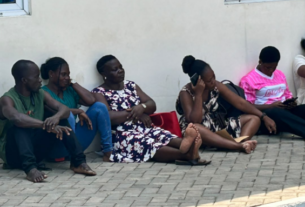
To illustrate the severity of this shift, he cited three specific incidents, including a gang clash at Accra High School that resulted in physical injuries, and a case at West Africa Senior High School where a student, sanctioned by teachers for visiting a girl during school hours, mobilised armed individuals from town who returned to assault the teachers involved.
Read also:
- Minority demands full disclosure of gov’t’s VALCO equity plan
- Europe Heatwave Intensifies Wildfire Battle
- Parliament Passes Excise Bill, Scraps 20% Tax on Local Fruit Juices.
- Rising material costs push building inflation to 3.1% – GSS
- ‘At 65 I feel like I’m living an extra time’ – Veteran actor, RMD
He described these episodes as clear evidence that the nature of indiscipline confronting schools today has grown considerably more dangerous than the disciplinary issues educators dealt with in earlier years.
Response Measures and Their Limits
Prof. Davis explained that whenever such incidents came to the attention of GES, the Service moved to identify and disband the groups responsible, in some cases transferring implicated students to other schools across the country as a corrective measure.
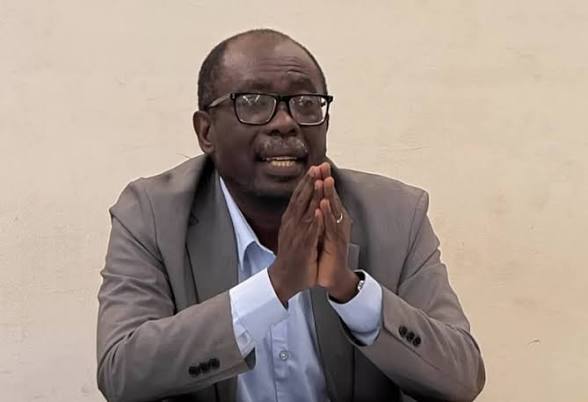
He said these interventions reflected a genuine effort to contain the spread of gang-related activity, even as the scale of the challenge continued to test the capacity of school authorities to respond effectively.
He noted that while such measures have helped address individual incidents as they arise, they remain largely reactive, underscoring the need for more systemic and preventive approaches to curbing the growth of organised indiscipline within the school system.
Policy Exists, But Implementation Has Lagged
Turning to why indiscipline continues to grow despite existing frameworks meant to address it, Prof. Davis was unusually candid in acknowledging gaps between policy design and actual enforcement within the education system. He admitted that some disciplinary tools formally adopted by the Service have remained largely unused in practice.
“Implementation challenges are real. We have very nice policies, but I don’t think we have implemented them. I am very honest to say that the positive discipline toolkit has never been implemented, it’s still in our books, very beautiful, for eight years.” Prof. Ernest Kofi Davis
He said the Service is now working to address this gap, signalling an intent to move beyond policy documentation toward practical, enforced implementation of disciplinary tools already developed but never fully rolled out across the country’s schools.