ELS; MBN360 BUSINESS
The Chief Executive Officer of the Ghana Free Zones Authority (GFZA), Dr. Mary Awusi, has positioned Ghana as the destination of choice for investors seeking to establish operations in Africa’s rapidly evolving Special Economic Zones (SEZs) ecosystem.
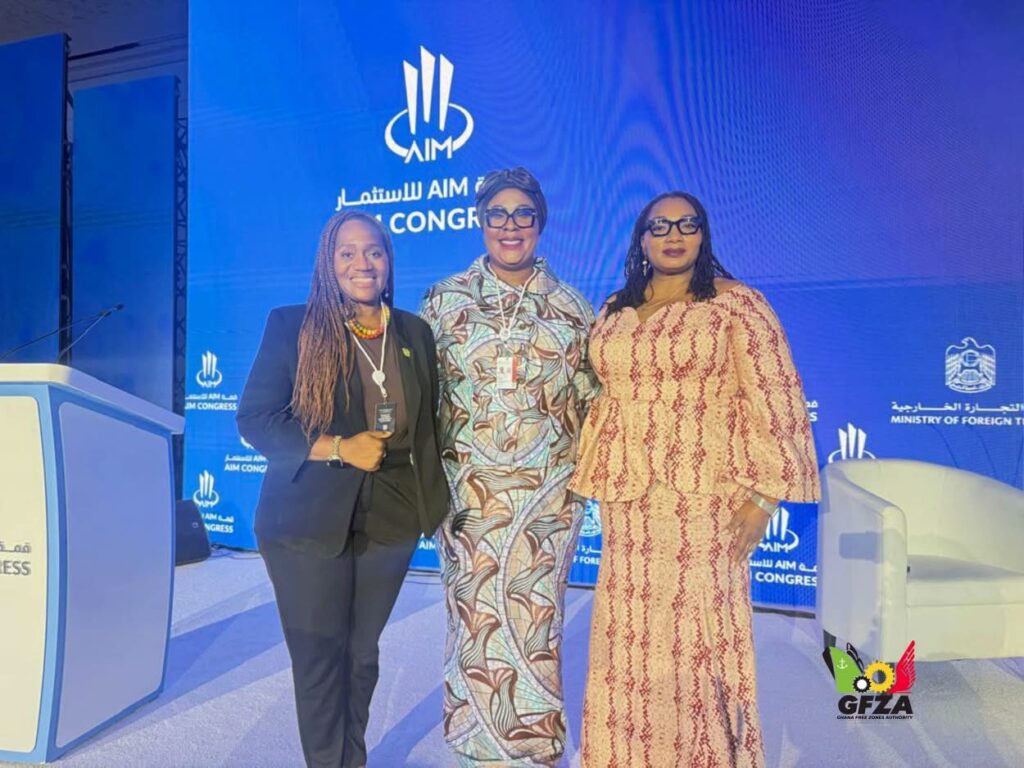
Dr. Awusi made the strong pitch when she participated as a key panellist at the prestigious AIM Congress 2026 Africa Regional Forum in Dubai, United Arab Emirates.
The high level forum, held at the Dubai World Trade Centre brought together Heads of State, Ministers, Investment Promotion Agencies, SEZ Authorities, Development Finance Institutions, global investors and private sector leaders to deliberate on the future of investment and industrialisation.
The Africa Regional Forum segment was dedicated to strengthening SEZs as engines of industrialisation, regional integration and investment on the continent. The panel discussion on which Dr. Awusi served was themed: “The Next Generation of African SEZs: From Enclaves to Integrated Ecosystems for Industrialization and Regional Value Chains.”
The session critically examined what distinguishes successful SEZs from unsuccessful ones and explored strategies for how African zones can transition from isolated enclaves into fully integrated platforms for industrialisation, investments, exports and regional value chains.
Ghana’s Locational Advantage is Unmatched
Dr. Awusi Contributing to the discussion argued that while fiscal incentives are important, the future competitiveness of African SEZs will be determined by strategic location matched with guaranteed market access.
She highlighted Ghana’s unique geographical and economic positioning as a key proposition for attracting high quality investment into the country’s Free Zones enclaves.
“Location is everything in the Free Zones business. Ghana offers a natural locational advantage that is difficult to replicate. We are centrally located on the West African coast, with direct access to major shipping lanes, two world class ports in Tema and Takoradi, and efficient trade corridors linking us to the over 400 million people in the ECOWAS market.”Dr. Awusi
However, she was quick to stress that locational advantage alone is not enough. For SEZs to be sustainable and truly competitive, she said, investors need clear, predictable and unhindered access to markets.
This, she noted, is where Ghana’s dual advantage becomes most compelling.
Read also:
- OliveTheBoy Launches Early Bird Tickets for O’Live Experience
- FC AshantiGold Head Coach Targets Maximum Points on First Ever GPL Home Game
- Government To Give 20% Incentive To Health Workers In Deprived Areas
- GPL: Sowah Odotei, Nyaho-Tamakloe appointed to Hearts of Oak IMC
- ‘Life Is Short’ gospel music hitmaker Bernice Offei dies at 63
“Location must be matched by market access. What makes Ghana exceptional today is that we offer both. Beyond ECOWAS, Ghana is the host country for the Secretariat of the African Continental Free Trade Area (AfCFTA). This places Ghanaian Free Zones enterprises at the heart of a 1.4 billion-person single African market worth over $3.4 trillion. Our position as a strategic production and distribution hub for businesses seeking to serve African markets and beyond is therefore unparalleled.”Dr. Awusi
Dr. Awusi further outlined reforms being undertaken by the GFZA under her leadership to make the Free Zones ecosystem more integrated and investor friendly. These include streamlining licensing processes, improving infrastructure within the enclaves, enhancing linkages with local raw material suppliers to boost value addition, and deepening collaboration with other agencies to ensure ease of doing business.
She said the GFZA’s new focus is to move beyond the traditional enclave model where zones operate in isolation, to an integrated ecosystem model that connects Free Zones enterprises to local industry, regional value chains, and global markets, a vision perfectly aligned with the theme of the panel.
Some Experts Panel Joins in the Conversation
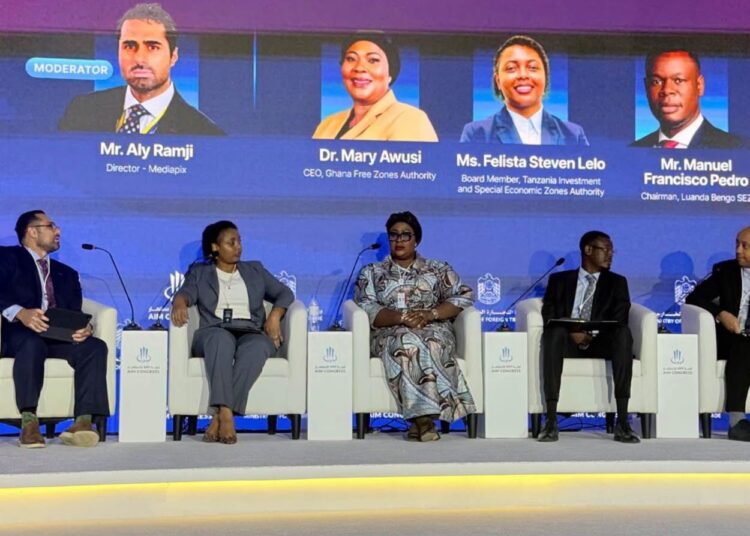
The panel discussion was moderated by Mr. Aly Ramji, Director of Mediapix Ltd., a renowned investment and economic zones consultant.Dr. Awusi shared the platform with other distinguished African SEZ leaders and investment experts including Ms. Felista Steven Lelo, Board Member of the Tanzania Investment and Special Economic Zones Authority.
Also features, Mr. Manuel Francisco Pedro, Chairman of the Luanda-Bengo SEZ in Angola; Mr. Roland Lalille, Director of Investment Promotion at the Seychelles Investment Board; and Mr. Elias Magosi, Executive Secretary of the Southern African Development Community (SADC).
The panellists collectively agreed that African SEZs must innovate to remain relevant. They identified critical success factors including strong governance, reliable infrastructure and energy, skills development, digitalisation, and deliberate integration into national industrial strategies and regional trade agreements like the AfCFTA.
The AIM Congress, now in its 15th edition, is one of the world’s largest investment platforms. This year’s edition, under the theme “Mapping the Future of Global Investment: The New Wave of a Globalized Investment Landscape – Towards a New Balanced World Structure”, attracted over 12,000 participants from more than 170 countries.
The Africa Regional Forum provided a crucial platform for African investment promotion agencies to showcase their countries’ reforms and investment opportunities to a global audience of investors, particularly from the Middle East and Asia who are increasingly looking to Africa for expansion.
Dr. Awusi’s participation has been described by observers as timely, coming at a time when Ghana is intensifying its industrialisation drive under the government’s 24-Hour Economy and Export Development Programme, where Free Zones are expected to play a central role in boosting non-traditional exports and creating jobs.
She was supported in Dubai by Hajia Hanatu Abubakar, Director of Administration at GFZA, and Ms. Anita Quashie, Director of Marketing and Investment Promotion. The GFZA delegation also held a number of bilateral side line meetings with potential investors and strategic partners interested in Ghana’s Free Zones, with particular interest shown in agribusiness, light manufacturing, and logistics sectors.