
Els: MBN360 Extractives/Energy
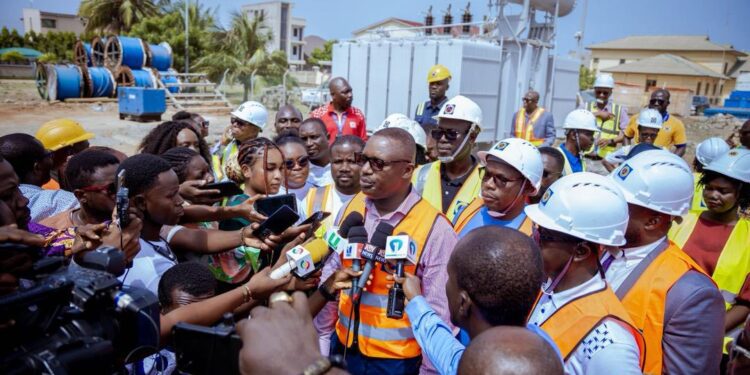
Hon. Dr. John Abdulai Jinapor, the Minister for Energy and Green Transition, has announced the emergency procurement and deployment of 2,500 new transformers as a decisive measure to stabilize the national grid and eliminate the persistent power outages currently affecting parts of Ghana.
This strategic “injection of capacity” is designed to directly address the localized blackouts and voltage fluctuations that have sparked public concern, particularly within the heavy-load urban corridors of Accra and Kumasi.
By prioritizing the distribution segment, the Ministry aims to resolve the immediate supply gaps while laying the groundwork for a more resilient and modern power architecture.
“In total, 2,500 transformers are being procured as quickly as possible to address the shortfalls and improve reliability. These investments are not short-term fixes, but part of a sustained and strategic effort to build a resilient, modern, and future-ready electricity distribution system. We therefore appeal to the public to bear with ECG during this period of intensive upgrades.”Hon. Dr. John Abdulai Jinapor

The initiative marks a significant shift toward rectifying decades of “underinvestment and poor planning” that have left the country’s distribution infrastructure strained under the weight of growing industrial and residential demand.
Dr. Jinapor elaborated that this comprehensive program involves more than just hardware; it includes the upgrading of key primary substations in areas such as Adenta, Teshie-Nungua, and Lashibi, alongside the rehabilitation of overloaded feeders.
He noted that the government had to step in with emergency funding to ensure the Electricity Company of Ghana (ECG) could execute these upgrades, as the technical assessment revealed that “insufficient maintenance of critical infrastructure” was the primary driver of the current system instability.
The Technical Imperative: Why Transformer Injection is Non-Negotiable

The necessity of this massive procurement stems from the fundamental role transformers play as the “invisible architects” of the grid.
In electrical engineering, transformers are critical for voltage adaptation; they step down high-voltage electricity from transmission lines to safer, usable levels for households and businesses.
When a distribution network suffers from “overloaded feeders,” the existing transformers operate beyond their thermal limits, leading to frequent trips, equipment failure, and significant technical losses.
By injecting 2,500 new units, the Ministry is effectively reducing the load on individual nodes, which prevents the overheating and subsequent “pockets of outages” mentioned by the Minister.
This process is vital for improving voltage stability the ability of the system to maintain a consistent voltage level despite fluctuations in demand.
Read also:
- UK Launches AI Tutoring Programme to Support Disadvantaged Students
- CDD-Ghana calls for 10% increase in DACF.
- WHO commends Mahama over Free Primary Healthcare
- Berekum Chelsea set Dominic Frimpong’s funeral for April 29 in Assin Fosu
- South African politician Julius Malema sentenced to five years in prison for gun offenses
Without this intervention, the “strain on the system” would lead to a cascade of failures, damaging consumer appliances and stifling the government’s “24-hour economy agenda.”
Strategic Upgrades in Urban Hubs and Regional Networks

In Accra, the ECG is currently fast-tracking the expansion of substation capacities in Nmai-Dzor and Baatsonaa to “reduce instances of localized outages.”
These high-demand urban centers have outpaced the original design capacity of the grid, making the replacement of “ageing power transformers” a matter of national economic security.
The Minister emphasized that these works are meticulously aligned with broader efforts to “modernize the grid” and support the Ashanti Region’s burgeoning commercial sector.
Furthermore, the “structured distribution enhancement programme” introduced by the Ministry focuses on enhancing fault detection and response times.
By integrating newer, more efficient hardware, the ECG can achieve better power quality and support the integration of renewable energy sources, which is a cornerstone of the Green Transition.
Dr. Jinapor insisted that “timely, transparent, and accurate information” must be provided to citizens as these works progress, ensuring that the public remains informed about maintenance schedules and the long-term benefits of these “necessary inconveniences.”
Operational Efficiency and the Path to Resilience

The government’s strategy extends beyond hardware to include a radical overhaul of operational efficiency and accountability within the utility companies.
Strengthening the ECG’s internal systems is intended to ensure that the newly procured assets are maintained through a “sustained and strategic” culture rather than the “procurement misalignment” of the past.
This involves a shift toward predictive maintenance and better customer engagement to rebuild public confidence in the energy sector.
Ultimately, the deployment of these 2,500 transformers is a pillar of the government’s commitment to providing “reliable, affordable, and quality electricity.”
As these units are installed across the nation, the expected reduction in technical losses will not only stabilize the lights but also improve the financial viability of the energy value chain.
The Minister concluded that while the transition period may be challenging, the result will be a “future-ready” system capable of powering Ghana’s next phase of economic transformation.