
Els: MBN360 Extractives/Energy
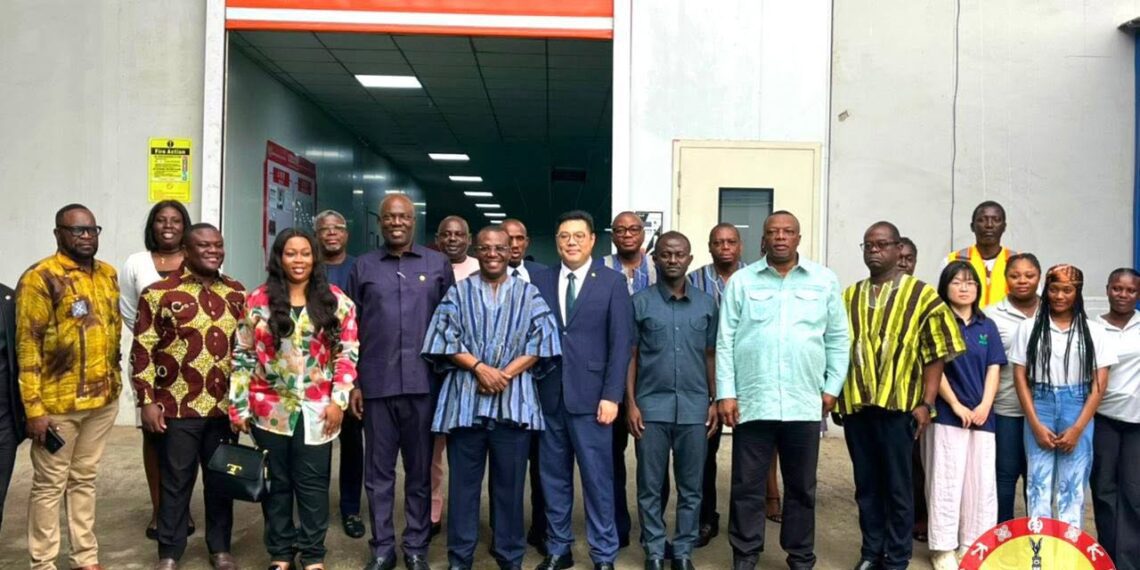
Parliamentary Select Committee on Energy has paid a working visit to Aburi New Energy, a leading solar panel manufacturing company that exports its products to the United States market, to evaluate its production capacity and operational hurdles.
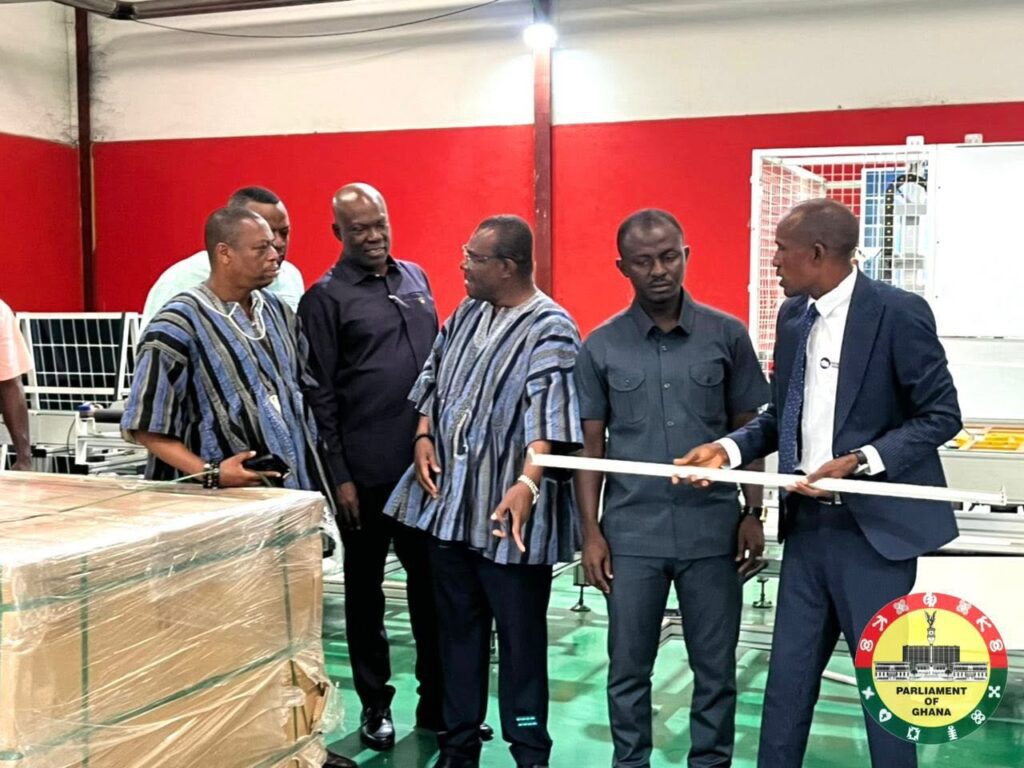
The visit offered the lawmakers a firsthand look at the high-tech assembly lines located within the industrial enclave.
During the assessment, the committee members interacted with executive management and logistics partners to identify regulatory bottlenecks that restrict the factory from distributing its clean energy solutions within Ghana.
“Mr. Ocansey appealed to the Committee to support the company in obtaining the necessary licence to sell its solar panels on the Ghanaian market. He also called for extended port clearing operations beyond 6:00 p.m. to facilitate smoother and more efficient export activities. Chairman of the Select Committee on Energy, Hon. Emmanuel Kwasi Bedzrah assured the company of the Committee’s commitment to engaging the relevant authorities to address the concerns raised.”Parliament of Ghana
The factory tour and subsequent deliberations allowed the legislative delegation to appreciate the massive industrial scale achieved by the renewable energy firm over its brief tenure.
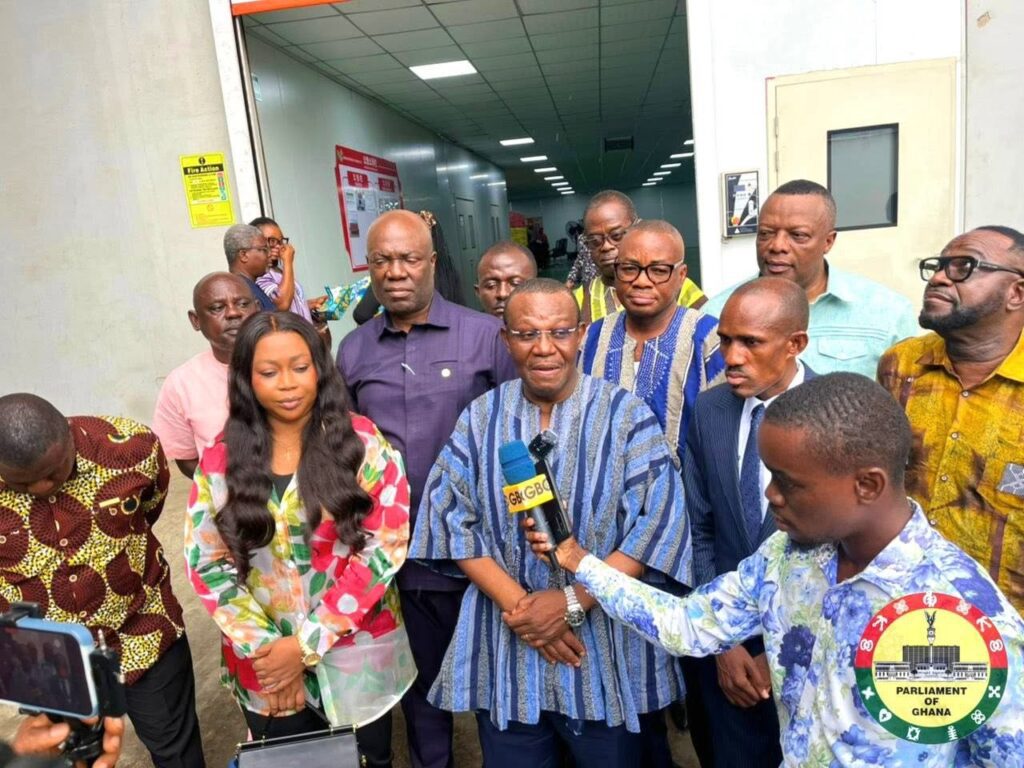
Partner Freight Forwarder, Mr. Bismark Laweh Ocansey, highlighted the company’s remarkable progress, revealing that Aburi New Energy has successfully exported more than 200 containers of solar panels within a year of operations.
To further scale local economic impact, Mr. Ocansey appealed to the Committee to support the company in obtaining the necessary licence to sell its solar panels on the Ghanaian market.
He also called for extended port clearing operations beyond 6:00 p.m. to facilitate smoother and more efficient export activities.
Strategic Growth and Regulatory Frameworks for Domestic Solar Retail
Chairman of the Select Committee on Energy, Hon. Emmanuel Kwasi Bedzrah assured the company of the Committee’s commitment to engaging the relevant authorities to address the concerns raised.
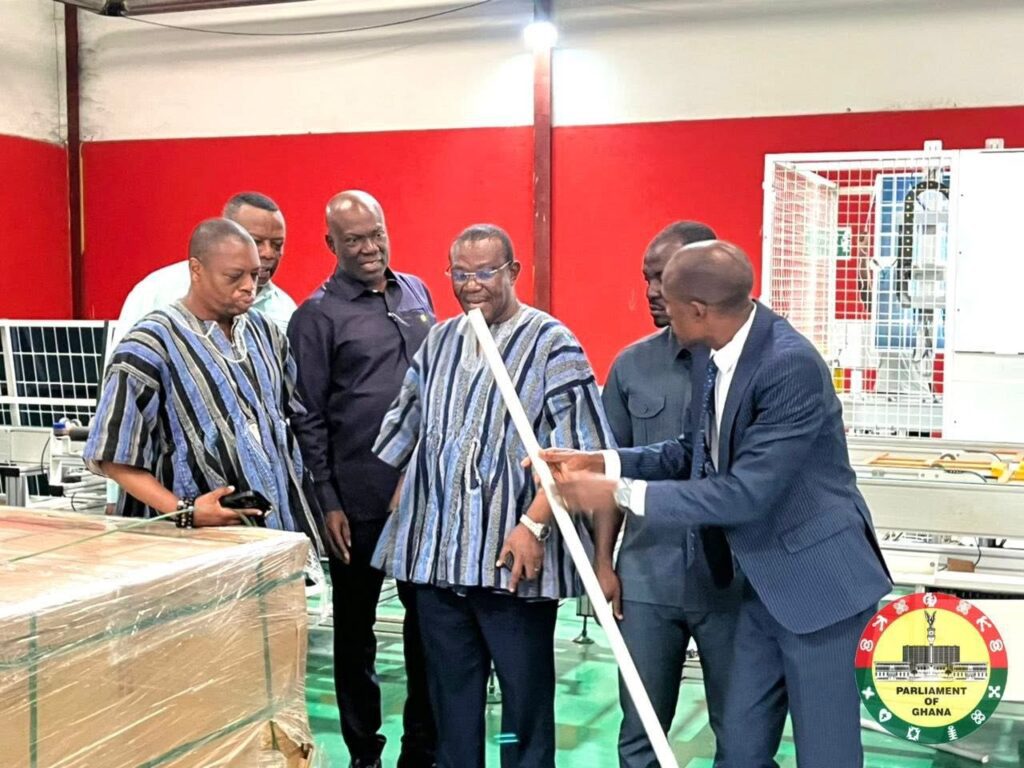
Hon. Bedzrah noted that integrating domestic supply lines aligns perfectly with Ghana’s ultimate renewable energy transition targets.
He further commended the company for its contribution to the renewable energy sector and encouraged it to strengthen its corporate social responsibility initiatives by providing solar energy solutions for schools, hospitals, and other community institutions.
Refining the clearance protocols at the ports of entry emerges as a critical operational necessity for modern manufacturing setups.
Mr. Ocansey maintained that run-in quotes from custom authorities regarding standard closing times frequently limit logistics workflows, stating, “extended night operations are vital for modern supply chains to eliminate cost overheads.”
Read also:
- Israel and Hezbollah agree to ceasefire after intensified fighting threatens US-Iran talks
- NEDCo unveils digital billing revolution to eliminate delays and improve accuracy
- 2026 World Cup: USA beat Australia to sit on top of Group D
- Historic Accra conference adopts landmark Reparatory Justice roadmap as global support grows
- World Refugee Day: Record Displacement Fuels Call for Lasting Solutions
The committee agreed that continuous border and port processing would yield a compounding advantage for local manufacturers competing globally.
Local Socioeconomic and Institutional Benefits of Renewable Energy Integration
Integrating local solar panel production into the domestic retail framework offers immediate socio-economic benefits to public institutions across Ghana.

By answering the Chairman’s call to provide dedicated solar setups for schools and healthcare centers, Aburi New Energy can anchor its corporate social responsibility in sustainable national development.
Deploying decentralized solar infrastructure directly mitigates the operational costs borne by rural clinics and municipal schools, shielding them from traditional grid disruptions and volatile tariff structures.
Furthermore, direct market access for locally manufactured panels drives down the initial capital expenditure for clean energy adoption among ordinary citizens and small businesses.
Currently, high import duties on finished solar modules inflate the cost of green transition projects nationwide.
Sourcing high-tier, locally fabricated photovoltaic systems removes ocean freight costs and external tariffs, transforming clean power from an upscale alternative into an accessible utility for the broader Ghanaian population.
Advancing Ghana’s National Energy Transition and Macroeconomic Stability
From a macroeconomic perspective, introducing over 200 containers of production capacity into the local economy drastically balances Ghana’s clean energy trade metrics.
Retaining a percentage of this high-volume manufacturing output locally helps conserve foreign exchange reserves that would otherwise be spent importing foreign components.
This industrial framework effectively turns Ghana into a sub-regional hub for green technology, matching the structural ideals found in major industrial publications like Vaultz News.
Ultimately, supporting domestic distribution helps Ghana meet its international commitments under the Paris Climate Agreement and its own National Energy Transition Plan.
By removing the legislative boundaries that force manufacturing plants to focus exclusively on Western export channels, the government can directly harness private industrial capacity to power its national grid.
This balanced economic approach secures local jobs, reinforces grid resilience, and establishes a sustainable blueprint for industrial development across the West African sub-region.