ELS: MBN 360
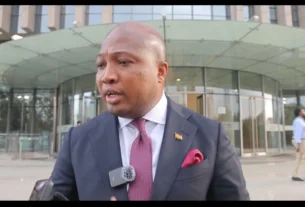
Hon. Kojo Oppong Nkrumah, Member of Parliament and Ranking Member on the Economy and Development Committee, has expressed strong support for the Bank of Ghana’s (BoG) recent policy decision to cease funding the gold board’s purchasing operations.
Addressing the Speaker of Parliament, the Ranking Member welcomed Governor Asiama’s announcement that the central bank will no longer pre-finance the domestic gold purchase programme, describing the move as a long-overdue validation of the Minority caucus’s persistent warnings regarding fiscal distortions and market intervention risks.
“Mr. Speaker, secondly, that structure where they were buying gold high and selling low to get forex to pump onto the market, we are happy that the governor has announced yesterday that he will no longer be funding the gold board. That is an admission that everything we have been saying here in this chamber is true. And now, he’s turning away from that action.”Hon. Kojo Oppong Nkrumah
The Parliamentary Ranking Member underscored that the practice of buying gold at elevated prices and offloading it lower to inject foreign exchange into the market created unsustainable imbalances within the national financial framework.

Hon. Oppong Nkrumah pointed out that despite executive assertions attributing early cedi appreciation to recent government policies, official central bank documentation confirms the currency’s recovery actually commenced in the fourth quarter of 2024.
He emphasized that recent economic indicators published prior to the Monetary Policy Committee meetings revealed a significant $1.2 billion reduction in Ghana’s international reserves, raising critical questions about foreign exchange interventions masked as market “intermediation” alongside the long-term risks of relying on volatile global commodity price peaks.
Fiscal Pressures and Reserve Depletion Dynamics
The Minority highlights how central bank interventions under the domestic gold purchase scheme placed unprecedented stress on national foreign exchange reserves.
According to economic data released ahead of monetary policy deliberations, the drawdowns reduced reserve buffers by $1.2 billion, exposing the vulnerability of relying on high gold volumes and elevated market prices to stabilize local liquidity.
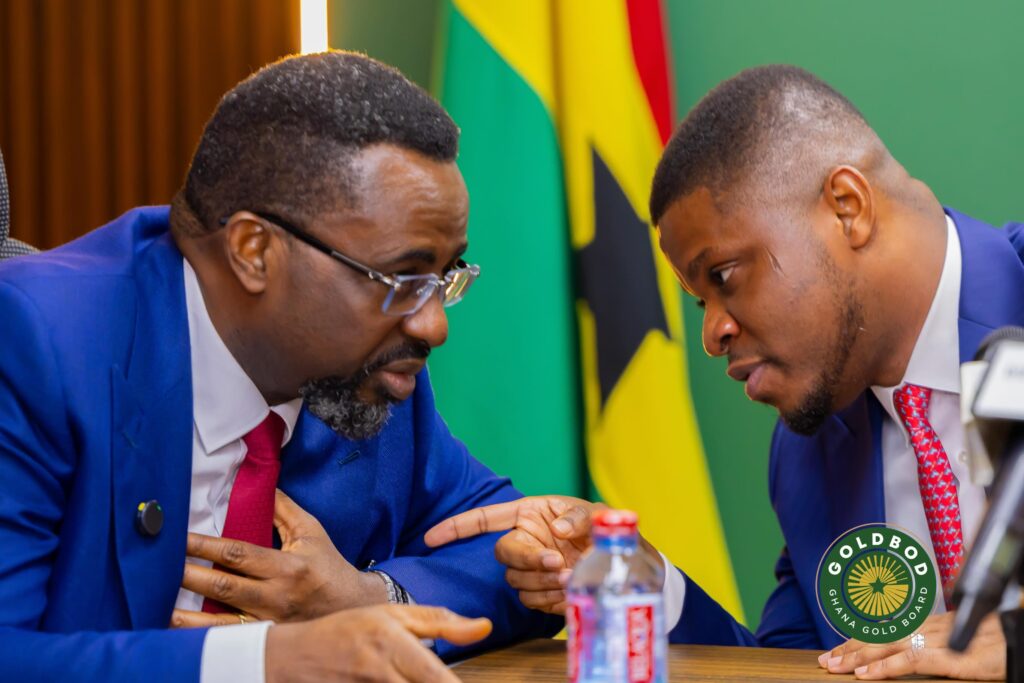
By utilizing gold-backed forex reserves for aggressive market intervention, the central bank absorbed substantial financial losses while attempting to smooth out exchange rate volatility.
Read also:
- VALCO not being sold to Ibrahim Mahama – GIADEC
- AMA announces August National Sanitation Day exercise, orders temporary closure of businesses
- No court sittings in Greater Accra on July 28 and 31 as Judiciary marks Supreme Court’s 150th anniversary
- Mahama assures transfer of UGMC to University of Ghana.
- Fuel prices could go up again this week — COPEC
Hon. Oppong Nkrumah noted that shifting from direct pre-financing toward open-market mechanisms addresses these structural deficits, demanding full transparency from the Ministry of Finance regarding reserve utilization and previous intermediation expenditures.
Macroeconomic Benefits for BoG and the Ghanaian Economy
The policy decision to halt the pre-financing of the gold board provides several immediate and long-term structural benefits to the Bank of Ghana and the broader macroeconomy.
Ending high-cost gold purchases prevents further multi-billion cedi drawdowns, effectively protecting international reserves against external commodity shocks and sovereign rating risks.

Furthermore, ceasing the “buy-high, sell-low” framework eliminates quasi-fiscal operations that previously diluted central bank profitability and expansion capacity.
Transitioning away from direct pre-financing also enhances monetary policy transmission, allowing the monetary authority to rely on interest rate mechanisms rather than artificial liquidity management through excessive sterilization.
Additionally, discontinuing undisclosed forex injections fosters genuine market-driven price discovery for the Ghana cedi, boosting investor confidence and curbing speculative hoarding in the local foreign exchange market.
Strategic Policy Recommendations for Sustainable Growth
To consolidate these gains, the Minority caucus advocated for a complete realignment of fiscal and monetary management strategies going forward.

Hon. Oppong Nkrumah reiterated that maintaining a tight monetary policy stance must not be confused with excessive liquidity sterilization, urging central bank leadership to adhere strictly to the newly announced reforms and avoid repeating past policy missteps.
As Parliament awaits formal briefings from the Minister of Finance, the discontinuation of gold purchase pre-financing signals a pivotal pivot toward institutional transparency and sustainable macroeconomic management for the Ghanaian economy.