
ELS: MBN360 POLITICS
IMANI Centre for Policy and Education has urged Ghanaians to treat the country’s exposure to cocaine trafficking as a problem of organised crime and systemic failure rather than a contest between political parties.
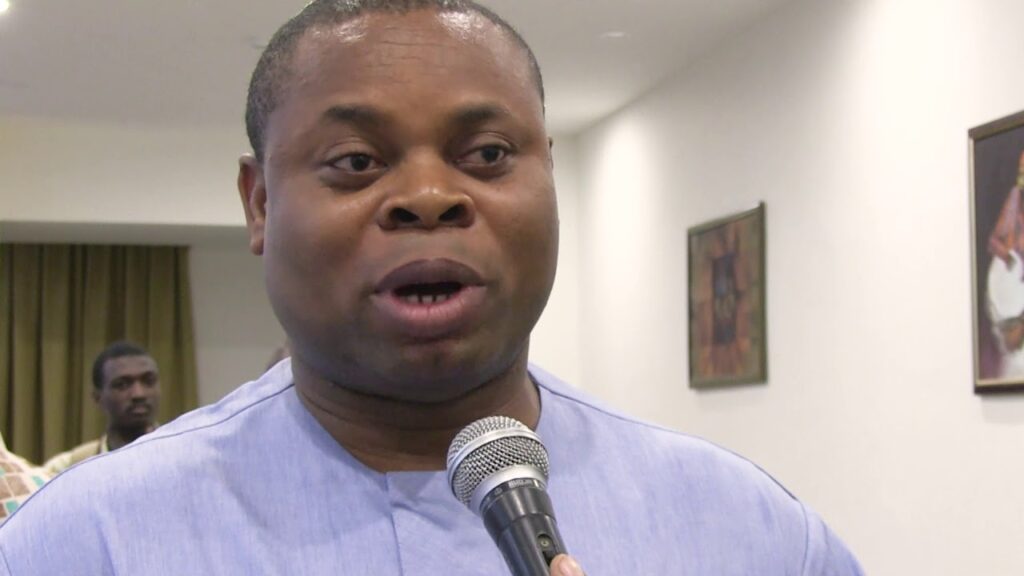
The argument came in an analysis titled “The Last Word on Cocaine Politics,” shared by IMANI Founding President and Chief Executive Franklin Cudjoe on behalf of an unnamed analyst he describes as an IMANI sage.
The intervention arrives as fallout from the seizure of nearly four tonnes of Ghana-origin cocaine in France drives a partisan blame game at home. The analysis shifts attention to the ports, airports and the security personnel who work around them, and sets out a series of changes it argues would make the trafficking network harder to operate.
The Dunkirk Seizure Behind The Debate
French customs seized nearly 3.9 tonnes of cocaine at the port of Dunkirk earlier this month, concealed in a container of plastic waste that had arrived from Ghana and valued at about €225 million.
Four Ghanaians were arraigned before the High Court in Accra on 16 September on charges linked to the shipment and remanded until 13 October. Six others, four of them connected to the Ghana Revenue Authority and facing allegations over the Customs scanning process at Tema Port, have been remanded until 24 September.
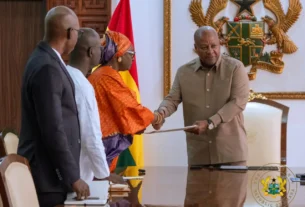
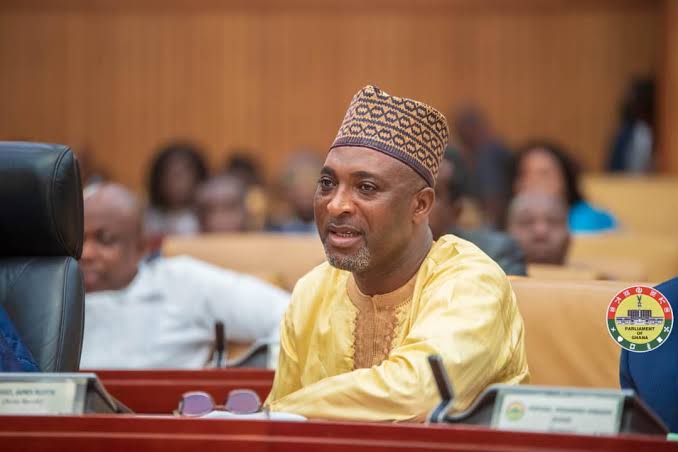
A Dutch fugitive, Jos Leijdekkers, alias Bolle Jos, remains at large. Interior Minister Muntaka Mohammed-Mubarak has said preliminary investigations uncovered suspected collusion by Ghanaian officials, and one media compilation counts eight major Ghana-linked drug seizures over 17 months involving at least 12.7 tonnes of cocaine and suspected cocaine.
Systemic Failures, Not Political Failure
The IMANI analysis frames the culprits as international organised criminals, likening the threat to terrorism, and argues that public debate has missed half of the problem by focusing only on how drugs leave Ghana. A transit country is a corridor, it argues, and the route in matters as much as the route out.
Its diagnosis is compressed into four words. “Systemic failures. Not political failure.” It warns that parties come and go while the network endures, and that fixing blame on politicians ultimately serves the traffickers.
Read also:
One of the analysis’s more provocative arguments concerns how seizures are valued. “Cocaine has no value until it is consumed,” it states, arguing that a consignment’s market value becomes zero once intercepted and that traffickers simply recoup the loss through subsequent shipments.
Authorities, it suggests, should report seizures by weight and quantity rather than by headline street value. It treats every seizure abroad as intelligence for Ghana rather than an embarrassment. “Like Swiss cheese, you plug the holes it went through,” the analysis states, arguing that closing each route gradually shrinks the network’s options.
Take NACOC Out Of Uniform
The most concrete proposals target the Narcotics Control Commission and the security presence at the ports. The analysis questions why NACOC personnel move around the ports in uniform, arguing that visible officers alert the very networks they are meant to watch. “NACOC is intelligence. Not footsoldiers.”
It also claims that ports and airports host more people who are not travelling than those who are, many of them present to facilitate cargo, and makes a pointed allegation about the security services. “There are more off-duty security services personnel at the ports than those on duty.“
Its remedy is a clocking system under which every service member, on or off duty, would register presence at a port, with the record triggering at their headquarters. It further urges intelligence agencies to profile high-walled properties in affluent communities, where it says cocaine is stored, and points to the Ghana Card as the first tool for doing so.
The 2028 Warning
The analysis closes with a forecast. It expects a recurrence as the 2028 elections approach, pointing to November and December as a period of holidays, distraction, and a lowered security posture, and to transition between governments as a window it calls the honeymoon conspiracy.

It likens the capture of ports to party foot soldiers seizing public toilets and markets after a change of power, and insists the problem belongs to no party. The proposals will appeal to a public weary of partisan point scoring, and several echo the Interior Minister’s acknowledgement of insider collusion. The harder question is institutional.
Clocking systems and undercover deployment require the security services to police their own personnel at the ports, and the unanswered test is whether any of them will accept that scrutiny before the next consignment leaves.