ELs: MBN360 UK
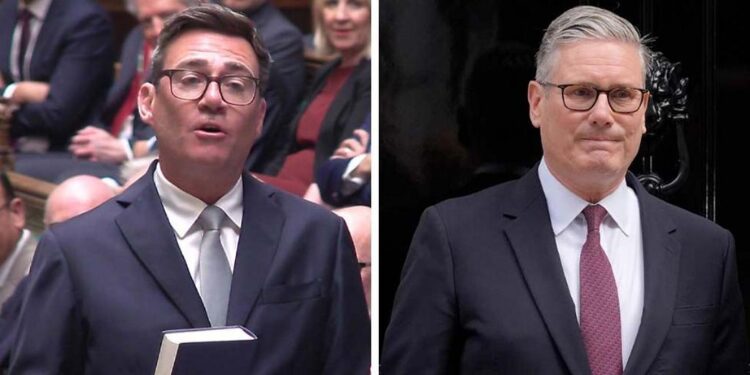
Andy Burnham has officially been sworn in as the new Labour MP for Makerfield just hours after Keir Starmer resigned as Prime Minister, setting in motion a fast-moving leadership contest that could determine Britain’s next occupant of Downing Street within weeks.
The extraordinary political sequence began when Keir Starmer delivered a resignation speech outside 10 Downing Street, confirming that he would step down as Labour leader and Prime Minister, citing a desire to focus on his family.
While Starmer will remain in office as caretaker Prime Minister until a successor is chosen, his announcement immediately reshaped the balance of power within the governing party and triggered an accelerated race for leadership.
Within hours, Burnham who had already secured a decisive by-election victory in Makerfield travelled to Westminster to take the oath as an MP in the House of Commons. The return to Parliament marks a dramatic political comeback for the Greater Manchester Mayor, who had spent nearly a decade outside Westminster politics while building a powerful regional base.
His swearing-in ceremony was met with visible enthusiasm from Labour MPs, with reports of whoops and cheers from a gathering of around 200 parliamentarians who had assembled to witness his return.
The atmosphere reflected the rapid consolidation of support around Burnham, who immediately confirmed that he would stand to replace Starmer as Labour leader and Prime Minister.
This development places Burnham at the centre of what is expected to become one of the most consequential and compressed leadership contests in modern British politics.
Early indications suggest he has already secured backing from key figures within the party, including former Health Secretary Wes Streeting, who had previously positioned himself as a potential contender for the leadership.
Streeting’s support is widely viewed within Westminster as a pivotal shift that could significantly narrow the field of challengers and strengthen Burnham’s position among Labour MPs.
Despite the speed of events, political tensions remain high across Westminster. Opposition leaders seized on the resignation to call for broader democratic accountability, with Reform UK leader Nigel Farage urging an immediate general election and describing the situation as “Italian-style farce politics.”
Conservative leader Kemi Badenoch has also pressed for a national vote, arguing that any incoming Prime Minister should face the electorate.
Read also:
- Fix Kasoa–Winneba Road or face 20% fare hike from June 29 – Transport operators warn gov’t
- French Football Mourns Young Guingamp Player Kenzo Kies After River Tragedy
- Meet Kevin Akoto and friend being paid $50,000 to watch every single World Cup match
- Drug Peddling In Schools Rising — NACOC Deputy Director
- Teyana Taylor Invited to Join Prestigious Academy Voters Roster
Labour Party in Transition as Leadership Race Unravels
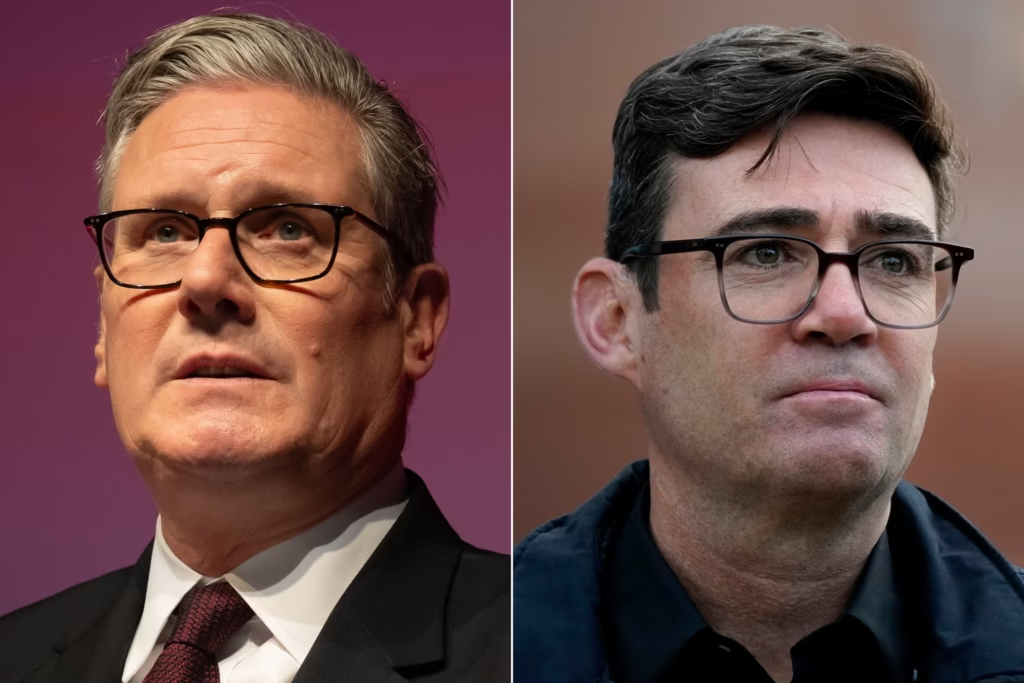
Labour Party is now grappling with the mechanics of an accelerated leadership transition that few within the party had anticipated would unfold so quickly.
Senior figures suggest that Burnham’s entry into Parliament has fundamentally altered the dynamics of what was expected to be a contested and potentially divisive leadership race.
His immediate declaration of candidacy has drawn support from influential MPs and triggered urgent discussions about whether a formal contest is necessary at all.
Some within the party argue that Burnham’s broad support base and recent electoral momentum make him the inevitable successor, reducing the need for a prolonged internal battle. Others, however, warn that bypassing a full leadership contest could deepen internal divisions and undermine democratic legitimacy within the party.
Moreover, speculation remains that other senior Labour figures may enter the race for the premiership, including ministers who are concerned about the prospect of an uncontested leadership handover.
The increasing opposition narrative that Labour is about to enter a period of instability was brought to light by Conservative Leader Kemi Badenoch’s intervention in the House of Commons. She expressed concerns over defence and national security policy, criticising Burnham’s lack of participation in Westminster debates during his immediate post-election transition, and stated that a change in leadership shouldn’t take attention away from pressing government obligations.
In response, David Lammy defended the government’s record and rejected claims of dysfunction, insisting that Labour remained focused on delivering stability during a sensitive political period.
Yet even within Labour ranks, there is an acknowledgement that the party is navigating unfamiliar territory. While Starmer’s resignation removes immediate uncertainty about whether he would face a leadership challenge, it also opens a compressed and potentially unpredictable succession process.
Nominations are expected to define the speed and structure of the contest, with the possibility of an uncontested leadership transition gaining momentum.
If Burnham fails to face a challenger, his ascent to Downing Street could be confirmed within weeks marking one of the fastest transfers of political power in recent British history.
For now, however, the political focus remains firmly on Westminster, where a newly sworn-in MP has, within hours, become the central figure in a leadership race that will determine the future direction of the United Kingdom.