
Els: MBN360 Extractives/Energy
Afreximbank (African Export-Import Bank) announced in its latest commodity report that Africa is on track to triple its share of global lithium production within the next five years, driven by a powerful surge in global demand for clean energy and high-technology infrastructure.
The pan-African trade lender highlighted that the continent could supply up to 15% of the world’s lithium by the early 2030s, soaring from a modest 4% share recorded in 2023.
This massive expansion is being propelled by accelerating investments in critical battery minerals, positioning Africa as the world’s fastest-growing lithium-producing region in the modern industrial era.
“Transforming lithium resources from countries such as the Democratic Republic of Congo into batteries and related clean-energy technologies, will help to position Africa as a hub for green industrialisation and high-skilled job creation.”Afreximbank (African Export-Import Bank)
The institution explained that the intensifying global race for battery metals is fueled by the rapid growth of electric vehicles, renewable energy storage systems, and expanding infrastructure for artificial intelligence (AI) data centers.

This demand comes at a time when global supplies face constraints due to an underinvestment down-cycle between 2022 and 2025, alongside structural challenges such as declining ore grades, water shortages, and regulatory permitting delays.
In its latest commodity bulletin, Afreximbank noted that “Africa has rapidly emerged as the fastest-growing producing region globally,” prompting the lender to scale up its technical and financial support for strategic mineral processing and integrated industrial value chains.
Retaining Value Through Local Processing and Export Curbs
Resource-rich African economies have consciously moved away from the historical precedent of merely exporting cheap, unrefined raw ores to industrialized nations.
To capture the true value of global commodity demand, governments in nations like Zimbabwe, Namibia, Ghana, and the Democratic Republic of Congo have systematically tightened regulatory frameworks and enacted strict controls on raw mineral exports.
By enforcing domestic refining and upgrading operations, these nations ensure that the economic windfall from the lithium boom remains within local borders rather than being fully exported overseas.
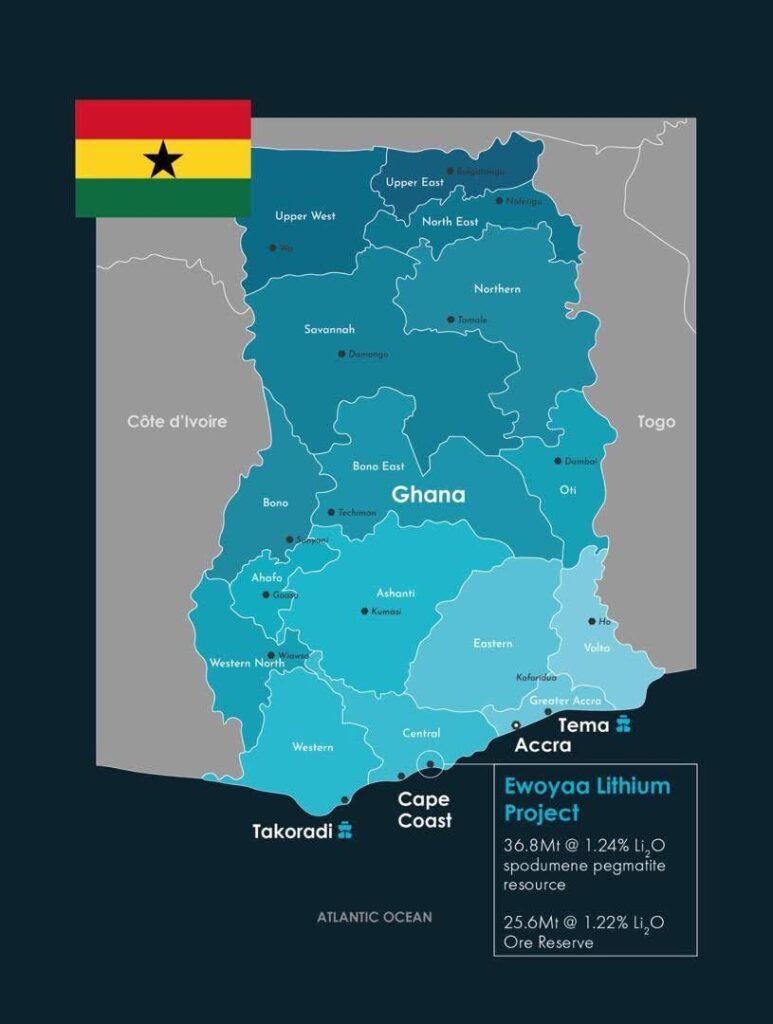
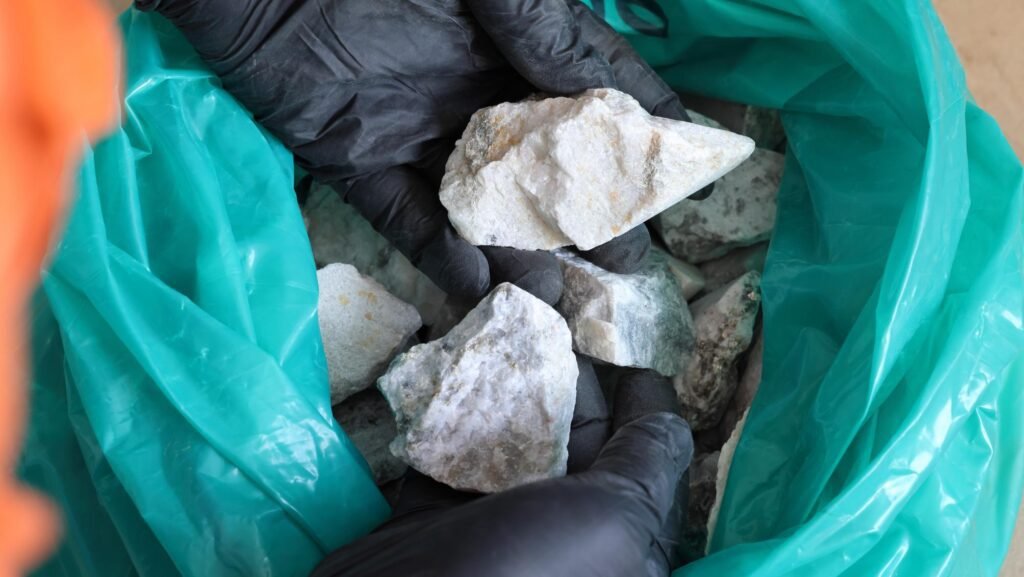
This paradigm shift addresses the persistent “resource curse” by keeping processing profits on-continent. Analysts point out that producing battery-grade lithium carbonate or hydroxide locally can increase the value of the exported product by multiple factors compared to raw spodumene ore, providing essential tax revenues that governments can reinvest in national infrastructure.
Read also:
- Auditor-General uncovers GH¢5.26bn in financial irregularities across MDAs in 2025
- Belgium ends US World Cup dream with 4-1 win in Round of 16
- Will Smith and Jada Pinkett reportedly reunite after years of separation
- Stephen Appiah set to light up 5th Edition of All Star Festival at Legon
- Every Player Knows What’s at Stake, Says Black Maidens’ Coach Ahead Senegal Clash
Boosting Regional Trade and Green Industrialization via AfCFTA
The ambitious target of producing 15% of the world’s lithium supply aligns directly with broader economic transformation goals outlined under the African Continental Free Trade Area (AfCFTA) framework.
Critical minerals serve as the fundamental backbone for the continent’s budding industrial policies, which actively aim to stimulate regional manufacturing hubs and integrated cross-border trade.
Instead of individual countries operating as isolated mineral exporters, the AfCFTA enables cross-border supply chains where raw lithium mined in one sub-region can be sent to a neighboring regional hub equipped with advanced chemical processing plants or battery assembly facilities.

This collaborative mechanism reduces dependency on external markets while creating a highly integrated internal market for clean technology.
Furthermore, establishing a pan-African clean-energy supply chain strengthens economic resilience, allowing local automotive and energy firms to access affordable storage solutions to stabilize domestic electrical grids.
Economic Diversification, High-Skilled Employment, and Resource Security
Beyond raw financial gains, the acceleration of battery mineral investments promises deep structural benefits for African labor markets and technological advancement.
Moving into higher-value manufacturing stages transforms local economies from basic agrarian or primary extraction models into knowledge-based industrial powerhouses.
The establishment of domestic refining facilities, battery component factories, and secondary engineering sectors naturally generates thousands of high-skilled, sustainable jobs for Africa’s rapidly growing youth population.
It also fosters localized technical expertise, encouraging universities and research institutes to invest in material sciences and metallurgical engineering programs.
Moreover, despite recent price fluctuations triggered by short-term supply recoveries, lithium remains a top-performing global commodity with strong long-term fundamentals due to the continuous growth of electric vehicles and AI data centers.
By securing a dominant position in this inevitable energy transition, the continent effectively insulates its macroeconomic outlook against traditional fossil fuel volatility, laying down a sustainable foundation for long-term prosperity.