ELS: MBN360 BUSINESS
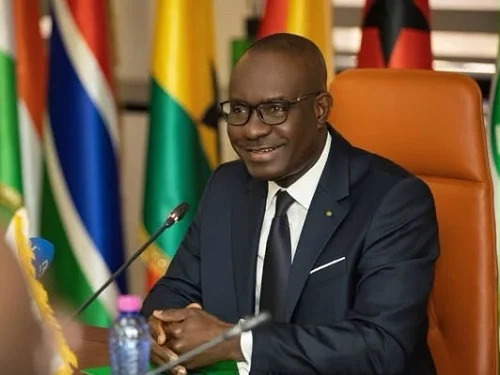
Africa’s quest for industrialisation will remain a mirage if the continent fails to address its energy deficit, President of the ECOWAS Bank for Investment and Development (EBID), Dr George Nana Agyekum Donkor, has warned.
He made the remarks at the 2026 Future of Energy Conference (FEC) in Accra, organised by the Africa Centre for Energy Policy (ACEP).
Speaking on the theme, “Transformation: Energy Systems for Value Addition and Competitiveness,” Dr Donkor conveyed greetings from EBID, the development finance institution of the 15 ECOWAS member states, and commended ACEP for sustaining the dialogue series for more than a decade.
“Organising conferences of this quality for many years is no mean achievement. The fact that ACEP continues to draw audiences from across the continent is a testament to the quality of these dialogues and the practical recommendations they offer for securing a sustainable energy future,” he said.
According to him, the theme chosen for this year’s conference was not only timely but essential.
“For decades, Africa has powered the world but not powered itself. We have been exporting raw cocoa, raw crude oil, raw bauxite, raw gold, and importing finished goods at higher prices. We have lit up other continents while over 600 million of our own people remain in darkness,” Dr Donkor said.
He said Africa’s past industrialisation strategies had failed not only because of inadequate feasibility studies and poor planning, but also because of infrastructure gaps, particularly the lack of reliable and affordable electricity.
“Let me tell you the hard truth: Africa cannot industrialise in the dark. An industrial revolution cannot take off without a robust energy arrangement behind it. Value addition needs power; competitive industries need reliable, affordable and sustainable power,” he stressed.
Citing data from the African Development Bank (AfDB), he said Africa needed US$25 billion annually to achieve universal access to electricity.
Read also:
- Parliament to probe disputed GH¢22bn GoldBod loss – Speaker Bagbin
- Ethiopia makes official bid to host Africa Cup of Nations in 2028
- We can’t competitively refine copper if electricity is unreliable – AMDC boss
- Sarkodie Sets Rapperholic 2026 for Kumasi Stadium October
- King Promise and Mr Eazi Earn Headies Collaboration Nomination
He added that beyond access, the continent needed industrial-grade energy capable of supporting large-scale production and value addition.
Dr Donkor disclosed that EBID recognised the central role of energy in industrialisation and had, as of June 2026, committed more than US$1 billion across the energy value chain.
The funding covers conventional and renewable power generation, transmission and distribution, as well as fuel procurement to support economic activity.
He said under its Growth, Resilience and Optimisation (GRO) Strategy, EBID would commit a minimum of US$2 billion to the energy sector by 2030.
Dr Donkor called for deliberate policymaking and greater policy coordination to develop modern, reliable, affordable and diversified energy systems capable of supporting manufacturing, agro-processing, mining, digital industries and urban development.
He said such measures were necessary to avoid repeating the failures of previous industrialisation efforts.
He noted that electricity access across the continent stood at a maximum of 63%, with significant regional variations.
While North African countries have achieved near-universal access, countries such as Ghana and South Africa have access rates of more than 90%.
However, he said, Sub-Saharan Africa averages only 53% access, with some countries in Central and Eastern Africa lagging significantly behind.