ELS: MBN360 Business
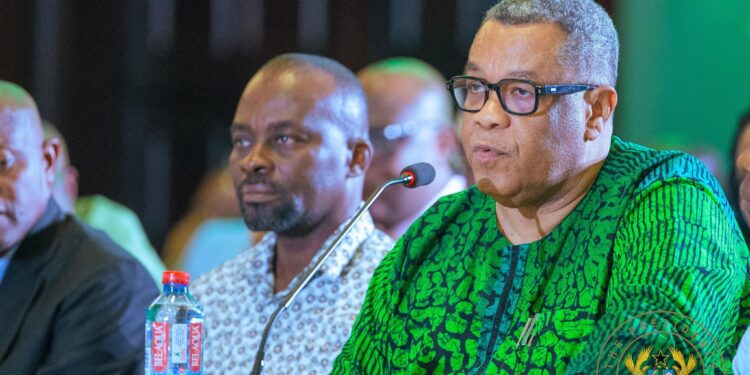
Augustus Goosie Tanoh, Presidential Advisor on the 24-Hour Economy and Accelerated Export Development
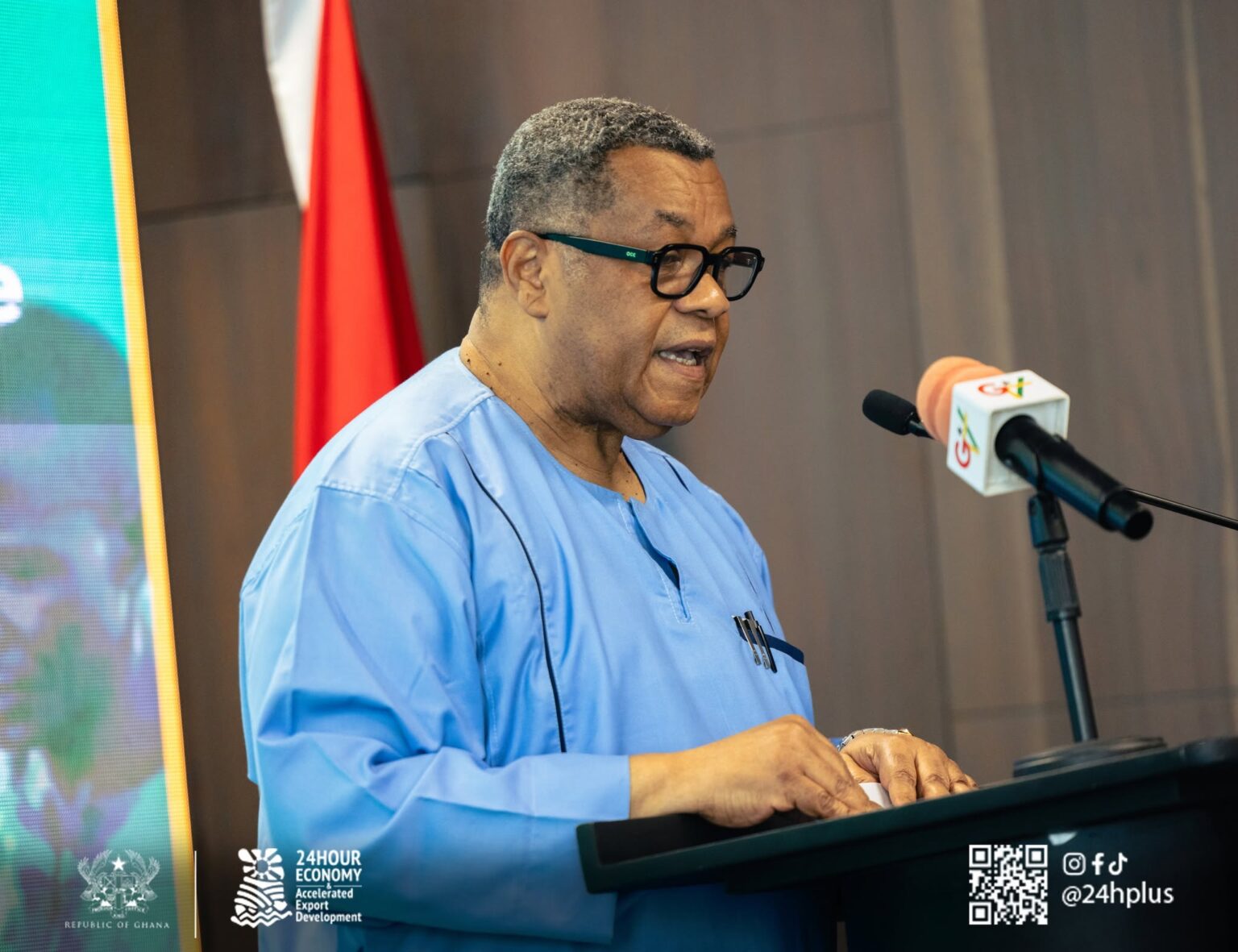
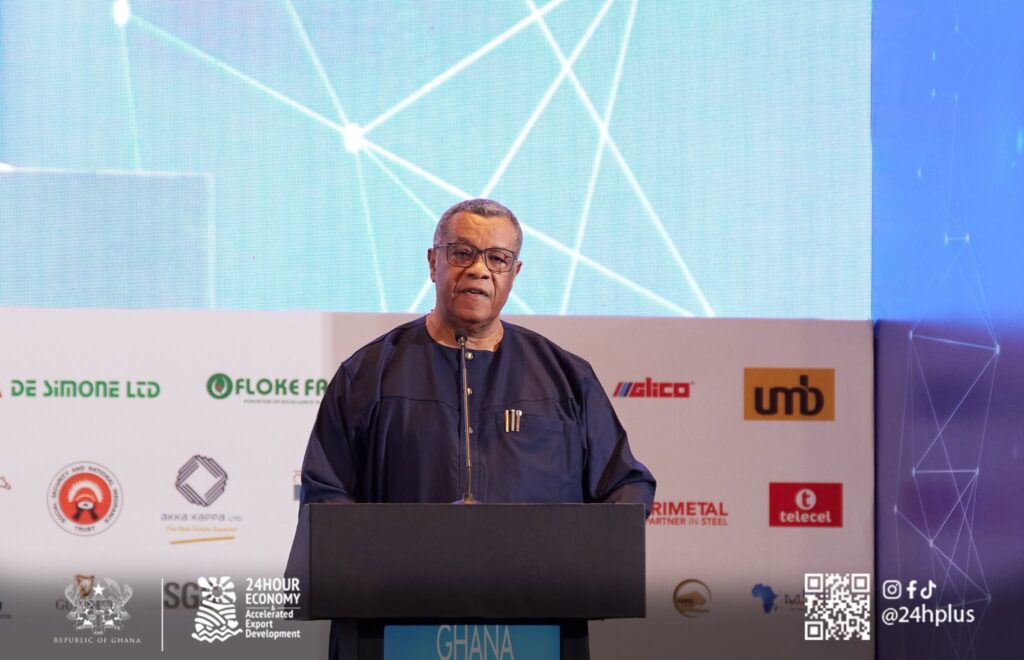
Augustus Goosie Tanoh, Senior Presidential Advisor and Coordinator of the 24-Hour Economy and Accelerated Export Development Secretariat, has outlined an ambitious vision for Ghana’s industrial future, telling a business forum in Canada that the country’s 24-Hour Economy programme aims to make Ghana an industrial powerhouse of productivity by 2035.
Speaking to an audience of investors and business leaders, Mr Tanoh explained that the 24-hour economy and accelerated export development programmes exist to consolidate efforts toward building an economy that produces what it consumes and exports more value than it imports.
He framed the morning’s discussion around three central tools for achieving that goal: infrastructure, electric mobility, and sustainable real estate.
Mr Tanoh identified energy as the element binding all three tools together. He said the cost of power determines whether a factory remains competitive, whether an electric bus proves cheaper to run than a diesel one, and whether a home stays affordable to build and to live in.
“Affordable, reliable, and sustainable power is where competitiveness begins,” he said, positioning energy policy as the foundation upon which the rest of Ghana’s industrial ambitions must rest.
Painting a Picture of Ghana in 2035
Mr Tanoh invited his audience to imagine Ghana nine years from now, painting a detailed picture of what the country could look like once these investments mature.
At Kwahu Afram Plains in the Eastern Region, he said, farmers and food companies operating within agro-industrial parks will be turning cassava into industrial starch and tomato paste. In Kabole in the Oti Region, an oil palm estate and mill will sustain roughly 120,000 livelihoods.
He described barges carrying grain and containers down the Volta Lake to southern ports, while electric trucks and buses move people and goods along charged transport corridors.
Cargo planes, he said, will lift fresh produce from Tamale into regional and European markets, and iron ore from Shani will leave Ghana’s mills transformed into finished steel.
Workers across this economy, Mr Tanoh added, will live closer to their jobs in decent, energy-efficient homes built using Ghanaian materials. “This is the Ghana of the future we’re beginning to build now,” he told the forum.
The Programme’s Core Targets
The 24-Hour Economy stands as a flagship initiative of the Mahama administration, designed to transform Ghana into a self-reliant, export-led economy. The programme incentivizes businesses to operate around the clock through a multi-shift system, with youth unemployment as one of its central targets.
Read also:
- Treasury bill auction attracts GH¢10bn in bids, oversubscribed by 77%
- Decolonise Ghana’s curriculum – Former NaCCA DG to gov’t
- Failed Leadership Behind Ghana’s Recurring Flood Crisis – Archbishop Duncan-Williams
- Miracles Aboagye and others are being probed over alleged misappropriation of GHS55m – EOCO
- Bono Region records 1,145 new HIV infections from January to May 2026
According to figures presented alongside Mr Tanoh’s remarks, the initiative aims to create 1.7 million jobs by 2028. It has already attracted $11 billion in prospective investments within its first year, while officials estimate the programme requires $4 billion in funding over five years for complete setup.
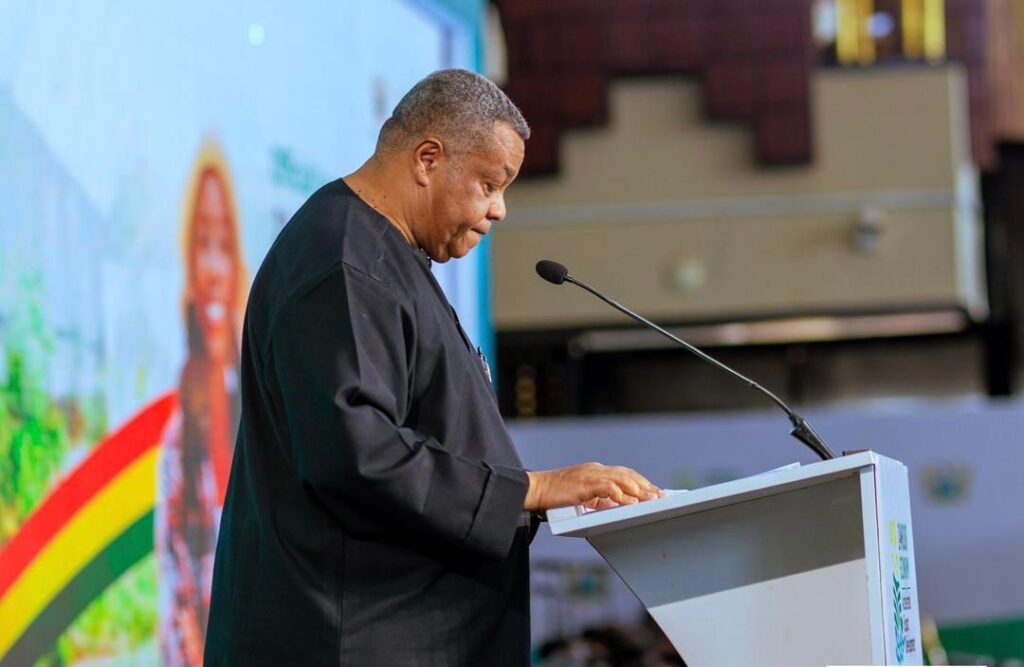
The government projects a nine-year timeline for Ghana to become fully competitive and industrialized, placing 2035 as the target horizon Mr Tanoh referenced in Canada.
Three Strategic Anchors Guide the Framework
Mr Tanoh has previously presented the policy framework to Ghana’s Parliament, describing it as resting on three interconnected pillars.
The first, production transformation, builds on modernized agriculture to scale value chains such as poultry, oilseeds, and grains, with a specific goal of eliminating heavy import bills, including Ghana’s $200 million annual poultry import expense, in order to protect the cedi.
The second pillar, supply chain and market efficiency, focuses on lowering logistics costs and upgrading transport connections, including plans to use the Volta Lake as a lower cost distribution channel and to revive existing industrial zones.
The third pillar, human capital development, centers on upgrading digital skills and executing the Aspire 24 programme, an effort aimed at reorienting workers’ mindsets toward competitive global manufacturing and services.
Legislation and a Market Driven Approach
The programme has gained formal institutional backing following the passage of the 24-Hour Economy Authority Act, 2025. Mr. Tanoh has noted that over 450 institutions were consulted in refining the legislation, reflecting an extensive consultation process behind the bill’s final form.
The Secretariat has consistently emphasized that the 24-hour system relies on business incentives rather than government mandate.
Under this approach, government action focuses on establishing favorable marginal cost regimes, infrastructure, and security conditions that encourage businesses to voluntarily adopt 8-hour shift rotations rather than being compelled to do so.
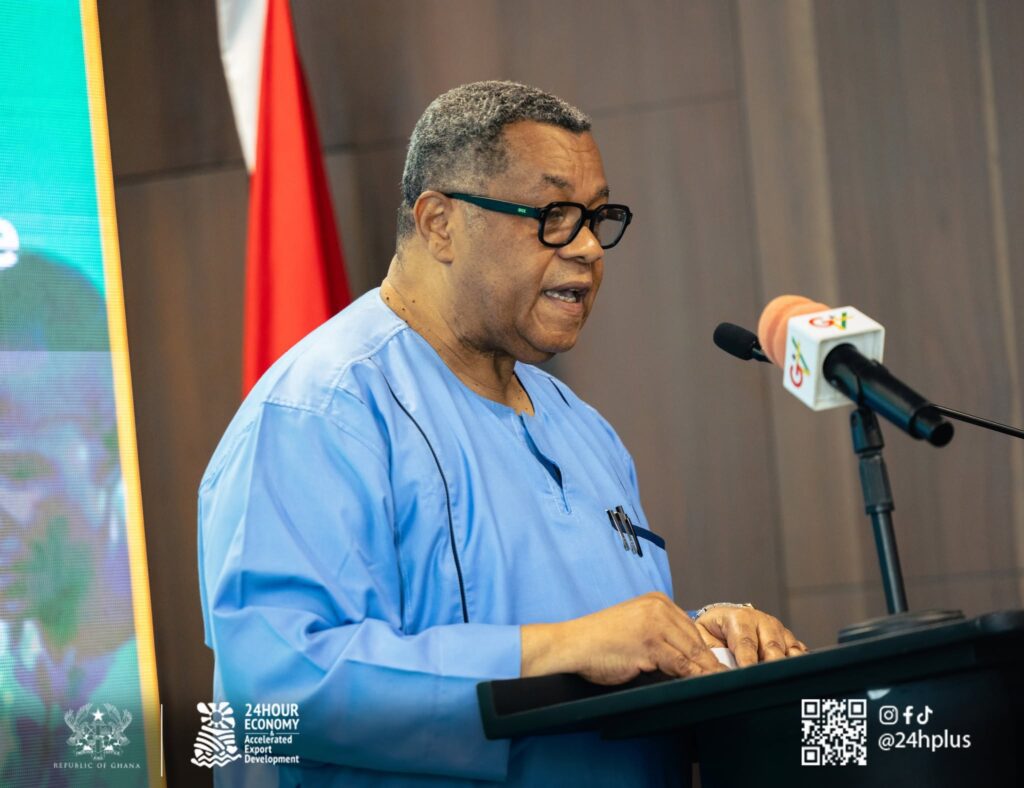
The initiative has also moved to secure large scale private sector partnerships to support its infrastructure goals.
Among the notable agreements is a $700 million deal signed with international partners covering local chemical plants and gold recovery projects, an early indication of the kind of investment the programme hopes to continue attracting as it builds toward its 2035 target.
Mr Tanoh’s remarks in Canada offered a vivid, forward looking account of what Ghana’s economy could resemble under sustained execution of the 24-Hour Economy programme.
Whether the vision of cassava processing in Afram Plains, oil palm production in Kabole, and steel manufacturing from Shani iron ore materializes as described will depend heavily on how effectively government and private partners translate the programme’s three strategic pillars into functioning infrastructure over the coming decade.