
ELS: MBN360 Extractives/Energy

After years of declining crude oil production that weighed on petroleum revenues and raised concerns about the future of Ghana’s offshore oil sector, the Jubilee Field is showing renewed signs of recovery following an intensive drilling programme that is lifting output to its strongest levels in recent years.
The rebound is expected to improve government petroleum revenues, strengthen investor confidence and provide additional resources for national development, although the long-term economic impact will depend on how effectively Ghana manages the additional income generated from the field.
New drilling campaign reverses years of declining output
According to an operational update released by Kosmos Energy, Jubilee produced an average of about 72,000 barrels of oil per day during the second quarter of 2026, with production exceeding 85,000 barrels per day by the end of the quarter after the successful commissioning of the J76 production well.
The company said the J76 well, which came on stream in mid-June, is currently contributing roughly 20,000 barrels of oil per day, making it one of the strongest-performing wells drilled under the 2026 campaign. A second producer well, J77, has also been completed and is expected to begin production shortly, with Kosmos projecting that total Jubilee output could rise to approximately 90,000 barrels per day.

A further producer well, J50, is expected to come online before the end of July, while a water injector well scheduled for later this year will help maintain reservoir pressure and prepare the field for the next drilling campaign planned for 2027 and 2028.
Kosmos attributed the improved performance to modern seismic imaging, enhanced reservoir modelling and continued investment in field development.
Initial results from the 2026 Ghana drilling program, in particular J76, highlight the potential of Jubilee with high-impact wells, supported by both modern seismic and enhanced reservoir modelling.Andrew G. Inglis, Chairman and Chief Executive Officer of Kosmos Energy.
Why the recovery matters beyond the oil industry
The significance of Jubilee’s recovery extends well beyond higher crude production.
Petroleum remains one of Ghana’s most important sources of export earnings, foreign exchange and government revenue. When production declines, the impact is felt across public finances, reducing the resources available for infrastructure, social programmes and petroleum-funded development initiatives.
The production increase therefore comes at a time when Ghana is working to strengthen fiscal stability while pursuing industrialisation, economic recovery and improved management of its natural resources.
Earlier reports from the Public Interest and Accountability Committee (PIAC) highlighted declining production from Jubilee during 2025, while official petroleum revenue data also reflected weaker inflows resulting from lower production and changing global market conditions.
The latest operational improvements therefore represent an opportunity to stabilise petroleum receipts if production gains are sustained.

However, higher production alone does not automatically translate into broad-based economic benefits. PIAC has consistently emphasised the importance of prudent petroleum revenue management, transparency and accountability in ensuring that Ghana’s oil resources deliver long-term value.
As production increases, attention is therefore likely to shift from operational performance to how additional revenues are allocated and invested under Ghana’s Petroleum Revenue Management framework.
Licence extensions provide longer investment horizon
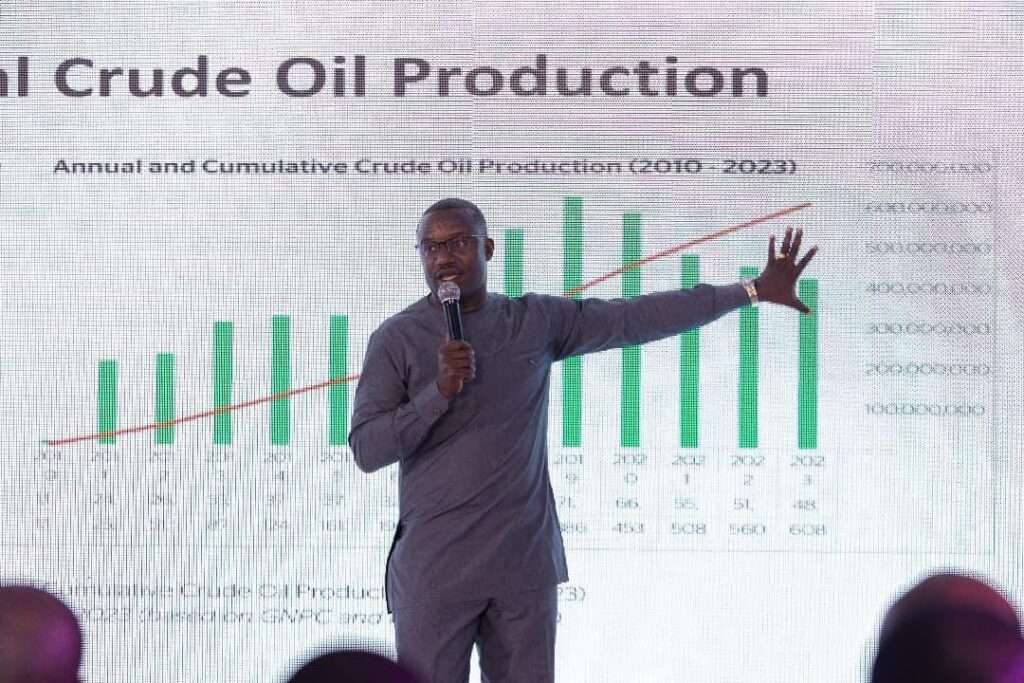
The renewed drilling campaign follows Parliament’s ratification earlier this year of agreements extending the licences for the Jubilee and TEN fields to 2040, providing operators with greater certainty to undertake long-term investment.
Read also:
- Community Led Climate Action Deserves Stronger Policy Support -Rt. Hon. Bagbin
- Oil Production Decline Hits Ghana’s Petroleum Revenues
- Google probed by Swiss regulator over Android default search feature
- Petroleum price floors increased for the second half of 2026 July pricing window.
- Ato Forson to Present 2026 Mid-Year Budget Review July 23
The extension allows additional drilling programmes designed to maximise recovery from Ghana’s mature offshore assets while also increasing the future equity participation of the Ghana National Petroleum Corporation (GNPC).
Beginning in 2036, GNPC’s participating interest in the fields is expected to increase, potentially allowing the state to capture a larger share of future petroleum revenues while maintaining investor confidence through longer licence terms.
The extended licences also permit further drilling campaigns over the coming years, creating opportunities to sustain production from fields that have formed the backbone of Ghana’s upstream petroleum sector since commercial production began in 2010.
Revenue gains will depend on governance as much as production
While higher production could improve government finances, analysts continue to caution that increased output alone does not automatically translate into broad-based economic development.
The Africa Sustainability Matters analysis, which examined the significance of Jubilee’s recovery, argues that the production rebound represents both an operational success and a governance test for Ghana’s petroleum sector.
The publication notes that the country’s ability to convert higher production into lasting economic benefits will depend on effective petroleum revenue management, transparent institutions and sustained investment in productive sectors rather than increased oil exports alone.

That assessment reflects concerns frequently raised by PIAC, which has consistently emphasised the need for prudent utilisation of petroleum revenues under Ghana’s Petroleum Revenue Management framework to maximise long-term national benefit.
As production increases, attention is therefore likely to shift from operational performance to how additional revenues are allocated and invested.
Ghana’s petroleum future depends on effective resource management
The renewed momentum at Jubilee highlights the importance of maintaining strong governance systems as Ghana continues to develop its petroleum resources.
The country’s upstream sector has generated significant revenues since commercial production began, but oversight institutions have repeatedly stressed that resource wealth must be managed carefully to create lasting economic benefits.

For Ghana, stronger production from Jubilee provides an opportunity to improve petroleum receipts and increase the resources available for national development. However, ensuring that these gains translate into meaningful economic outcomes will require continued transparency, accountability and disciplined investment decisions.
The increased future equity participation of GNPC also presents an opportunity for the state to capture greater value from its petroleum assets, provided that the institution is supported with the capacity and governance structures required to manage its expanding role effectively.
Stronger production presents opportunity and responsibility
The recovery at Jubilee offers encouraging signs for Ghana’s upstream petroleum industry after several years of production decline.
Higher output could improve export earnings, strengthen foreign exchange inflows, support government revenue and restore investor confidence in the country’s offshore petroleum sector.

However, the longer-term significance of the recovery will depend less on the number of barrels produced than on how effectively the resulting revenues are managed.
As Ghana seeks to maximise value from its petroleum resources, Jubilee’s resurgence provides an opportunity to demonstrate that mature oil assets can continue creating national value when supported by sustained investment, sound regulation and transparent revenue management.