ELS: MBN360 Features,
On August 15, audiences gathering at AfriFest East will experience far more than a music festival. They will be immersed in stories that reconnect people with the idea of home through masquerade performances, traditional fireside storytelling reminiscent of village life across Africa, and performances from internationally acclaimed artists, including Kenyan percussionist Kasiva Mutua, Ghanaian performer Kweku KOG, and Juju music exponent Emperor Seye Paul.
Urban music performances will close the day, featuring a performance from Timaya, Nigeria’s Bayelsa State and national music icon. It will be a festival that seeks to recreate the sights, sounds and memories of home while celebrating the richness of cultures from across Africa.
Against this backdrop, another story will begin.
On the festival grounds, Ban’tikar will launch the next chapter of its journey by unveiling the concept behind its debut album project, Mboka, which is scheduled to be recorded in London next year. The occasion will also mark the band’s second anniversary, having been nurtured as one of AfriFest East’s pilot projects and performing at the festival throughout its first two editions.
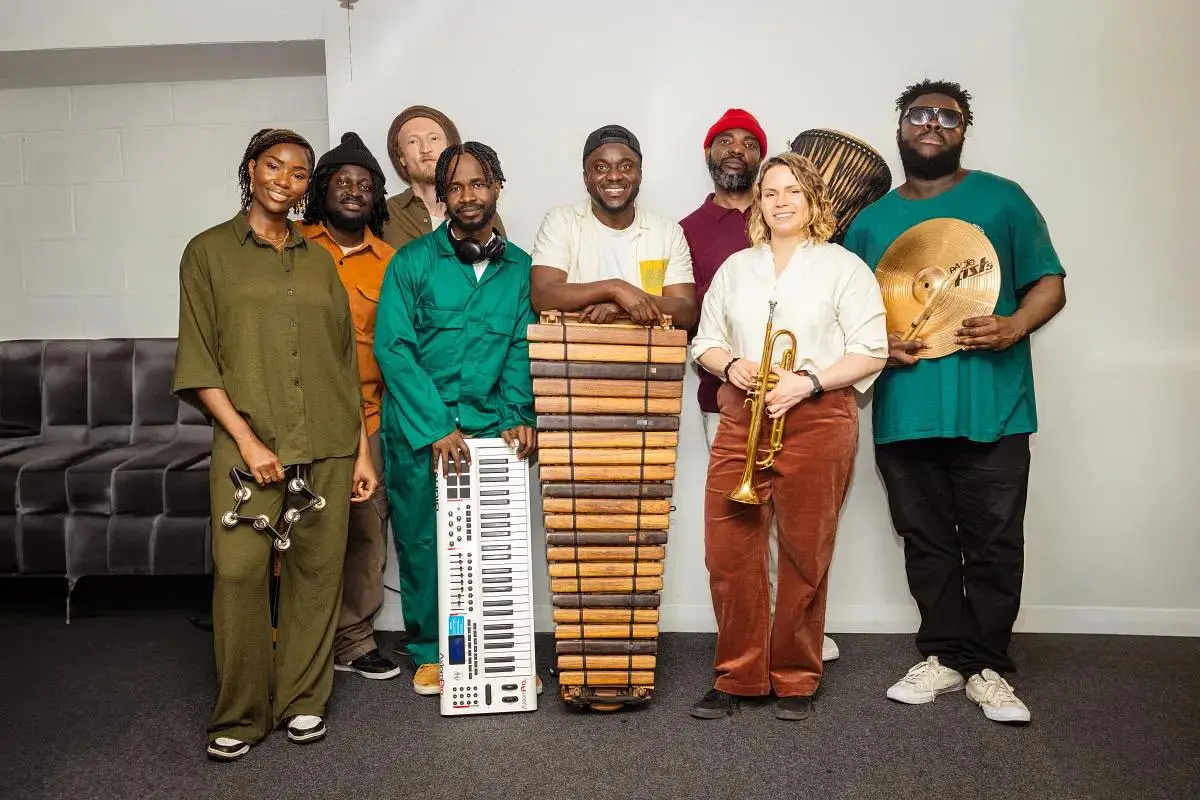
Ban’tikar is a multicultural ensemble bringing together musicians from Cameroon, Ghana, the Democratic Republic of Congo, Chad, Jamaica, Ireland and Britain. Its name combines Bantu and Tikar, reflecting the diversity of African cultures while embracing the communities that now call Britain home.
Led by Cameroonian balafonist, composer and music educator Obase-Aboli, Ban’tikar was founded to explore a question that resonates with millions of people around the world:
Where is home?
That question lies at the heart of Mboka, a word meaning “home” in several Central African languages, but drawn particularly from the Orocko language of Cameroon.
For many members of the band, Britain is where they have built careers, friendships and families. It is where they contribute to society and where many have spent a significant part of their lives. Yet, for various cultural, nostalgic, social and political reasons, many are constantly left grappling with the question: “Where is home?”
For some, returning to the countries where they were born presents another challenge. Years away have changed them. Languages have evolved, communities have transformed, and familiar places can begin to feel unfamiliar. They are sometimes viewed as outsiders — speaking differently, behaving differently and carrying experiences shaped by life abroad.
Read also:
- Minority accuses government of undermining Ghana’s democratic institutions
- Reform UK’s Deputy Leader Under Investigation Over Alleged Interests Declaration Failure
- France Rejects Reform UK’s Proposal to Deploy Royal Navy in English Channel
- Ghana Reaffirms $12bn First Phase of Petroleum Hub Project
- King Promise Features on CKay’s New Album Banger Boy
They find themselves belonging to two or more places, yet feeling completely at home in neither.
0Rather than answering this question through politics, Ban’tikar seeks to answer it through music.
The album will be recorded at Premises Studio in London, bringing together traditional African instruments with contemporary jazz, reggae, folk and modern production. It is an album about identity, memory, belonging and the emotional complexity of living between cultures.
The ensemble features Ghanaian bassist Nii Mantse Emmanuel Tetteh, keyboardist and producer Richard Ampadu, Congolese vocalist Clarisa Shulungu, Chadian percussionist Hamil Harel, British trumpeter Becky Waite, Irish guitarist James Shepherd, Jamaican saxophonist and flautist Oneil D, alongside bandleader Obase-Aboli on the chromatic balafon.
For Obase-Aboli, Mboka is not simply an album about migration.
“It is about all of us. Everyone searches for somewhere they belong. Home is not only a place — for us musicians, it is where you find your peace, where you dream and where you drink with ease.”
AfriFest East has always sought to celebrate African creativity while creating meaningful cultural exchange across East Anglia and the United Kingdom. Ban’tikar embodies that vision, bringing together musicians whose different histories create a shared musical language and demonstrate how culture can build connections across borders.
As conversations about identity, migration and belonging continue across Britain, Mboka offers something increasingly rare: an invitation to listen to each other’s stories.
Perhaps the question is no longer where home is.
Perhaps home is something we create together.