Els: MBN360 Health
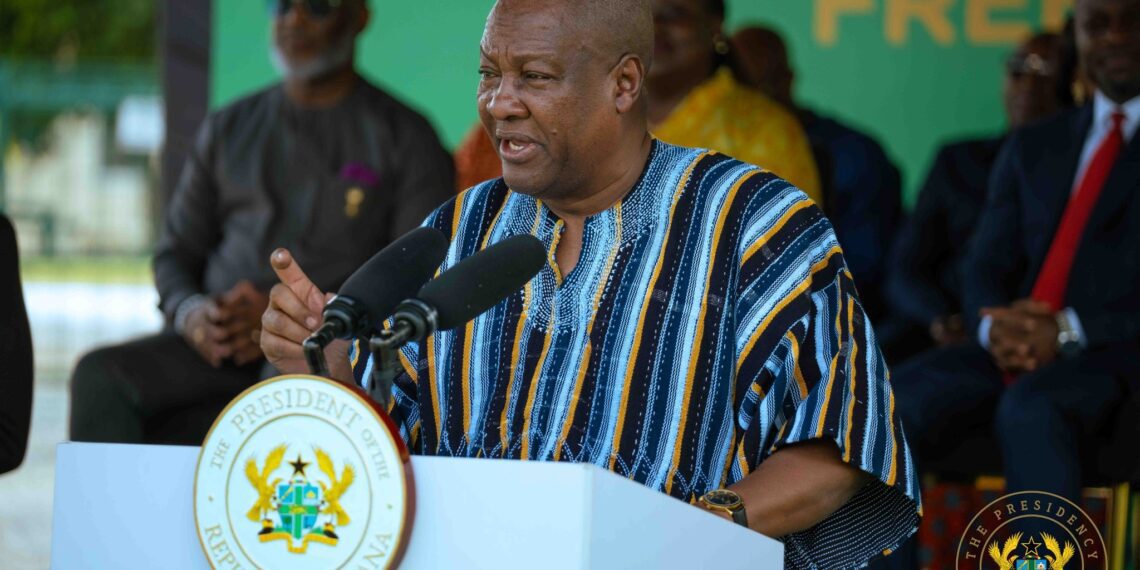
President John Dramani Mahama has clarified that tricycles distributed under Ghana’s Free Primary Healthcare programme are not ambulances but are intended to support the movement of health workers delivering essential services.
sod-cuttingHe made the remarks during a sod cutting ceremony for a 24 hour market in Bimbilla as part of his Resetting Ghana tour of the Northern Region. Addressing public concerns, the President sought to correct what he described as widespread misconceptions surrounding the purpose of the tricycles.
According to him, the vehicles are specifically designed to enhance the mobility of community health workers and volunteers, enabling them to reach underserved communities more effectively.
President Mahama explained that the tricycles form part of a broader package of equipment being distributed to Community-based Health Planning and Services compounds across the country. He noted that over 6,000 CHIPS compounds are expected to benefit from the programme.
He stated that the initiative includes motorcycles and tricycles, depending on the operational needs and capabilities of health workers in different regions. “If something is not clear, it is important to seek clarification instead of drawing conclusions,” he said, stressing the need for accurate public understanding.

President of Ghana, HE John Dramani Mahama
The President emphasized that the tricycles are equipped with storage compartments designed to safely transport medical supplies, including vaccines that require temperature control. This feature, he noted, allows health workers to carry essential materials while traveling from one community to another.
Regional Differences Shape Deployment Strategy
Explaining the rationale behind the distribution strategy, President Mahama highlighted differences in mobility skills among health workers across regions. In many parts of northern Ghana, he said, female health workers are able to ride motorcycles and therefore use them to access remote communities.
In contrast, he noted that in southern parts of the country, many health workers are less familiar with motorcycle riding. To address this, tricycles are being provided as an alternative means of transport to ensure that healthcare delivery is not hindered.
He explained that the approach is intended to ensure inclusivity and efficiency in service delivery. By matching transportation options with the capabilities of health workers, the programme aims to maximize outreach and improve healthcare access at the community level.
President Mahama stressed that the vehicles are central to the delivery of preventive healthcare services, which form the backbone of the Free Primary Healthcare programme. He explained that health workers will use the tricycles to travel from village to village, conducting screenings and administering vaccinations.

Read also:
- Trinidad and Tobago police investigate discovery of 50 infants and six adults dumped at cemetery
- Rawlings family consoles General Nunoo-Mensah over wife’s passing
- President Mahama warns against interference in public sector discipline
- Curfew hours on Karaga Township and environs revised to 8pm–4am
- Benjamin Asare headlines Black Galaxies’ 32-man squad
Some of the Tricycles under Ghana’s Free Primary Healthcare
He noted that these activities include testing for conditions such as high blood pressure and diabetes, as well as providing routine immunizations. The goal, he said, is to detect and manage health conditions early, thereby reducing the burden on hospitals and improving overall public health outcomes.
The President emphasized that the initiative reflects a shift toward community based healthcare, where services are brought closer to the people rather than requiring patients to travel long distances.
Addressing Public Misconceptions
President Mahama expressed concern over narratives suggesting that the tricycles were intended to function as ambulances. He described such claims as inaccurate and misleading, reiterating that the vehicles are not designed for emergency medical transport.
He stated that misinterpretations of the programme risk undermining public confidence and distract from the initiative’s core objectives. By providing a clear explanation, he said he hopes to put an end to the ongoing debate and ensure that citizens understand the purpose of the intervention.
The President reiterated that the tricycles are tools to support healthcare workers, not substitutes for ambulances or emergency response systems.
The clarification comes as part of a larger effort by the government to strengthen primary healthcare systems across the country. President Mahama indicated that the distribution of equipment and vehicles is one component of a comprehensive strategy to improve healthcare delivery.
He explained that by equipping CHIPS compounds with the necessary tools, the government aims to enhance the effectiveness of frontline health services. This includes improving access to basic healthcare, particularly in rural and hard to reach areas.

President of Ghana, HE John Dramani Mahama
The President added that the programme is designed to complement existing healthcare infrastructure, ensuring that preventive services are prioritized alongside curative care.
Outlook for Community Healthcare Delivery
The introduction of tricycles and motorcycles into the healthcare system is expected to significantly improve the reach of health workers. President Mahama expressed confidence that the initiative will lead to better health outcomes by making services more accessible and responsive to community needs.
He noted that empowering health workers with reliable transportation will enable them to perform their duties more efficiently and consistently. This, in turn, is expected to strengthen public health systems and support long term development goals.
President Mahama concluded by reaffirming his commitment to ensuring that healthcare delivery is both inclusive and effective. He emphasized that clear communication and public understanding are essential to the success of national programmes, particularly those aimed at improving the wellbeing of citizens.