ELS: MBN360 NEWS
The Minority in Parliament has accused the government of using state institutions to intimidate and harass members of the opposition, warning that such actions pose a threat to Ghana’s democratic governance.
The caucus alleged that Members of Parliament and other members of the New Patriotic Party (NPP) have become targets of investigations and prosecutions simply for expressing dissenting views.
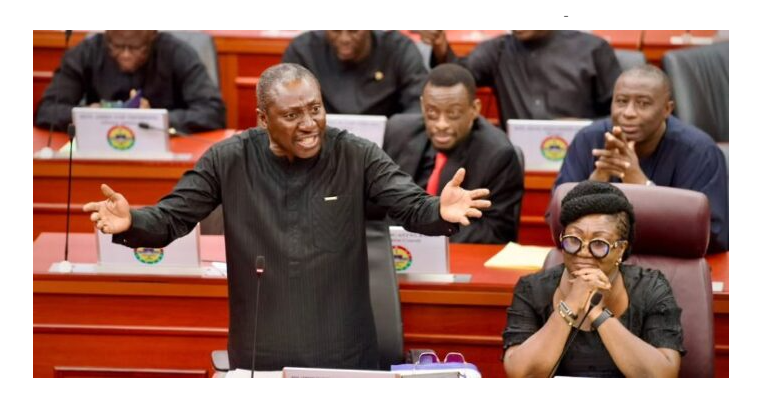
Speaking during his closing remarks at the end of the Second Meeting of the Second Session of the Ninth Parliament, Minority Leader Alexander Afenyo-Markin called on the government to end what he described as the persecution of political opponents.
“We say to the NDC government: stop the harassment of the opposition,” he stated on Friday, July 31.
According to Mr Afenyo-Markin, the use of investigative and prosecutorial powers against opposition figures undermines the principles of democracy and weakens public confidence in state institutions.
“Members of the New Patriotic Party, including Minority MPs, have been maliciously targeted and harassed simply for holding different views through the use of the investigative and prosecutorial powers of the state,” he alleged.
Read also:
- Eco-Conscious Coordinator Calls for Stronger Oversight of Mining Activities
- 9,000 Miners Registered for Responsible Mining Scheme, Ministry’s Spokesperson Discloses
- Ghana’s Inflation Fight Scores Major Victory As July Inflation Drops to 4.6%
- Inusah Fuseini opposes proposal to extend presidential term.
- Haruna Iddrisu critiques Parliament’s approach to oversight role
He argued that a government that resorts to silencing its critics demonstrates intolerance of opposing views.
“We say, without apology, that this is both dangerous and wrong. A government that fears its critics has already told us something horrifying about itself,” he said.
The Minority Leader further claimed that the alleged actions were creating what he described as “a culture of silence,” where citizens and political opponents may fear expressing their opinions.
He also questioned a number of recent judicial decisions, alleging that they pointed to unequal treatment under the law.
“We also place on record a shocking string of doubtful judicial decisions that have emerged in recent times. Taken together, they appear to suggest that there is one set of justice for the friends and cronies of this government and another, altogether harsher, set for its opponents,” he said.
Mr Afenyo-Markin stressed that the strength of Ghana’s democracy depends on the ability of the opposition to freely express its views without fear of intimidation.
“Ghana is bigger than any one party, and our democracy only works if the opposition can speak,” he added.