

Els: MBN360 News
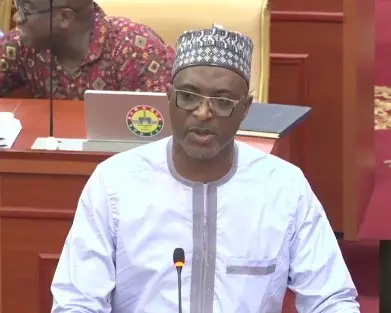
Interior Minister Hon. Mubarak Muntaka Mohammed has taken to the floor of Parliament to deliver a sobering account of flood-related disasters that have swept through several regions of Ghana over the past two weeks, painting a picture of a country confronting widespread weather-driven destruction on multiple fronts simultaneously.
The Central Region absorbed the worst of the damage. Hon. Muntaka told Parliament that a total of 58 houses collapsed across the region, with many of the affected structures described as old mud and brick buildings, some estimated to be over a century old.
The collapses claimed 18 lives and left communities across more than a dozen districts reeling from loss of shelter and life.
The Cape Coast Metropolitan Assembly recorded the highest concentration of collapsed structures, with 20 houses coming down, and also suffered the most deaths, losing five people to building collapses and one to drowning.
Awutu Senya East followed with seven houses collapsing and three fatalities, two from building collapses and one from drowning. Assin North recorded seven collapsed houses, while Twifo Atti Morkwa saw six come down and lost one resident to drowning.

Other affected districts included Assin Fosu Municipality, where five houses collapsed, and Abura Asebu Kwamankese, which recorded four collapses. Ajumako Enyan Essiam, Gomoa East and Upper Denkyira West each reported two house collapses, while Gomoa West, Gomoa Central, and Assin South each recorded one.
Upper Denkyira West lost three residents to drowning, making it the district with the highest drowning toll outside Cape Coast. Gomoa Central also lost one person to a building collapse and one to drowning.
Fatalities Spread Across Multiple Districts
The 18 deaths recorded in the Central Region did not concentrate in a single location but spread across several districts, reflecting how broadly the disaster reached.
Beyond the Cape Coast Metropolis and Awutu Senya East, fatalities were recorded in Gomoa Central, where two people died, in Twifo Atti Morkwa, which lost one resident to drowning, and in Upper Denkyira West, where three people drowned.
Agona West recorded one drowning death, and Upper Denkyira East lost two residents to drowning. The pattern of deaths, split between building collapses and drowning incidents, underscores the dual danger posed by the sustained rains.
While weakened old structures gave way under the pressure of the downpours, rising floodwaters created a separate but equally deadly threat in communities where drainage could not cope.
More Than 60 Communities Flooded in the Volta Region
Turning to the Volta Region, Hon. Muntaka told Parliament that more than 60 communities experienced flooding, with the impact spread across eleven districts.
Read also:
- Portugal edge Croatia 2-1 to set up blockbuster Round of 16 clash with Spain
- 2026 World Cup: Switzerland knockout Algeria to reach fourth straight Round of 16
- These are the Games that matter” – Carlos Queiroz fires warning ahead of Colombia clash
- Southern France Battles Wildfires
- Minority calls for stronger governance of Ghana’s emerging carbon credit market
He noted that based on available reports, the flooding in the Volta Region did not pose life-threatening situations, offering some relief against the backdrop of the Central Region’s death toll.
The flooding reached communities across a wide geographic spread. South Tongu recorded the highest number of affected communities at eight, matched by the Ho Municipality, which also reported eight.
Akatsi South saw nine communities affected. Keta, Anloga, Ketu South, Ketu North and Agotime Ziope each reported between six and seven communities hit, while Central Tongu and North Tongu reported three and two affected communities respectively. Adaklu recorded the fewest, with two communities affected.
Despite the absence of confirmed fatalities in the region, the scale of the flooding across more than 60 communities points to significant disruption to livelihoods, farmland and infrastructure in an area that has historically been vulnerable to flooding along its coastal and riverine zones.
Over 200 Displaced in Western North Region
The Western North Region added another dimension to the national picture. Hon. Muntaka told Parliament that extensive flooding in the Sefwi Wiawso Municipality and its surrounding communities displaced more than 200 people, compounding the human cost of what has become a multi-region disaster in the span of just two weeks.
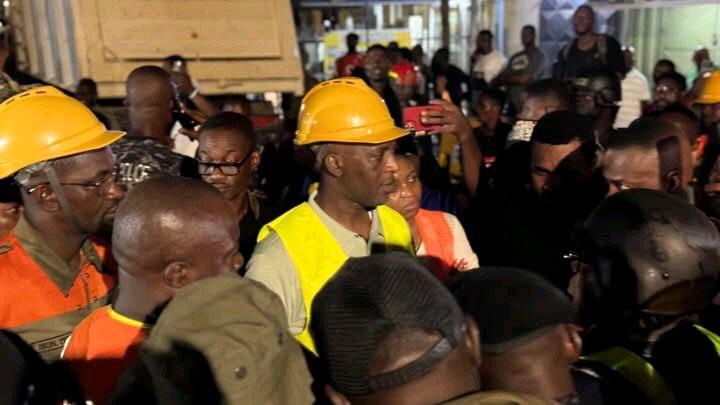
The Minister did not provide further detail on the specific communities affected within the region or the current status of those displaced, but the figures confirm that the flooding in Sefwi Wiawso reached a scale requiring displacement responses.
Minister Frames Disaster as a National Weather Emergency
Hon. Muntaka framed the combined impact across the three regions as evidence that Ghana is facing widespread weather-related disasters, a statement that positions the current crisis as something beyond a collection of local incidents.
The breadth of the damage, spanning the Central Region’s building collapses and drowning deaths, the Volta Region’s flooded communities and the Western North’s mass displacement, suggests a seasonal rainfall pattern that is testing the resilience of communities and infrastructure across the country.
The Interior Minister’s briefing to Parliament follows similar statements from the Presidency and the Ministry of Works, Housing and Water Resources in recent days, each pointing to climate variability, inadequate drainage infrastructure and human encroachment on waterways as overlapping causes of the flooding.
Hon. Muntaka’s statement adds the dimension of structural vulnerability, with more than half a century’s worth of old mud and brick buildings proving no match for the intensity of recent downpours in the Central Region.

Parliament’s receipt of the update signals that the disaster has now crossed the threshold from regional emergency to a matter requiring national legislative attention.
With 18 confirmed dead, dozens of houses destroyed, more than 60 communities flooded, and over 200 people displaced in just two weeks, the scale of the crisis appears likely to prompt further government intervention in the days ahead.