Els: MBN360 Europe
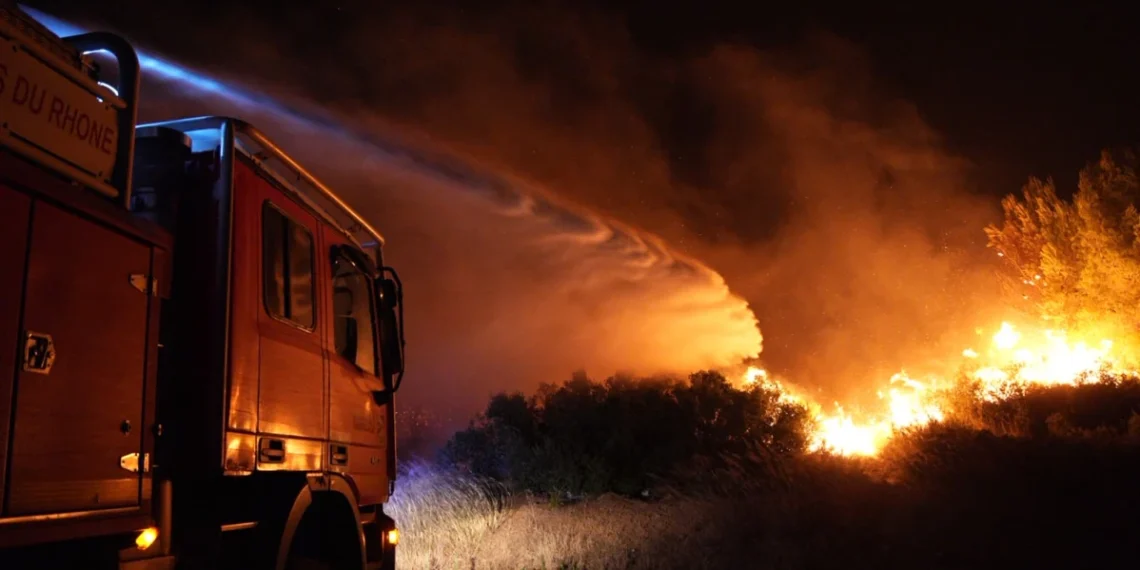
wildfires raged in the south of France today, after weeks of dry weather and record temperatures across the country.
Weeks of exceptionally dry weather and record-breaking temperatures fueled fast-moving blazes, devastating large swaths of land and prompting authorities to intensify firefighting efforts amid what officials describe as an increasingly difficult wildfire season.
Interior Minister Laurent Nunez said that three blazes, two of which broke out on the western edge of the Mediterranean port city of Marseille, had scorched a combined area of 1,210 hectares (2,990 acres).
According to local authorities, the biggest fire spread in the Aude and Herault regions, where up to 800 firefighters and 150 vehicles were deployed to tackle the flames that ran over 900 hectares (2,200 acres).
In the Aude region, four water-bomber aircraft were deployed to support firefighters. “The idea is to bring the fire under control quickly because temperatures are rising and the wind is growing stronger,” Alain Bucquet, the Aude prefect, disclosed. Local authorities said that high winds were making it more difficult for the 800 firefighters to battle the fire.
The Aude is regularly hit by wildfires. Last year, firefighters contained France’s largest wildfire in decades in the region.
Further fires broke out in the neighboring Marseille region, where two blazes were brought under control, but not yet extinguished. Firefighters were tamping down a small blaze in Rognac near Marseille’s airport and had brought another fire covering 260 hectares in Lancon-Provence under control. Local officials said that there were no casualties.
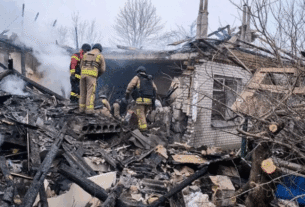
Spreading blazes in the seaside resort of Canet-en-Roussillon forced the evacuation of 1,500 people from three campsites and tore through hundreds of mobile homes, said the regional prefect, Pierre Regnault de la Mothe. He stated that firefighters were engaged in “a fierce struggle” to prevent the flames from spreading in an industrial zone.
Further east, in Fréjus, a resort town in the Var department some 35 kilometres (22 miles) from Cannes, more than 2,000 people were evacuated from six campsites on yesterday because of a nearby forest fire.
Although authorities had not immediately reported fatalities from the latest fires, several homes and agricultural areas were threatened, and officials continued assessing damage to property and infrastructure. Residents living near affected areas were advised to avoid unnecessary travel and monitor updates from emergency services.
Read also:
- Sentuo Group, Eezzy Group Foundation donate 10 ambulances, pickup vehicle to Ghana Police Service
- Lower Manya Krobo: NDC members petition leadership over alleged irregularities in branch elections
- Defamation Law Demands Truth Defence from Journalists — Tanko Musah
- Ghana Medical Association Demands Urgent Action Over Recurrent Flooding Crisis
- Dame: Deputy A-G’s claim Hanan withdrew from frozen account false
France has experienced increasingly severe wildfire seasons in recent years, a trend that scientists link to rising temperatures, prolonged droughts and changing weather patterns associated with climate change. Environmental experts say hotter and drier conditions are extending the wildfire season and increasing the likelihood of larger, more destructive fires across southern Europe.
Environmental researchers note that wildfires not only destroy forests and wildlife habitats but also release large quantities of carbon dioxide into the atmosphere, further contributing to climate change. Burned landscapes can also become more vulnerable to soil erosion and flooding when heavy rains eventually return.
Authorities have reiterated the importance of public vigilance as firefighters continue working to contain the blazes. Emergency services remain on high alert, with additional personnel and equipment positioned in regions considered to be at elevated risk.
For residents in affected communities, the fires have brought renewed concern about the growing impact of extreme weather on daily life. Many have watched as smoke blanketed nearby hillsides while emergency crews worked to protect homes, businesses and critical infrastructure.
As firefighting operations continue, French authorities say their immediate priority is bringing the active blazes under control while protecting lives and property.
Fairly Tense Situation
French Prime Minister, Sebastien Lecornu said that nearly 7,000 fires have broken out since the start of the summer season, with some 8,700 hectares already burned. Acknowledging the pressure the fires have placed on emergency services and local authorities, he said, “The situation is fairly tense.”

High temperatures and drought conditions are expected to continue, with no rain forecast in the coming days, following heat waves in May and at the end of June. Plants and vegetation are under severe water stress, adding to the danger of fires, while strong winds are blowing across the Mediterranean region.
Last week, the World Meteorological Organization warned that the record temperatures that baked Western Europe for over a week in late June would worsen the risk of wildfires, given the outlook for sustained high temperatures, very low humidity and dry vegetation.
France’s weather office has also warned that another spell of extreme heat could hit next week. Health authorities estimate the previous heatwave may have caused at least 1,000 excess deaths in the country during record-breaking temperatures.
With forecasts indicating that hot and dry weather may continue, officials warn that the wildfire threat remains high and are urging communities to remain prepared throughout the remainder of the summer.