Els: MBN360 News
The Minority Chief Whip and Member of Parliament for Nsawam-Adoagyiri, Frank Annoh-Dompreh, has called on the government to strengthen the governance framework for Ghana’s emerging carbon credit market, describing it as a major opportunity to drive sustainable development while safeguarding the country’s national interests.
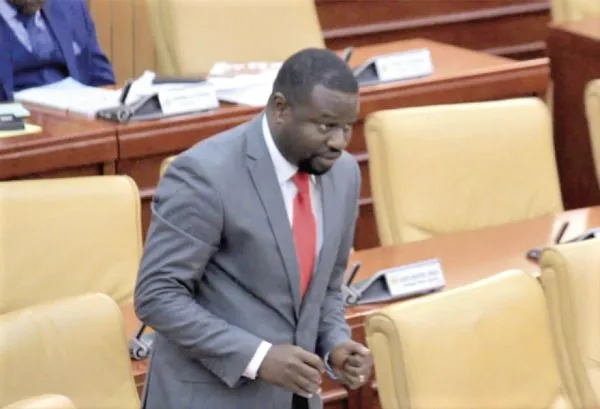
Delivering a statement on the floor of Parliament on Thursday, July 2, 2026, Mr Annoh-Dompreh commended the government’s initial efforts to position Ghana within the global carbon market through the establishment of the Ghana Carbon Market Office under the Environmental Protection Authority (EPA).
He noted that Ghana had already laid a solid foundation by developing institutional structures to support carbon market activities under Article 6 of the Paris Agreement, voluntary carbon markets, carbon project monitoring, reporting and verification, and registry operations.
“This is a significant national opportunity. The benefits of a properly managed carbon market are not lost on us, and we have already begun recording dozens of mitigation activities across the energy, agriculture, forestry and transportation sectors. This demonstrates that Ghana is not starting from zero. The foundations exist,” he stated.
Mr Annoh-Dompreh, however, cautioned against viewing carbon credits solely as a commercial venture.
“The carbon credit market must not be treated merely as a trading platform for emissions reductions. It must be treated as a national development instrument. Ghana’s approach must be guided by one central principle: to deliver real national value, real emissions reductions, real community benefits and real private-sector investment,” he said.
The Minority Chief Whip urged the government to strengthen policy clarity and regulatory certainty by simplifying approval processes, ensuring transparent timelines and fees, and clearly distinguishing between Article 6 transactions, voluntary carbon market projects and domestic carbon market activities.
He also called for stronger safeguards to protect Ghana’s national interests, stressing that carbon credits are closely linked to the country’s climate commitments, biodiversity, land rights and long-term development agenda.
“The government must therefore ensure that the authorisation of internationally transferred mitigation outcomes does not weaken Ghana’s ability to meet its own climate commitments. We must not sell cheaply today what we may need tomorrow to meet our own Nationally Determined Contribution targets,” he cautioned.
Read also:
- Sentuo Group, Eezzy Group Foundation donate 10 ambulances, pickup vehicle to Ghana Police Service
- Lower Manya Krobo: NDC members petition leadership over alleged irregularities in branch elections
- Defamation Law Demands Truth Defence from Journalists — Tanko Musah
- Ghana Medical Association Demands Urgent Action Over Recurrent Flooding Crisis
- Dame: Deputy A-G’s claim Hanan withdrew from frozen account false
Mr Annoh-Dompreh further called for strict quality standards to ensure the credibility of Ghana’s carbon market.
“The global carbon market has suffered credibility challenges because of weak projects, inflated claims, double counting and poor community consultation. Ghana must not become a destination for low-quality carbon projects,” he stated.
He emphasised that local communities should remain at the centre of carbon market initiatives through meaningful stakeholder engagement, transparent benefit-sharing arrangements and effective grievance mechanisms.
The Nsawam-Adoagyiri MP also urged the government to prioritise investments in renewable energy, regenerative agriculture, forest restoration, methane reduction, climate-smart irrigation, public transport and industrial energy efficiency to build a strong domestic carbon project pipeline capable of creating jobs while reducing greenhouse gas emissions.
To strengthen Ghana’s competitiveness, Mr Annoh-Dompreh proposed the establishment of a National Carbon Finance Academy to train Ghanaian experts in carbon accounting, project development, legal contracting, registry management and carbon finance, rather than relying heavily on foreign consultants.
He also advocated strengthening the Ghana Carbon Registry and improving coordination among institutions responsible for regulating the sector.
He concluded by urging the government to position Ghana as a trusted regional hub for high-integrity carbon market investments while ensuring environmental protection and community rights remain paramount.
“Although the carbon credit market offers Ghana a significant opportunity, it also carries risks. If poorly managed, it can create confusion, speculation, unfair contracts and a loss of national value. If properly governed, it can position Ghana as a leader in Africa’s green transition,” Mr Annoh-Dompreh stated.
“Our national position should therefore be clear: Ghana is open to carbon market investment, but only on terms that protect environmental integrity, national interests, community rights and long-term development,” he added.