
Els: MBN360 News
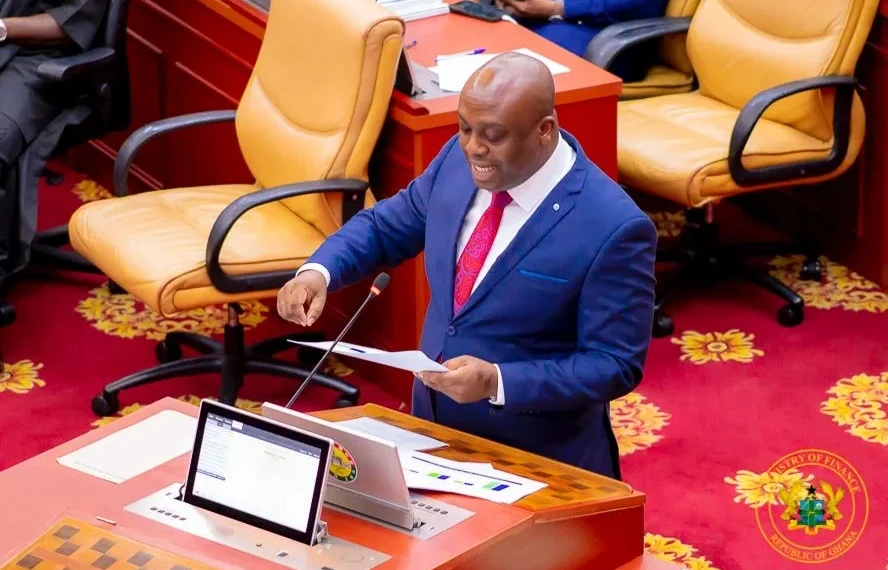
eputy Minister for Finance, Hon. Thomas Ampem Nyarko has disclosed during a parliamentary briefing, that the Ministry of Food and Agriculture (MoFA) is currently the subject of an intense forensic investigation following the disclosure of massive procurement irregularities.
Hon. Ampem unveiled the findings of a rigorous audit conducted by the Ghana Audit Service, in collaboration with EY and PwC, which uncovered a trail of ghost deliveries, fictitious receipts, and unexplained payments within MoFA’s agricultural recovery programs, while validating GHS 68.7 billion in government arrears.
The revelations have cast a harsh light on the internal controls of the Ministry’s past flagship food security initiatives.
“In 2024, the Government of Ghana paid for 34,000 metric tonnes of rice to address the impact of the Dry Spell. However, the Ministry of Food and Agriculture received and distributed 24,000 metric tonnes of rice. To date, 10,000 metric tonnes of rice remain unaccounted for.
“The Ministry of Food and Agriculture submitted Stores Receipt Advice as evidence of delivery of the 100,000 metric tonnes of maize worth 771.2 million Ghana cedis to the Ministry of Finance for payment. But only 11,900 metric tonnes were supplied and distributed”Hon. Thomas Ampem Nyarko, Deputy Minister for Finance
According to the Deputy Finance Minister, the audit examined the government’s response to the 2024 “Dry Spell,” a critical intervention intended to bolster national food stocks. However, the documentation presented to the Ministry of Finance for payment suggests that the program was marred by systematic abuse.

Investigators found that while the state authorized payments for 34,000 metric tonnes of rice to support affected farmers, only 24,000 metric tonnes were actually received and distributed. To date, 10,000 metric tonnes of rice – paid for by the taxpayer – remain completely unaccounted for.
The scale of the discrepancies extended far beyond missing rice as auditors flagged a contract for the supply of 100,000 metric tonnes of maize, valued at GHS 771.2 million.
The Ministry of Food and Agriculture submitted Stores Receipt Advices (SRA) to the Ministry of Finance to facilitate full payment, certifying that the entire quantity had been received. Upon forensic verification, however, investigators discovered that only roughly 12% of the contracted amount had actually been supplied and distributed.
Perhaps most damaging to the reputation of the Ministry of Food and Agriculture is the role of its own internal audit team. The investigation confirmed that the fraudulent Stores Receipt Advices were not just clerical errors; they were officially certified by the internal auditor of the Ministry.
Read also:
- Thomas Partey, Former Arsenal Player to deny rape charges, court hears
- GoldBod to Establish Gold Buying Centres Across Mining Districts
- US Strikes Military Sites On Iran’s Kharg Island
- Missile strike hits US Embassy in Baghdad as Iran warns of retaliation over oil hub
- Education Must Deliver Practical Solutions – Veep Opoku-Agyemang honoured as UCC’s first distinguished fellow
Hon. Ampem flagged this as suggesting a systemic breakdown in the oversight mechanisms designed to protect public funds. He argued that when an internal auditor signs off on a receipt for 100,000 tonnes when only a fraction has arrived, the integrity of the entire procurement chain is “compromised,” leaving the Administration vulnerable to massive financial hemorrhage.
Transportation Fraud and Unearned Payments
The audit, according to Hon. Ampem further exposed a flagrant abuse of the Farmer Food Relief and Recovery Programme, specifically regarding the transportation of grains.

The audit revealed that in the case of a contractor who was engaged to move 134,000 metric tonnes of maize and rice across the country for a total contract sum of GHS 115.2 million, the company transported only 35,000 metric tonnes – a service that should have cost approximately GHS 30.9 million.
Despite this significant shortfall in performance, the company was paid a staggering GHS 50 million in cash. Yet the corruption did not stop with cash disbursements.
In a move that defies standard procurement logic, the transport company was handed 7,311 metric tonnes of rice – equivalent to 14,622 bags of 50kg rice – valued at GHS 11.7 million. This allocation was made in lieu of cash for “no work done,” effectively subsidizing the contractor for service they never provided.
“This brought the total payout to the company to GHS 61.7 million, even though their actual work output warranted significantly less. The Auditor-General has since rejected an additional request for GHS 65.2 million in payments to the same company, putting a stop to the final attempt to drain the program’s coffers”Hon. Thomas Ampem Nyarko, Deputy Minister for Finance
According to the Deputy Finance Minister, these findings arrive at a critical juncture for the government, which has made the modernization of Agriculture and sustainable Industrialization the cornerstones of its economic policy. The misuse of funds within the Ministry of Food and Agriculture undermines the government’s efforts to ensure food security and stabilize prices for the Ghanaian consumer.
By diverting resources into the hands of ghost suppliers and non-performing contractors, those responsible have directly hindered the Ministry’s ability to effectively support the very farmers the programs were designed to protect. The Ministry of Finance is now working with law enforcement to determine if criminal charges will be filed against the officials involved in certifying these fraudulent transactions.

For the public, the audit serves as a stark reminder of why forensic oversight is vital to the health of the state. As the Administration moves forward with its 24-hour economy vision and aggressive fiscal consolidation, it is clear that “paper deliveries,” and “ghost transport,” will no longer be tolerated.
The clean-up of the Ministry of Food and Agriculture is not just an administrative necessity; it is a prerequisite for achieving the nation’s broader industrial and economic goals.