Els: Around the Globe
World Health Organisation (WHO) has completed Exercise Polaris II, a large-scale global simulation designed to test how effectively countries and international partners can respond to a fast-moving disease outbreak.
The exercise centred on a fictional outbreak of a new bacterium spreading across multiple regions, challenging governments to coordinate emergency responses under realistic, high-pressure conditions and brought together 26 countries and territories, approximately 600 health emergency experts, and more than 25 international partners.
It was designed to assess global readiness for pandemics and other major health emergencies by testing emergency coordination systems, information-sharing mechanisms, and workforce mobilisation strategies.
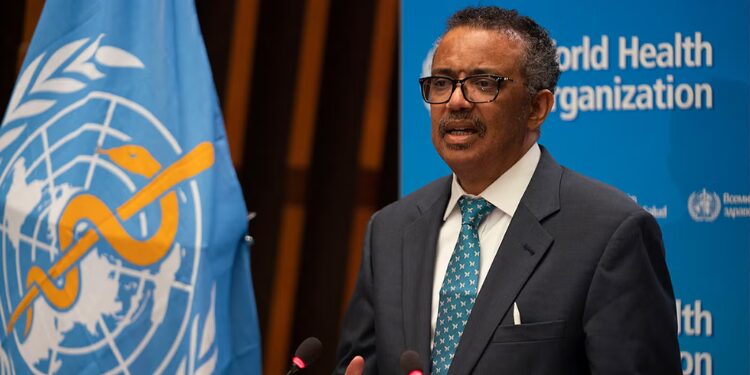
According to Dr Tedros Adhanom Ghebreyesus, WHO Director-General, “Exercise Polaris II showed what is possible when we act together.”
“It demonstrated that global cooperation is not optional – it is essential. This is the purpose of the Global Health Emergency Corps coordination across the emergency workforce, building trust, strengthening connections, and working as one across borders.”Dr Tedros Adhanom Ghebreyesus
The simulation was built on the first Polaris exercise conducted in April 2025, which focused on a fictional virus outbreak. This second edition expanded participation and complexity, requiring countries to not only respond domestically but also align cross-border policies and deploy coordinated international support under simulated emergency conditions.
Edenilo Baltazar Barreira Filho, Director of the Public Health Emergencies Department, Ministry of Health, Brazil indicated that, “By simulating the spread of a dangerous pathogen under real-life conditions, Exercise Polaris II helped us turn existing plans into action. It is not enough to have plans on paper – what matters is how they perform in practice.”
Moreover, the exercise also drew on support from international organisations, including the Africa Centres for Disease Control and Prevention, UNICEF, Médecins Sans Frontières, the International Federation of Red Cross and Red Crescent Societies, UK-Med, and the Robert Koch Institute, alongside global emergency response networks such as the Global Outbreak Alert and Response Network and Emergency Medical Teams initiative.
Read also:
- EOCO arrests former GIHOC MD Maxwell Kofi Jumah.
- Ghana invites investors to partner in launch of new national airline
- 2026 World Cup: FIFA introduces new booking and conduct rules
- World Cup 2026: FIFA raises Member Association funding to $871 million
- King Charles III reaffirms ‘special relationship’ with US amid UK’s refusal to join Iran war
Strengthening Global Health Emergency Systems Through Coordinated Simulation

Exercise Polaris II forms part of WHO’s broader HorizonX programme, a long-term initiative aimed at strengthening global preparedness through repeated, large-scale simulation exercises. The programme is designed to ensure that emergency readiness is not treated as an occasional exercise but as a continuous process of testing, learning, and system improvement across countries and regions.
Unlike traditional national drills, Polaris II required simultaneous action across multiple jurisdictions, with countries responding to a shared fictional outbreak while aligning their strategies through WHO coordination systems. This approach tested not only individual national preparedness but also the strength of international cooperation in managing rapidly evolving health threats.
The simulation required participating countries to activate emergency coordination structures in real time. This included establishing communication channels between health ministries, deploying emergency workforce teams, and sharing outbreak data across borders. The exercise also placed emphasis on rapid decision-making, ensuring that governments could respond to evolving scenarios without delays caused by fragmented information flows or institutional bottlenecks.
A key feature of Polaris II was the testing of the Global Health Emergency Corps (GHEC), which was developed to strengthen the global health emergency workforce. The framework enables countries to better organise health personnel, coordinate international deployment when needed, and improve interoperability between national systems.
The exercise also incorporated the National Health Emergency Alert and Response Framework, which defines how countries should structure their emergency response systems at different administrative levels. This includes mechanisms for early detection, escalation procedures, and integration between local and national response units.
Another key dimension of the exercise was the integration of technology, including AI-enabled tools for workforce management and planning. These tools were tested for their ability to support decision-making during rapidly evolving outbreak conditions, particularly in allocating resources and coordinating emergency personnel across jurisdictions.
WHO officials highlighted that the growing complexity of global health threats requires more than national preparedness alone. Infectious disease outbreaks can spread rapidly across borders, making international coordination essential for effective containment. Polaris II was therefore designed to reflect real-world conditions where no single country can manage a global health emergency in isolation.
Dr Chikwe Ihekweazu, Executive Director of WHO’s Health Emergencies Programme, highlighted that, “Exercise Polaris II showed what it looks like when countries are prepared and ready to act together,”
“This reflects the spirit of the Global Health Emergency Corps: a well-organized, trained, coordinated and connected emergency workforce ready to respond wherever and whenever it is needed”Dr Chikwe Ihekweazu