
Els: MBN360 News
Agovernment audit into outstanding financial commitments has uncovered large scale irregularities involving recycled and overstated payment claims within several ministries and public institutions.
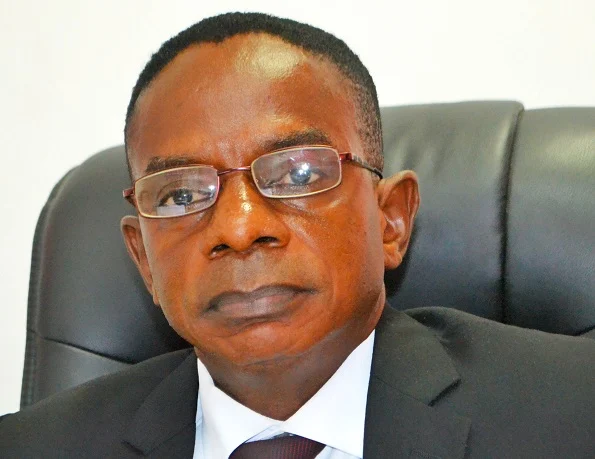
The findings were presented in Parliament by Deputy Minister for Finance Thomas Ampem Nyarko on behalf of Finance Minister Cassiel Ato Forson as part of the report on the verification of government arrears accumulated by the end of 2024.
One of the most striking findings of the audit was the discovery of recycled claims amounting to GH¢4.4 billion. According to the Deputy Minister, these claims had already been paid by government between 2020 and 2024 but were later resubmitted as outstanding obligations.
He warned that without the verification exercise the country could have suffered a significant financial loss. “But for our vigilance the Ghanaian taxpayer would have lost a colossal 4.4 billion Ghana cedis in these recycled claims,” he told Parliament.
The largest portion of the recycled claims came from the Ministry of Roads and Highways, Ghana, which accounted for GH¢3.6 billion of the resubmitted payments. Other institutions involved included the Ministry of Health, Ghana, with GH¢384.8 million, and the Ministry of Energy, Ghana, with GH¢216.7 million.

Additional recycled claims were linked to the Ministry of Food and Agriculture Ghana with GH¢57 million, the Ministry of Defence Ghana with GH¢40.9 million, and independent power producers with GH¢36.4 million.
Further amounts were associated with the Ministry of Finance Ghana which accounted for GH¢26.4 million and the Ministry of Interior Ghana with GH¢3.1 million.
The Deputy Minister said the discovery raises concerns about the quality of financial records maintained by several government institutions.
He noted that many ministries lacked clear documentation showing what contracts had been executed, what payments had been made and what obligations remained outstanding.
According to him, this situation effectively placed government in a vulnerable position where contractors and suppliers determined how much the state owed them.
“This calls for an urgent review, redesign, and implementation of an appropriate public financial management architecture to manage our public funds”.
Overstated and Duplicated Claims Also Detected
Beyond the recycled claims, auditors also identified duplicated and overstated payment requests amounting to GH¢1.4 billion. These irregularities were recorded across several ministries and agencies, reflecting weaknesses in internal verification systems.
The Ministry of Local Government, Chieftaincy and Religious Affairs Ghana accounted for the largest portion of these overstated claims with GH¢408.3 million.
The Ministry of Energy Ghana followed with GH¢386.7 million while the National Service Scheme Ghana recorded GH¢334.5 million in duplicated or inflated claims.
Read also:
- Thomas Partey, Former Arsenal Player to deny rape charges, court hears
- GoldBod to Establish Gold Buying Centres Across Mining Districts
- US Strikes Military Sites On Iran’s Kharg Island
- Missile strike hits US Embassy in Baghdad as Iran warns of retaliation over oil hub
- Education Must Deliver Practical Solutions – Veep Opoku-Agyemang honoured as UCC’s first distinguished fellow
Other institutions involved included the Ministry of Roads and Highways Ghana with GH¢125.65 million and the Ministry of Health Ghana with GH¢114.2 million.

The National Communications Authority Ghana was also linked to GH¢8.8 million in overstated claims. In a separate case, the Ministry of Defence Ghana reported outstanding claims amounting to GH¢77.1 million even though the contract in question had already expired and deliveries had not been completed.
Additional Overstatements Identified Through Confirmations
Auditors also conducted independent confirmation checks with relevant institutions and suppliers to verify the accuracy of claims submitted to the Ministry of Finance.
These responses revealed further overstatements totalling GH¢161.9 million. Institutions associated with these discrepancies included the Department of Urban Roads, Ghana, with GH¢57 million and the Ministry of Transport, Ghana with GH¢39.9 million.
Additional overstatements were linked to the Department of Feeder Roads Ghana with GH¢22.46 million, the Ministry of Food and Agriculture Ghana with GH¢20 million, and the Ghana Highways Authority with GH¢17.5 million. The Ministry of Foreign Affairs Ghana was also associated with GH¢2.68 million in overstated claims.
Addressing the House, the Deputy Minister described the audit as an important effort to uncover weaknesses in the management of public finances and to protect taxpayer funds.
“Right Honourable Speaker, I am grateful for the opportunity to make this statement on a matter that is very important to this Republic. This is a report on the systemic plunder and abuse of the public financial management system.”
According to the Deputy Minister, the findings highlight serious gaps in the country’s financial record keeping systems and underscore the urgent need for stronger controls in government financial administration.
Nationwide Audit of Government Arrears
The audit exercise was undertaken by the Ghana Audit Service in collaboration with global accounting firms Ernst & Young and PricewaterhouseCoopers.
The verification process examined claims submitted to the Ministry of Finance in the form of unpaid invoices, interim payment certificates and bank transfer advisers presented by ministries, departments and agencies.
In total, claims amounting to GH¢68.7 billion were submitted for validation. Of this amount, GH¢50.5 billion consisted of outstanding invoices and interim payment certificates while GH¢18.3 billion represented bank transfer advisers awaiting payment.

The audit was conducted to determine the legitimacy of these claims and ensure that only verified government obligations are honoured. Officials say the findings of the audit reinforce the need for stronger oversight and improved financial record keeping across government institutions.
The Ministry of Finance has indicated that the audit will guide reforms aimed at strengthening the country’s public financial management systems. According to the Deputy Minister, the government intends to review existing procedures to ensure that payments are only made after thorough verification.
He emphasized that safeguarding public resources requires stronger institutional discipline and more effective monitoring of government financial commitments.