

Els: MBN360 Extractives/Energy
Ministry of Lands and Natural Resources has debunked calls to truncate the operations of Heath Goldfield, asserting that the local firm deserves the necessary latitude to navigate the significant operational and financial wreckage left behind by previous occupants.
Despite the prevailing scrutiny regarding the capacity of indigenous players in the extractive sector, the government maintains that the current management has demonstrated sufficient resilience in stabilizing what was once a deeply embattled mining concession.
Paa Kwesi Schandorf, the Media Relations Officer at the Ministry of Lands and Natural Resources, emphasized that the evaluation of the firm transcends mere nationalistic sentiment, focusing instead on the tangible progress made within the last four months.
By prioritizing local content policies, the sector minister, Hon. Emmanuel Kofi-Buah, aims to ensure that Ghanaian firms are not unfairly penalized for legacy issues, provided they meet the requisite technical and financial benchmarks now being bolstered by international partnerships.
“Heath Goldfield inherited a legacy that was truly embattled and submerged in a lot of mess from previous operators. It would be illogical and unfair for the Ministry to mount undue pressure on them when they are clearly showing promise and have secured grand operators like Trafigura to bankroll operations. We have reviewed their technical expertise and current stability, and there is no material reason to halt their progress.”Paa Kwesi Schandorf
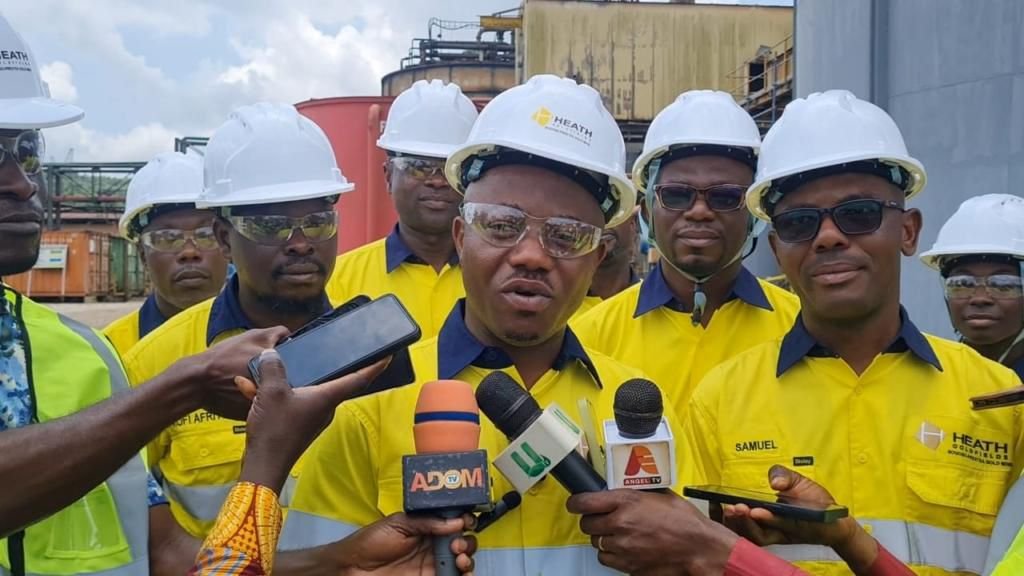
The Ministry clarified that Heath Goldfield inherited a facility that was essentially “submerged in a lot of mess,” characterized by deteriorating infrastructure and a history of legal volatility that previously stifled productivity.
To remedy these inherited defects, the firm has successfully secured a strategic partnership with Trafigura, a global giant in project financing and commodity trading.
This collaboration is viewed by the Ministry as a “game-changer” that provides the necessary “financial wherewithal” and “credibility” to transform the troubled mine into a viable asset.
The government’s stance remains that it is “unfair and illogical” to mount pressure on a local entity that has shown such promise in reversing the “legacy that we cannot describe as very bad” left by its predecessors.
The Burden of a Legacy Mess
The “legacy mess” referenced by the Ministry involves a complex web of infrastructural neglect and administrative chaos that plagued the concession long before the local firm took over the lease.

When Heath Goldfield assumed control, they did not meet a functioning, turnkey operation; rather, they stepped into a “defective structure” where the previous holders had left a trail of unresolved operational hurdles.
Read also:
- IGP’s Cyber Vetting and Enforcement Team arrests 11 for impersonating President Mahama
- Tell them you are causing the delays – Judge clashes with Wontumi’s lawyers in court
- Fuseini Issah advocates urgent reforms in Ghana’s healthcare and emergency response systems
- Ghana, UAE strengthen strategic energy ties as Mahama expresses solidarity with Abu Dhabi
- Fred Amugi laments decline in unity among Ghanaian actors
This inherited baggage created an immediate deficit in production capacity, forcing the new management to spend its initial tenure on remediation rather than extraction.
The financial strain of rehabilitating a facility where “so much that had gone down the drain” would have collapsed many smaller entities, yet the Ministry notes that Heath has managed to stay afloat.
The impact of this inherited mess was further exacerbated by a series of legal entanglements that saw the mine’s operations “injuncted until much recently.”
These court battles, initiated by former holders who challenged the termination of their contracts, created a climate of uncertainty that deterred investment for a period.

However, the Ministry’s assessment indicates that the firm has successfully navigated these “back and forth” legal tensions within the local jurisdiction.
While some international arbitration may still be pending, the internal stability of the mine has been restored, allowing for a shift in focus from litigation to actual mining.
Trafigura and the Path to Financial Stability
The turning point for Heath Goldfield’s survival has been its ability to attract Trafigura, a move the Ministry describes as proof that the entity is “pregnant with prospect.”
In the high-stakes world of mining, technical expertise must be matched by deep pockets, and the entry of a “grand operator” provides the “green light” the Ministry needs to maintain its support.
This partnership serves as a buffer against the financial volatility that often hampers local firms. By “beginning to bankroll their operations,” Trafigura has effectively validated Heath Goldfield’s business model, signaling to the Ministry and the global market that the “troubled mine” is now on a trajectory toward profitability.
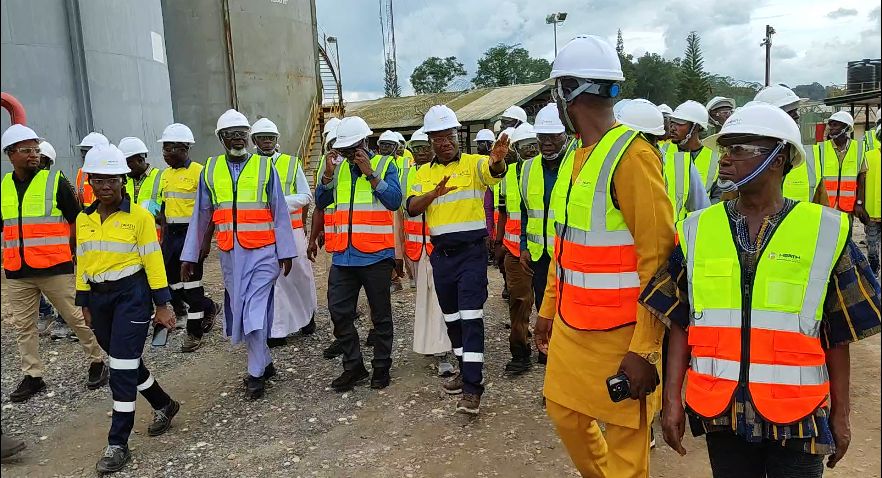
This transition is a litmus test for Ghana’s local content framework, proving that indigenous firms can thrive when given the space to rectify inherited failures.
The Ministry maintains that it would be “unfair and illogical” to judge the current management by the failures of the “earlier occupant.”
Instead, the focus remains on the “relevant protocols and regulations” that Heath is now satisfying. The government’s stance is clear: as long as the technical and financial benchmarks are met, local firms will be protected from “agitation” as they work to stabilize the nation’s extractive assets.