Els: MBN360 News
Ghana has secured renewed financial commitment from Japan International Cooperation Agency to advance the long anticipated Volivo Bridge project, following high level discussions at the IMF and World Bank Spring Meetings in Washington, D.C.
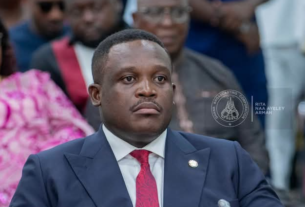
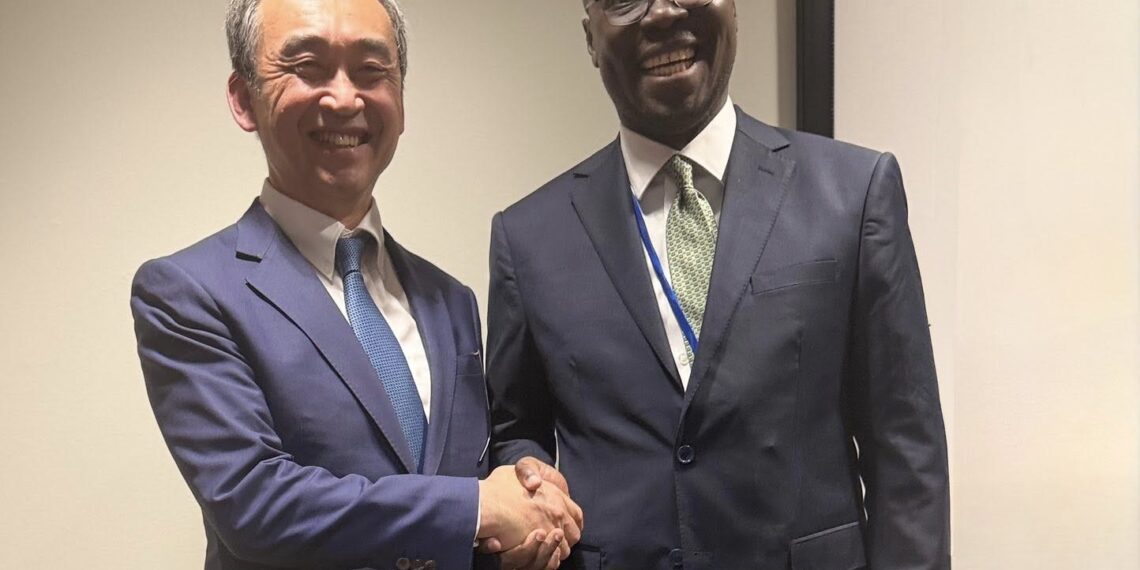
Finance Minister Dr Cassiel Ato Forson disclosed that the engagement with JICA’s Senior Vice President, Ando Naoki, reaffirmed international confidence in Ghana’s economic recovery and infrastructure agenda.
According to the Minister, the meeting was both productive and forward-looking, with a clear focus on accelerating critical national projects.
He emphasized that Ghana has moved beyond the economic crisis experienced in 2022, positioning the country to attract renewed development financing and partnerships.
JICA Signals Confidence in Ghana’s Recovery
The Japanese development agency expressed optimism about Ghana’s economic trajectory, citing the progress made in stabilizing key macroeconomic indicators. This confidence has translated into a willingness to provide additional funding to close existing financial gaps in major infrastructure projects.
Mr. Naoki indicated that JICA is working toward securing supplementary financing for the Volivo Bridge, a move expected to address procurement challenges that have delayed the project’s execution.

He further expressed hope that once the financial arrangements are finalized, contractors will mobilise before the end of the year, paving the way for construction to begin.
This renewed commitment builds on an earlier agreement signed in 2016, under which JICA allocated over ¥11 billion for the project. However, funding gaps, estimated at over half of the procurement requirements, have slowed progress until recent negotiations.
Volivo Bridge as a Flagship National Project
The Volivo Bridge is a central component of Ghana’s ambitious infrastructure drive under the government’s Big Push initiative, which seeks to transform the country’s transport network and stimulate economic growth.
Designed as a 540 meter cable stayed structure, the bridge will feature twin towers rising to approximately 51 meters, making it the tallest bridge in Ghana. Its main span of 280 meters will allow for efficient crossing over the Volta River, replacing the existing ferry system that has long served the area.
Once completed, the bridge will accommodate vehicular traffic with two lanes, alongside pedestrian walkways and enhanced safety features. Its scale and design will surpass that of the iconic Adomi Bridge, positioning it as a landmark infrastructure project in the country.
The anticipated sod cutting ceremony later this year by President Mahama is expected to mark the beginning of a transformative phase in Ghana’s transport development.
Enhancing Connectivity and Economic Activity
Beyond its structural significance, the Volivo Bridge is expected to deliver substantial economic benefits by improving connectivity between key regions of the country.
The project will establish a permanent link between the Volta and Oti regions and southern Ghana, significantly reducing travel time and improving access to markets. For decades, reliance on ferry services has limited the efficient movement of goods and people across the Volta River.
Read also:
- UK Launches AI Tutoring Programme to Support Disadvantaged Students
- CDD-Ghana calls for 10% increase in DACF.
- WHO commends Mahama over Free Primary Healthcare
- Berekum Chelsea set Dominic Frimpong’s funeral for April 29 in Assin Fosu
- South African politician Julius Malema sentenced to five years in prison for gun offenses

With the new bridge in place, agricultural produce such as yams and maize from northern and eastern regions can be transported more quickly to southern ports and urban markets.
This improved connectivity is expected to boost trade, enhance supply chains, and support local economies, particularly in rural areas that depend on agriculture for livelihoods.
The Volivo Bridge also plays a critical role in strengthening the Eastern Corridor, a key transport route that connects Tema Port to landlocked countries in the sub region.
By improving the efficiency of this corridor, the project will facilitate cross border trade and enhance Ghana’s position as a transit hub for neighboring countries such as Burkina Faso.
The development aligns with broader regional integration goals, supporting the movement of goods and services across West Africa while reducing logistical bottlenecks. In this context, the bridge is not only a national asset but also a strategic regional infrastructure investment.
Parallel Developments in Urban Infrastructure
In addition to the Volivo Bridge, discussions between Ghana and JICA also covered progress on urban road infrastructure projects. Notably, the tender process for the Inner Ring Road project in Kumasi is currently underway.
This project involves the expansion of a 3.2 kilometre stretch between Santasi and Ahodwo Roundabouts, along with upgrades to intersections, pedestrian facilities, and drainage systems.
The improvements are expected to enhance traffic flow, reduce congestion, and improve safety for both motorists and pedestrians within the Kumasi metropolis.
Together, these projects reflect a broader commitment to modernizing Ghana’s infrastructure, addressing both urban and rural transport challenges.
Financing and Implementation Outlook
The additional funding from JICA is expected to play a critical role in bridging the financial gap that has hindered the Volivo Bridge project. By securing these resources, the government aims to ensure timely procurement and smooth implementation.

The Minister’s engagement at the Spring Meetings underscores the importance of international partnerships in financing large scale infrastructure projects. It also highlights Ghana’s efforts to align its development priorities with global financial institutions and development partners.
With contractor mobilisation anticipated before the end of the year, attention is now shifting to implementation timelines and project execution.
The renewed progress on the Volivo Bridge project signals a broader shift in Ghana’s infrastructure development landscape. After years of delays, the project is now gaining momentum, supported by strengthened economic conditions and renewed investor confidence.
For communities along the Volta River, the bridge represents more than just a transport link. It is a symbol of opportunity, improved livelihoods, and integration into the national economy.
As Ghana continues to pursue its infrastructure agenda, the successful execution of the Volivo Bridge will serve as a benchmark for future projects under the Big Push initiative.