ELS: MBN360 EDUCATION
Former Director-General of the National Council for Curriculum and Assessment (NaCCA), Prof. Edward Appiah, has called on the government and educational institutions to decolonise Ghana’s curriculum, arguing that the country’s education system must be restructured to produce a generation capable of competing globally.
According to him, Africa’s education system was designed during the colonial era to produce clerks, catechists and administrators for colonial economies rather than nurture African values, innovation and critical thinking.
He maintained that, while political independence has been achieved, the structure of education remains largely unchanged, describing the current curriculum design as a failure.
Read also:
- World Gold Council commits initial US$250,000 to support Ghana’s responsible mining drive
- Vice President heads to U.S. for Sister Cities International 70th Anniversary Conference
- President Mahama receives Wisconsin Governor on Accra visit
- CID rescues nine trafficking victims, arrests ten in Afienya cybercrime operation
- FiFA Re-Activates the old adage of “Robbing Peter to Pay Paul”
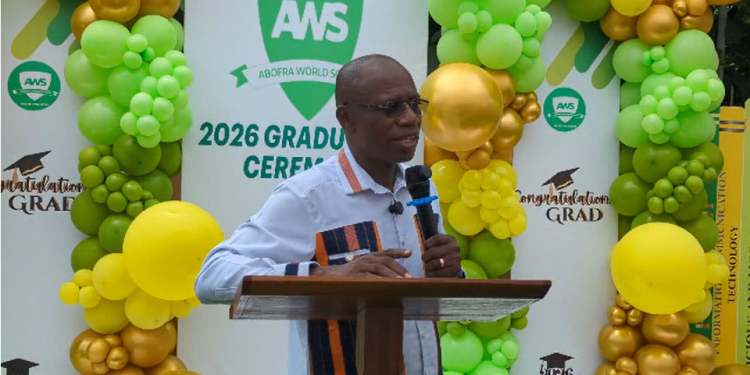
Speaking at a graduation ceremony of Abofra World School in Kumasi, Prof. Edward Appiah said meaningful curriculum reform should focus on restoring coherence by reconnecting knowledge to its local context, integrating disciplines, and strengthening the link between the classroom and the communities it serves.
“Let me be emphatic in decolonising the African curriculum and I want to begin with a question, but I don’t want the answer. A question that I want every teacher or parent to take a closer look at and reflect and review and probably you can give your answer later. Whose knowledge are we teaching or molding our children for?
“If we are preparing our children for the curriculum that is for the global and they move along and they stay out, we are rather contributing more to brain drain, not just brain drain, but rather helping in dehumanising our own society because our children will not grow to empathise with our local community.”