ELS: MBN360 EDUCATION
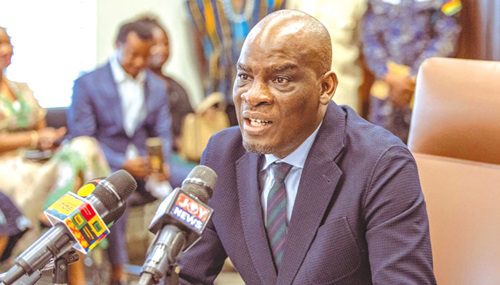
Education Minister Haruna Iddrisu has outlined a long term plan to end the recurring pressure on the Computerised School Selection and Placement System (CSSPS), with infrastructure expansion at its core.
He announced the plan during a courtesy visit to the CSSPS Centre at the GNAT Hall in Accra, where students and parents had gathered to resolve placement complaints.
The Minister said the crisis stems from a shortage of spaces in the category A schools most candidates prefer, a gap that no quick administrative fix can close. He pointed to new dormitories, classrooms and model schools, backed by World Bank funding, alongside a planned overhaul of the CSSPS as the path to a lasting solution.
Government Pledges Patient Solution to CSSPS Crisis
Hon. Iddrisu acknowledged the frustration many families face but asked for understanding. He made clear that the problem cannot be solved within a single placement cycle.
“Our government will fix this crisis with time. We have to invest long-term in infrastructure: more dormitories for girls and boys, more classrooms, more laboratories, more workshops”.Education Minister Hon. Haruna Iddrisu
In the meantime, he urged affected students and parents to exercise restraint while the CSSPS team works through their concerns. He said he had instructed the team to treat every complaint with compassion and assured candidates that the process would continue after schools reopen on September 18.

Category A Schools at the Heart of Placement Pressure
The Minister identified the preference for category A schools as the main source of the difficulty. He said vacancies exist in all categories, with category C schools holding the largest number, followed by category B and then category A.
“But we will be deliberate about expanding infrastructure in the much preferred category A. That is where the problem emanates from,” he explained. The numbers, he noted, show the size of the challenge. Candidates submitted 313,000 applications against 76,000 vacancies, leaving the system unable to meet demand for the most popular schools.
Hon. Iddrisu encouraged families to look beyond category A. He said evidence shows students from category C schools have performed well, with some progressing to university and beyond.
Read also:
- Ghana vs Côte d’Ivoire headlines Group C in 2027 AFCON Qualifiers as Old Rivals Meet
- GFA to distribute 3,000 footballs, 15,000 jerseys to Colts Clubs
- SHS Double-Track: Abolishing it is not the way to go — CPP’s Kwame Jantuah
- Gov’t commits nearly GH¢2bn to School Feeding Programme, reaches 4.5m children
- Veteran Nigeria actor Olu Jacobs dies at 84
Ten New Model Schools for Deprived Areas
A key part of the government’s plan is the construction of new category A schools in underserved communities. The Minister said the government is expanding existing category A schools and working with World Bank support to build 10 new model category A schools in deprived parts of the country.
The funding comes through the US$300 million Transformative Secondary Education for Access, Results and Relevance for Jobs (STARR-J) Project. The project is designed to widen access, improve quality and relevance, and tackle infrastructure deficits created by the expansion of Free SHS.
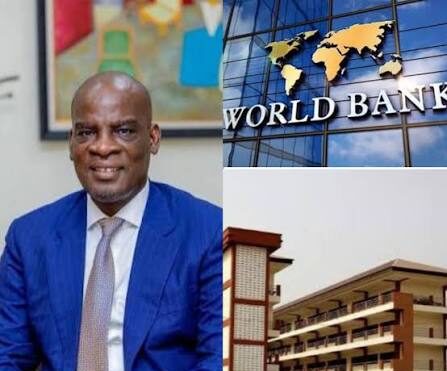
The government’s target under the project is that by 2027, no senior high school in Ghana will run the double-track system. Parliament has approved the US$300 million facility to finance the programme.
CSSPS Overhaul and Review on the Cards
Beyond infrastructure, the Minister signalled changes to the placement system itself. He announced that the government will overhaul and review the CSSPS, although he maintained that it remains a system largely based on merit.
He also questioned the various reserved slots in the process, including those set aside for alumni, faith-based institutions, traditional rulers and opinion leaders. He suggested such allocations amount to protocol rather than merit and said government would rather give priority to catchment areas so students can attend schools near their homes.
The Minister further stressed that neither he, his deputy nor the Director General has access to the system, a measure he said protects its independence and transparency.
Hon. Iddrisu noted that the system has already made significant progress this year. Of the 604,000 candidates qualified for placement, 527,000 have been placed, representing 87 percent.
He said the CSSPS team will attend to all remaining candidates before school resumes, with room for every qualified student even after reopening.
Ato Forson Links Crisis to Past Neglect
Finance Minister Dr. Cassiel Ato Forson has also weighed in on the placement difficulties. In a recent interview in Kumasi, he blamed the previous New Patriotic Party administration for failing to sustain investment in secondary school infrastructure started under Presidents Nkrumah, Mills and Mahama in his first term.

He said the Mahama administration has secured the World Bank funding under the STARR-J Project to close that gap. How quickly the new classrooms, dormitories and model schools take shape will determine whether future placement cycles bring relief to students and parents.