
ELS: M,BN360 NEWS
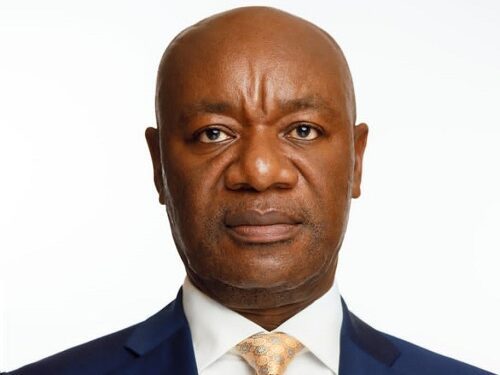
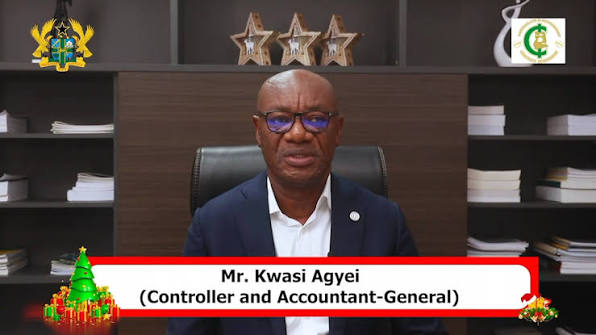
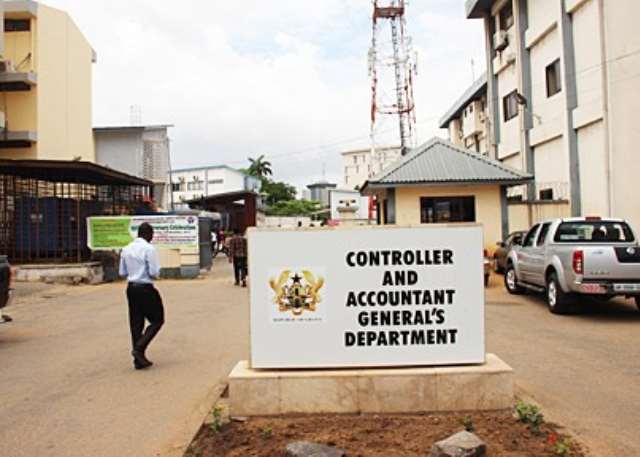
The Controller and Accountant-General’s Department has ordered the closure of any bank account opened by a public institution without its written approval, with the money sitting in those accounts to be swept into the Consolidated Fund. The directive is contained in Circular No. CC.T01/26, issued and signed by Controller and Accountant-General Kwasi Agyei.
The circular follows the department’s observation that some Covered Entities have been walking into commercial banks and opening accounts on their own authority, a practice that keeps public money outside the central view of the Treasury.
CAGD is treating the conduct as a breach of statute rather than an administrative lapse, and it has attached both closure and sanctions to continued non-compliance. The department anchored its position in the Public Financial Management Act, 2016 (Act 921).
“This practice infringes upon Section 51(1) of the Public Financial Management Act, 2016 (Act 921), which grants the Controller and Accountant-General the sole authority to approve the opening of bank accounts for all Covered Entities”.Controller and Accountant-General Kwasi Agyei
That provision sits at the centre of Ghana’s Treasury Single Account architecture. The Controller and Accountant-General is mandated to open accounts with the Bank of Ghana and its agents for the deposit of public funds subject to compliance with the Treasury Single Account system, and to authorise the opening of an account for a covered entity.
Accounts created outside that approval chain sit beyond the consolidated cash position the Treasury relies on when it plans borrowing and releases. All Covered Entities have therefore been directed to obtain prior written approval before opening any account with the Bank of Ghana or with any commercial bank.
The instruction covers new accounts across the board rather than a category of institutions or a class of transactions.
Closure, Sweeps and Sanctions
The consequences set out in the circular are unusually direct for a compliance notice. “Failure to comply with this directive shall result in the closure of any bank accounts opened without the requisite approval, and all funds held in such accounts shall be transferred into the Consolidated Fund,” it says.
Read also:
- Ghana Set to Receive Up To 2,600 Life-Changing Surgeries
- We Have Lost So Much Money Through Compensation Claims — Roads Minister
- Importers and Exporters Association Calls on Government to Simplify Export Procedures
- King Promise To Perform At Medeama CAF Champions League Match
- Vacation Trials Can Proceed, Supreme Court Rules Against Oppong Nkrumah
Beyond closure, the department signalled that it will pursue penalties. It said it shall enforce appropriate sanctions in line with the Public Financial Management Act and other applicable laws against any Covered Entity that fails to comply, closing with a request for the usual cooperation of the institutions concerned.
For an agency running an unapproved account, the practical reading is that the balance no longer belongs to it. Once the funds enter the Consolidated Fund, releasing them again requires the ordinary appropriation and warrant process, which means an entity that treated an off-book account as working capital could find its operations disrupted.
The directive lands in a year of severe audit findings. The Auditor-General’s Report on the Public Accounts of Ghana covering ministries, departments and other agencies for the year ended 31 December 2025 put total irregularities at GH¢5,266,315,079, the highest in five years and more than double the 2024 figure.
Cash irregularities alone accounted for GH¢410.7 million, while payroll anomalies approached GH¢20 million. Unapproved accounts feed directly into that pattern. Money held outside the sanctioned banking arrangement is harder to trace, easier to spend without documentation and frequently invisible until auditors arrive.
Over a longer horizon, the Auditor-General has flagged the equivalent of US$19.96 billion in public account irregularities between the 2010 and 2025 financial years, or GH¢129.8 billion in cedi terms.
A Compliance Test for the Treasury
Enforcement is where the circular will be judged. CAGD manages government finances across more than 703 MDAs, and reconciling every account held by that network against its approval records is a substantial exercise.
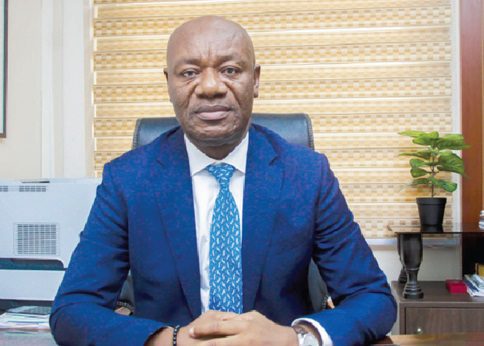
Mr Agyei, a chartered accountant who assumed office on Monday, 15 April 2024 after serving as Deputy Controller and Accountant-General in charge of treasury, has spent his career inside that system and understands where the gaps sit.
Whether the warning changes behaviour will depend on whether accounts are actually closed and balances actually moved. Circulars of this kind have been issued before without a visible sweep following them, and public financial management reform in Ghana has often stalled at the point where a rule meets an institution unwilling to surrender its cash.
The next audit cycle will show which entities took the instruction seriously.