Els: MBN360 News
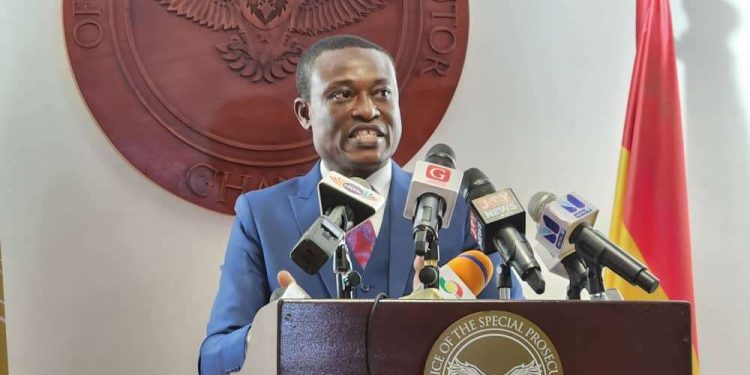
Private Legal practitioner, Thaddeus Sory has said that the law that established the Office of the Special Prosecutor embeds executive control, raising fundamental concerns about the office’s independence in Ghana’s fight against corruption, right from the beginning.
His remarks come on the back of a High Court ruling in Accra on April 15, 2026, directing the Attorney-General’s Department to immediately assume control of all criminal prosecutions being handled by the OSP, pending formal authorisation. The decision effectively strips the OSP of its prosecutorial role in ongoing cases, transferring that responsibility to the Attorney-General’s Department.
In an article on the dispute, he titled, So, the law is once again the culprit? Mr Sory argued that the legal framework establishing the OSP embeds executive influence, despite public expectations that the office would operate independently in the fight against corruption.
“What does the OSP law say about the SP’s appointment? Rather than providing for an independent or popularly accountable process… the law mandates that the SP be appointed by the President,” he said.
He noted that the same appointing authority also selects the Attorney-General, a situation critics have long argued undermines prosecutorial independence.
“The law further grants the President the authority to appoint the governing board of the OSP, raising additional questions about institutional independence,” Sory added.
He also pointed to the role of the Attorney-General in the appointment process, describing it as a key weakness in the structure of the office.
Read also:
- Glitz and glamour as Okyeame Kwame marks 50th birthday in style
- Semenyo Confident Ahead of Potential Title Decider Against Arsena
- Sundowns Beat Esperance to Book CAF Champions League Final Spot
- Spurs Condemn Racial Abuse Targeting Kevin Danso
- Tricycles Under Free Primary Healthcare, Not Ambulances – President Mahama
“More troubling still, the appointment of the SP is preceded by a recommendation from the A-G. In fact, the law goes so far as to allow the A-G to appoint the SP directly, where the President delegates such authority,” he said.
According to Sory, these provisions create a contradiction at the heart of Ghana’s anti-corruption architecture, where concerns about executive control over the Attorney-General have effectively been replicated within the OSP framework.
“It was clear from the law itself that the whole law was a fiasco ab initio. We just went round in circles and arrived at the same point,” he said.
The comments come amid heightened debate over the relationship between the OSP and the Attorney-General, particularly following a High Court ruling that the Special Prosecutor requires authorisation from the Attorney-General to prosecute certain cases.
Sory argued that the current controversy reflects long-standing design flaws rather than a sudden legal obstacle.
“Our argument was that once the President appoints the A-G, we cannot trust the A-G to enforce our corruption laws. Yet we put it back in the law,” he said.
He added that the situation highlights broader questions about how Ghana structures its anti-corruption institutions and whether existing legal frameworks can guarantee the independence required to sustain public confidence.