Els: MBN360 Politics
The Member of Parliament for South Dayi and Majority Chief Whip, Rockson-Nelson Dafeamekpor, has accused the Office of the Special Prosecutor (OSP) of misinterpreting criticism of its work as attempts to abolish the institution.
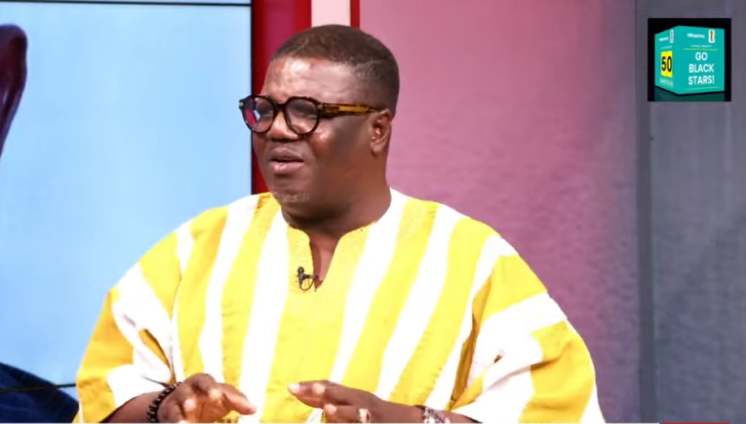
Speaking in an interview on JoyNews, he said concerns raised by politicians about the OSP’s performance are being misunderstood.
His comments follow remarks by the Special Prosecutor, Kissi Agyebeng, who suggested that politicians from both sides want the office disbanded.
Responding to this, Mr Dafeamekpor said, “I think it’s confusing constructive criticism with the fact that we want it gone. Nobody wants the Office of the Special Prosecutor gone.”
He admitted that he had previously questioned the relevance of the office but said that the position was based on performance concerns, not a personal attack.
“I said I wanted it gone, but I gave a reason. I said it’s not performing,” he explained.
According to him, the key issue is whether the institution is delivering value for the resources it receives.
“We are giving you so many millions. You are only telling us that you are handling about three, four, five, seven, ten cases. That is not the value,” he said.
He said that his criticism is directed at the institution as a whole, not at the individual leading it.
“It’s not about Kissi Agyebeng. It’s about the entire office. Are we getting value for money? That’s the question,” he stated.
Mr Dafeamekpor maintained that the OSP should remain in place but must improve its output.
“If we are getting value for money, it should stay. And I’m saying it should stay. But they ought to do more,” he said.
He also raised concerns about the centralised nature of the office’s operations, arguing that it limits its effectiveness across the country.
Read also:
- Gov’t to Deploy 2,500 Transformers in Kumasi to Improve Power Supply Reliability
- Banks’ Earnings Rise As Costs Growth Moderates Sharply
- WHO Tests Global Pandemic Preparedness in Major Global Simulation Exercise
- GRIDCo Fire Outbreak: 2 Generation Units Have Been Restored – Energy Minister
- We Inherited Crisis And Confronted It Head-On, Honourable Jinapor
“The centralisation of the activity is not helping. There are problems in the regions. There are problems in the districts. It’s not there. His officers are not there,” he said.
He said that, in the absence of a strong regional presence, other state institutions continue to carry much of the workload.
“We still have the policemen doing the work for the Attorney-General; meanwhile, we brought you on as an auxiliary in the anti-corruption fight,” he added.
On the OSP’s budget allocation of GH¢158,936,458 in 2026, Mr Dafeamekpor said the figure appears excessive when compared to its output.
“That’s too much for his output,” he said.
“You must compare the input and the output. We are inputting so much, he’s outputting very little. That’s the argument,” he explained.
He contrasted this with the work of the Attorney-General’s department, which he said handles a far greater number of cases despite facing serious logistical challenges.
“If you see their workload on a regional basis, you will be impressed,” he said.
He revealed that some state attorneys operate under difficult conditions, sometimes using their own resources to carry out official duties.
“They don’t even have vehicles in places. Some of the principal state attorneys… use their own vehicles when going to courts,” he noted.
He said that a specialised body like the OSP should be easing the burden on existing institutions.
“If we have set up such a specialised institution, you can only do more to assist the Attorney-General and other prosecutorial institutions in the anti-corruption fight,” he said.
He said that while the OSP remains important, it must significantly improve its performance to justify the resources allocated to it.
“He doesn’t appear to be producing more vis-à-vis the value of what we are giving him,” he said.