Els: MBN360 ECONOMIC
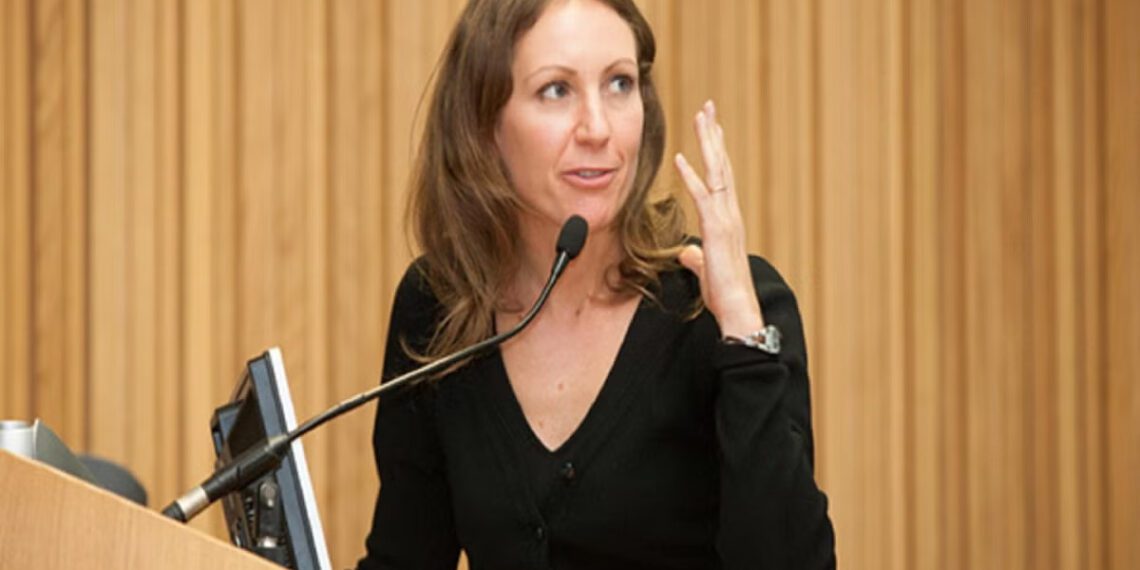
The International Monetary Fund (IMF) has ushered in a new era of economic leadership with the appointment of former Bank of England policymaker Silvana Tenreyro as its next Chief Economist, a move that comes at a pivotal moment for the global economy.
With geopolitical tensions, trade disruptions, inflation risks and slowing growth continuing to shape economic decisions across continents, the IMF is placing one of the world’s most respected monetary economists at the center of its policy and research agenda.
For emerging economies such as Ghana, the appointment could not have come at a more significant time. As the country continues its economic recovery under the IMF-supported programme, policymakers, investors and financial institutions closely monitor every assessment and recommendation produced by the Fund. The IMF’s flagship reports often influence fiscal policy, monetary decisions, investor confidence and sovereign credit outlooks, making the choice of Chief Economist especially relevant beyond Washington.
Tenreyro will officially assume office on August 10, 2026, succeeding Pierre-Olivier Gourinchas, who recently returned to academia after serving as the Fund’s Chief Economist.
A Globally Respected Economist Takes the Helm
Announcing the appointment, IMF Managing Director Kristalina Georgieva praised Tenreyro’s exceptional academic background and extensive experience in policymaking, expressing confidence that she would strengthen the institution’s influence during a period of profound global change.
“I am delighted to announce that Silvana Tenreyro will join the Fund as our next Chief Economist,” Georgieva said.
“Silvana is a globally respected economist who combines outstanding academic achievements with extensive policy making experience and a close engagement with leading international institutions. At a time of profound transformation and heightened uncertainty in the global economy, Silvana’s mix of intellectual leadership and policy experience will help ensure that the Fund’s analytical work and multilateral surveillance and policy advice will remain at the cutting edge in support of our membership.”Kristalina Georgieva
The appointment underscores the IMF’s determination to ensure its research and policy recommendations remain relevant as governments confront increasingly complex economic challenges.

Why Ghana Will Be Watching Closely
Although the appointment is global in scope, its implications extend directly to countries such as Ghana.
The IMF’s Research Department produces the World Economic Outlook, regional economic assessments and policy papers that often shape investor sentiment and government planning. Ghana’s Ministry of Finance, the Bank of Ghana and international investors routinely rely on these analyses when evaluating the country’s economic prospects.
As Ghana works to sustain macroeconomic stability after debt restructuring, restore fiscal discipline and strengthen private sector confidence, future IMF assessments under Tenreyro’s leadership could play a key role in influencing international perceptions of the country’s progress.
A balanced global outlook that recognizes improvements in inflation, fiscal consolidation and exchange rate stability could further support investor confidence in Ghana’s financial markets, including the Ghana Stock Exchange and the domestic bond market.
Academic Excellence and Policy Experience
Tenreyro arrives at the IMF with an impressive combination of academic scholarship and real-world policymaking experience.
Read also:
- Treasury bill auction attracts GH¢10bn in bids, oversubscribed by 77%
- Decolonise Ghana’s curriculum – Former NaCCA DG to gov’t
- Failed Leadership Behind Ghana’s Recurring Flood Crisis – Archbishop Duncan-Williams
- Miracles Aboagye and others are being probed over alleged misappropriation of GHS55m – EOCO
- Bono Region records 1,145 new HIV infections from January to May 2026
She joins the Fund from the London School of Economics, where she has served as the James E. Meade Professor of Economics since 2004. Throughout her distinguished academic career, she has produced influential research on international trade, macroeconomics and monetary policy, earning widespread recognition within the economics profession.
Her experience extends well beyond academia.
She served as an external member of the Bank of England’s Monetary Policy Committee from 2017 to 2023, helping shape monetary policy during one of the most turbulent periods in recent economic history that included the COVID-19 pandemic, supply chain disruptions and surging inflation.
Earlier in her career, she worked at the Federal Reserve Bank of Boston and also served on the Bank of Mauritius’ Monetary Policy Committee, providing her with valuable insights into both advanced and emerging economies.
She is currently a member of the IMF Managing Director’s External Advisory Group, giving her firsthand knowledge of the institution she is now set to help lead.
Communication Seen as a Major Strength
Beyond her technical expertise, IMF leadership believes Tenreyro possesses another quality that has become increasingly valuable in modern economic policymaking, the ability to explain complicated issues in a way that policymakers, investors and the public can understand.
Georgieva highlighted this strength while introducing the incoming Chief Economist.
“She is also known for her ability to communicate complex economic issues with clarity and precision and fosters constructive dialogue across diverse audiences. These qualities will serve her well as one of the Fund’s principal voices on the global economic outlook and as the leader of the Research Department.”Kristalina Georgieva
At a time when central banks and governments are under growing pressure to explain difficult policy choices, effective communication has become almost as important as economic expertise itself.
A New Voice for the Global Economy
An Argentine, British and Italian national, Tenreyro holds a doctorate and master’s degree in economics from Harvard University and earned her bachelor’s degree in economics from the National University of Tucumán in Argentina.
As Chief Economist, she will oversee the IMF’s research agenda while leading the production of the institution’s flagship economic outlooks that guide governments, investors and financial markets around the world.
For Ghana and other emerging economies, her analyses will be closely followed as policymakers seek guidance on navigating global financial conditions, sustaining economic growth and managing inflation in an increasingly uncertain international environment.
Her appointment signals more than a leadership transition. It reflects the IMF’s intention to sharpen its economic analysis at a time when countries across the globe are searching for credible policy direction amid shifting trade patterns, evolving monetary conditions and persistent geopolitical risks.