Els: MBN360 Extractives/Energy
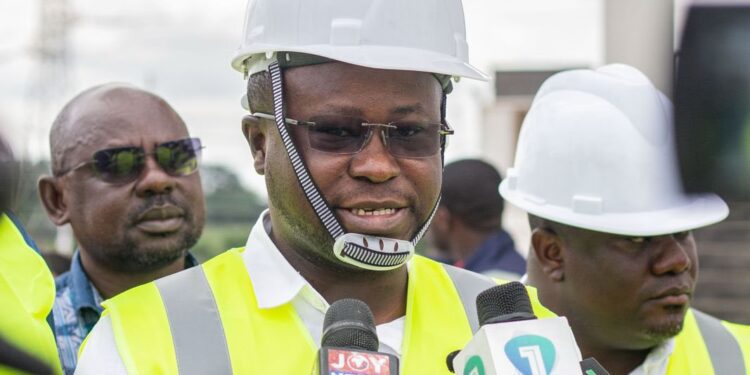
on. Michael Kwasi Aidoo, Member of Parliament and member of the Parliamentary Select Committee on Energy, has launched a scathing critique of the Ghana National Gas Company (GNGC) following a major system failure at the Atuabo Gas Processing Plant.
The lawmaker’s demand for accountability follows a joint statement by the Ghana Grid Company (GRIDCo) and Ghana Gas on April 15, 2026, which confirmed a “significant technical fault” in the Burner Management System (BMS) controller for the Heat Medium System (HMS).
This critical failure led to an emergency shutdown of the facility, curtailing gas supply to thermal power plants and triggering widespread power disruptions across the nation.
“Heads must roll at Ghana Gas – from senior management to those who approved dubious contracts – to prevent further sabotage of our energy security. This revelation unmasks a pattern of false claims and poor procurement decisions that have led to widespread blackouts. What is the Minister of Energy doing to hold this management accountable for the financial burden placed on the nation?”Hon. Michael Kwasi Aidoo

The Oforikrom legislator asserts that this latest crisis is not merely a technical glitch but a “chronicle of incompetence, deception, and national cost” that vindicates warnings he issued nearly a year ago.
In August 2025, Aidoo raised alarms regarding botched maintenance at the plant, claims which Ghana Gas leadership vehemently dismissed at the time as “false and misleading.”
According to the MP, the current breakdown of the HMS the very system at the heart of the 2025 controversy proves that the previous maintenance exercise was a “fiasco” involving the use of incorrect products by an allegedly inexperienced contractor, Blue Power Ltd.
He arguesd that without GRIDCo’s recent transparency, the public would remain in the dark about the systemic failures and “managerial incompetence” that have now plunged the country back into the “dreaded ‘dumsor’.”
Technical Negligence and the HMS Crisis

The failure of the Burner Management System (BMS) controller is more than a routine hardware malfunction; it represents a total collapse of the safety and operational heart of the Atuabo plant.
The HMS is responsible for regulating the extreme temperatures required for gas processing, and its failure necessitated a “complete replacement” of the system.
Read also:
- Vice President Opoku Agyemang Addresses Ghanaian Diaspora In Spain
- Mahama says power outages are not “dumsor” but planned grid upgrades
- Pope Leo XIV Describes Angola as Beautiful Yet Wounded
- Ben Proudfoot calls for urgent digitisation of Ghana’s historic film archives
- Supreme Court must embrace technology to reduce delays – Nana Oye Bampoe Addo
Hon. Aidoo points to a “pattern of deception,” noting that the very components now failing were supposedly serviced in 2025 by Blue Power Ltd., a firm he claims lacked the requisite experience for a multi-million dollar contract.
“The state is now paying the price for a botched job that was covered up with corporate PR,” Hon. Aidoo remarked, highlighting that the “unforeseen development” cited by officials was, in fact, an inevitable consequence of using the “wrong products” during previous interventions.
Erosion of National Energy Security

This technical shutdown has had a ripple effect across Ghana’s energy value chain, exposing the fragility of the nation’s energy security.
With the curtailment of gas supply, thermal power plants in the Aboadze power enclave were unable to operate at full capacity, leading to a significant generation deficit.
This gap in the grid has forced GRIDCo to manage the load, resulting in unannounced outages that affect both industrial productivity and domestic life.
The MP argues that the “systemic failures at Ghana Gas” constitute a direct threat to national stability, as the reliance on a single, poorly maintained processing hub creates a “single point of failure” for the entire power sector.
The Call for Accountability and Transparency

As the government and the Ministry of Energy face mounting pressure, the focus has shifted to the financial implications of this “emergency.”
Beyond the cost of replacing the damaged BMS controller, the nation faces millions of dollars in lost economic output and the high cost of liquid fuel alternatives for power generation.
Hon. Aidoo’s demand that “heads must roll” serves as a call for a full-scale forensic audit into the procurement processes at Ghana Gas.
“GRIDCo’s transparency has inadvertently unmasked Ghana Gas’s cover-up,” the MP noted, insisting that the “full extent of the damage” must be laid bare to ensure that such “technical sabotage” does not recur under the guise of “routine maintenance.”