ELS: MBN360 NEWS
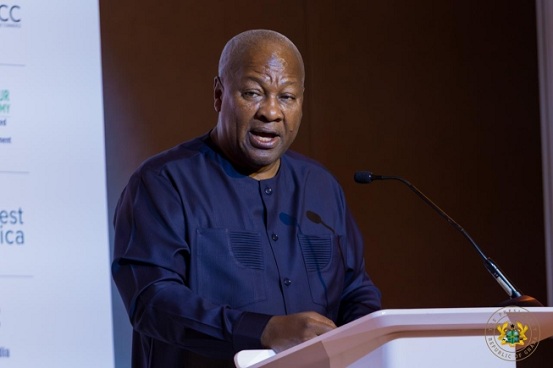
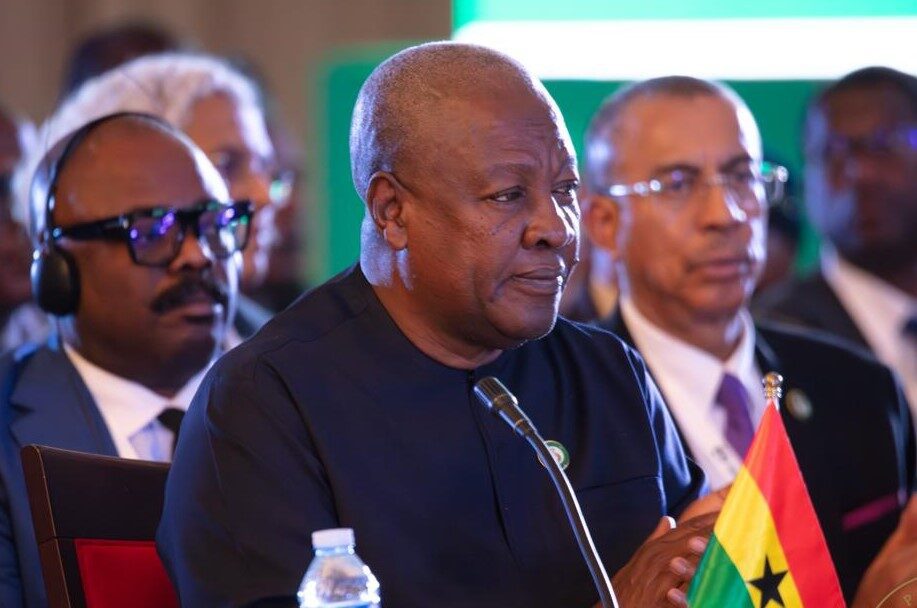
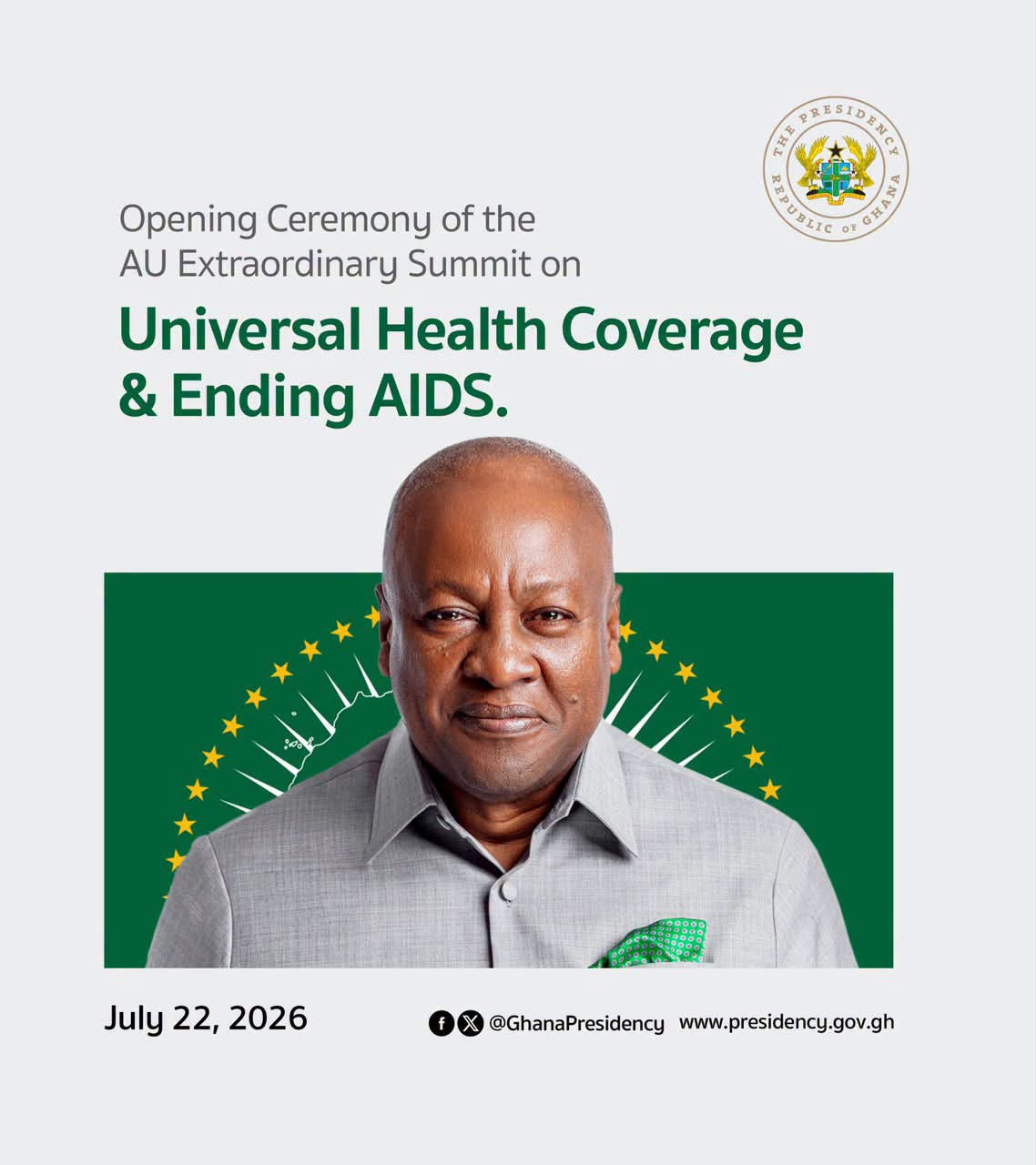
President John Dramani Mahama has urged African leaders to treat the sharp decline in global health funding as a turning point for the continent, using the opening of the African Union’s Extraordinary Session on Health in Accra to announce new maternal health commitments, push for greater investment in African-made medicines and vaccines, and call for a self-reliant health system capable of withstanding future global shocks.
H. E. Dramani Mahama warned that Africa’s heavy dependence on foreign health financing and imported medical supplies leaves the continent vulnerable, while stressing that stronger local manufacturing, sustainable financing and equitable healthcare for conflict-affected populations must become central to Africa’s health agenda.
“Development assistance for health fell more than one fifth in a single year from around $49.6 billion to about $39.1 billion.”H. E. Dramani Mahama
He noted that many member states still finance roughly half of their health budgets from external sources. While he acknowledged the temptation to reach for words like crisis or catastrophe, he urged delegates instead to respond with a sense of urgency rather than despair, describing the fading aid system as scaffolding rather than the tower it was meant to support.
Progress Cited Alongside the Continent’s Disease Burden
H. E. Dramani Mahama walked delegates through a mix of sobering figures and hard-won gains. He noted that Africa remains home to two-thirds of the 40 million people living with HIV worldwide, even as AIDS-related deaths have fallen by nearly three-quarters since their peak. On tuberculosis, he said incidence had dropped by 28 percent and deaths by 46 percent in under a decade, despite seventeen of the world’s thirty highest-burden countries being on the continent.
He extended the picture to hepatitis, neglected tropical diseases and a fast-rising wave of non-communicable diseases, which he said now claim more than two million African lives annually before age seventy, with cervical cancer alone killing over 80,000 women each year.
A New Push on Maternal and Child Health
Turning to maternal health, President John Mahama offered his personal backing to President Samia Suluhu Hassan in her role as the African Union’s Champion for Maternal and Child Health, announcing that Ghana intends to work closely with her through the Accra Reset on what he called the Mother Africa Call to Action.
He described the initiative as the continent’s first charter in support of the African Union’s Road Map on Maternal and Child Survival, built around measurable targets and clear reform principles.
Read also:
- CompuGhana Rewards Customers, Opens New East Legon Showroom
- Nearly 1 million Ghanaians lifted out of poverty in a year — Ato Forson
- Ghana’s economy tops $100 Billion for first time, now 8th largest in Africa – Ato Forson
- St Mirren agree deal to sign Ghana U20 winger Abdul Hakim Sulemana
- GPL: Medeama sign highly rated midfielder Etse Dogli from Heart of Lions
Warning Against Leaving Conflict Zones Behind
H.E. Mahama cautioned that Africa’s broader health ambitions would mean little if they failed to reach communities living through conflict and displacement, pointing to regions where clinics have been destroyed and vaccine cold chains reduced to broken equipment.
He argued that instability in one part of the continent could not be allowed to undermine health responses elsewhere, using the example of unrest in the Congo Basin potentially distracting from efforts to contain Ebola near the Nile.
“The sovereign health agenda that is guiding our steps as we march out of dependence will ring hollow if it cannot reach every corner of our continent.”H.E Dramani Mahama
Africa’s Reliance on Imported Medicines and Vaccines
Mahama then turned to what he described as one of the continent’s most urgent vulnerabilities, its dependence on imported medical supplies. He told delegates that Africa imports around 70 percent of its medicines, more than 90 percent of its medical devices and over 99 percent of its vaccines, a dependency he linked directly to the continent’s experience during the COVID-19 pandemic, when African nations were often served last despite having funds ready to pay.
He said that experience had left a lasting impression on the continent’s leadership.
Signs of a Shifting Manufacturing Landscape
As evidence of progress, Mahama pointed to vaccines now being produced in Dakar, messenger RNA research advancing in Cape Town, Ghana’s newly established Vaccine Institute engaging directly with global biotech strategists, and a new biologicals facility operating in Kigali.
He announced that the Pharmaceutical Manufacturing Plan for Africa had moved beyond the planning stage, and that the African Medicines Agency, led by Dr. Mimi Darko, was transitioning from treaty commitments into functioning institutional machinery. He added that a Strategic Joint Procurement mechanism and a Continental Active Pharmaceutical Ingredient Strategy were being developed to give the continent’s manufacturers the support they have long needed.
President Mahama closed his address by framing the moment as a turning point for the continent’s health independence, describing African leaders as custodians of a transformation that now extends from maternal health charters to the factories expected to anchor Africa’s future medicine and vaccine supply chains.