Els: MBN360 Health
The Director-General of the Ghana Health Service (GHS), Dr. Samuel Kaba Akoriyea, reaffirmed the Service’s commitment to strengthening adolescent sexual and reproductive health services through the government’s Free Primary Healthcare (FPHC) initiative, calling for stronger family involvement, closer collaboration and community-driven interventions to address adolescent pregnancy and other reproductive health challenges.
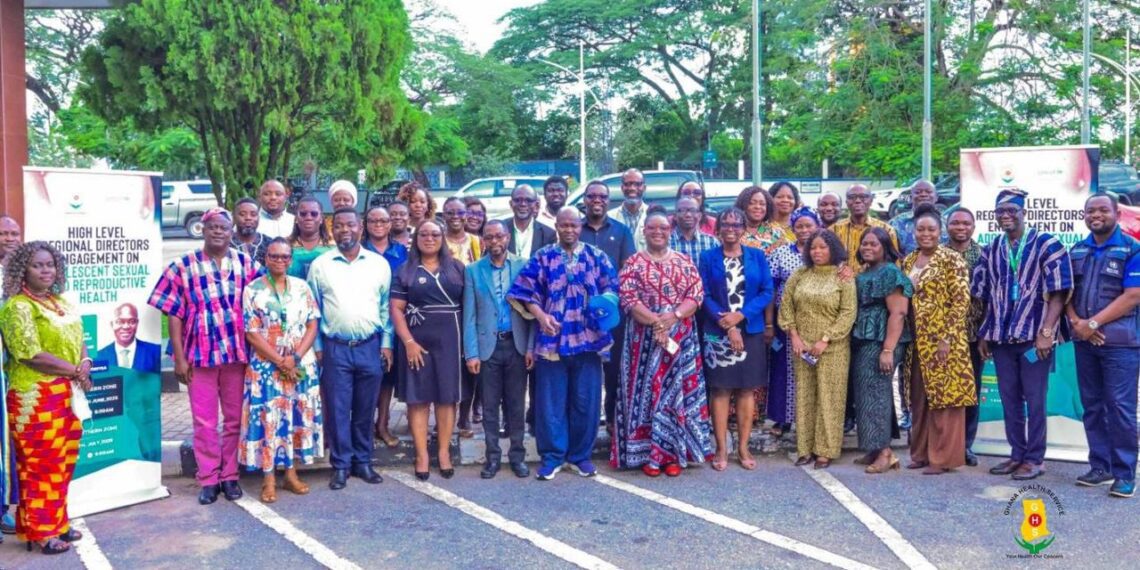
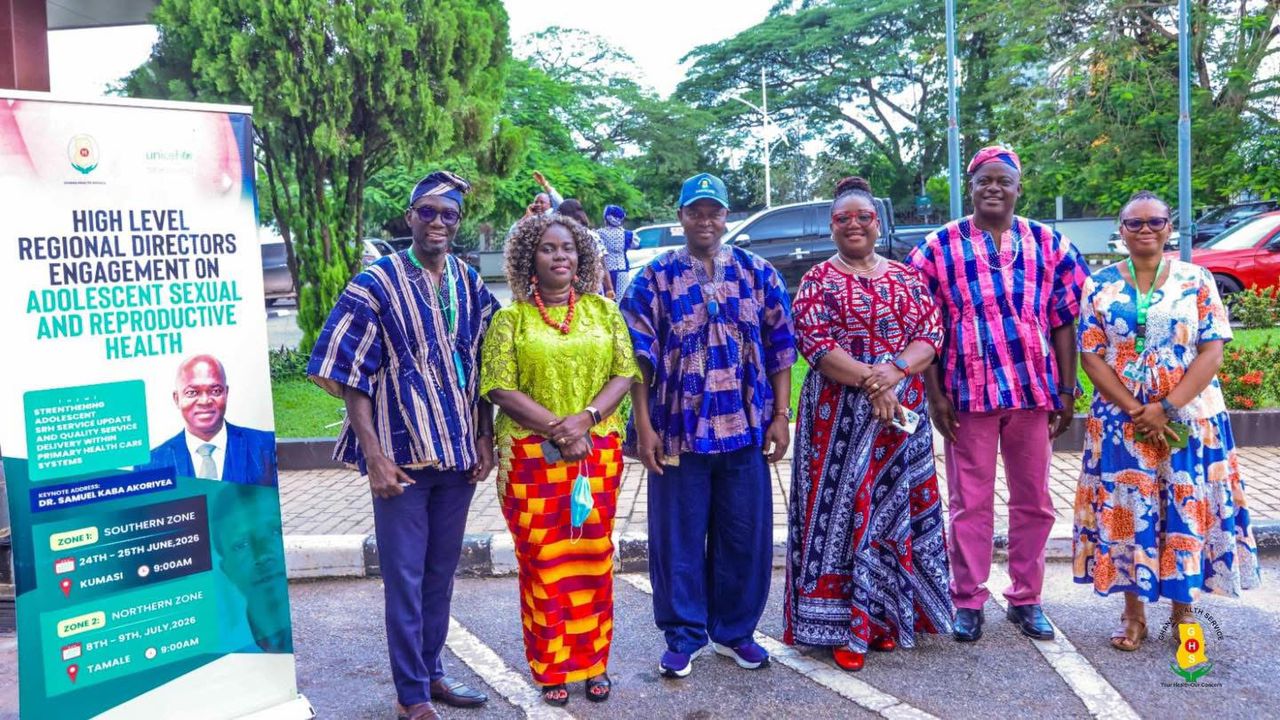
Speaking at the opening of the Southern Zone Meeting of Regional Directors, Deputy Directors and Adolescent Health Focal Persons from eight regions, Dr. Akoriyea stressed that improving adolescent health requires practical, coordinated and context-specific interventions that place the needs of young people at the centre of healthcare delivery.
“We must strengthen collaboration, deepen community engagement and implement tailored interventions to reduce adolescent pregnancies and improve reproductive health outcomes.” Director-General of the Ghana Health Service (GHS), Dr. Samuel Kaba Akoriyea,
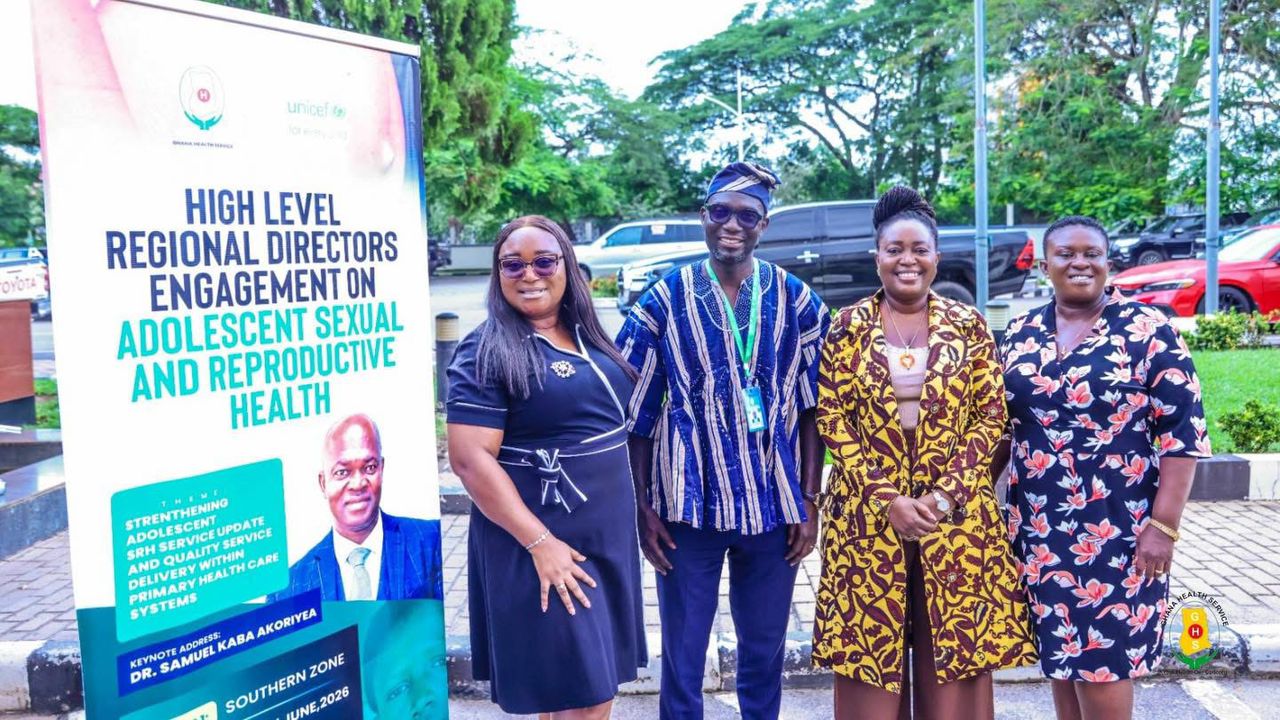
The meeting, organised under the Ghana Health Service’s Safety Net Programme with support from UNICEF Ghana, brought together health managers and adolescent health experts to review progress.
Share experiences and develop strategies for expanding adolescent-friendly health services across the country. The programme aims to improve access to sexual and reproductive health information and services for vulnerable adolescents while supporting pregnant schoolgirls to continue their education.
Dr. Akoriyea observed that although Ghana has developed several policies and programmes to improve adolescent health over the years, their implementation has often been undermined by weak institutional coordination.
“We have good plans, but we are unable to implement them effectively because of fragmented institutional coordination. We need to work together more closely and ensure that all stakeholders are aligned towards achieving the same goals.” Director-General of the Ghana Health Service (GHS), Dr. Samuel Kaba Akoriyea,
Prioritising Adolescents Under Free Primary Healthcare
The Director-General described the Free Primary Healthcare initiative as an important platform for expanding access to adolescent friendly health services and creating safe environments where young people can seek information and healthcare without fear of discrimination or stigma.
He explained that improving adolescent sexual and reproductive health is central to strengthening Ghana’s primary healthcare system, particularly as the country seeks to reduce adolescent pregnancies and improve long-term health outcomes.
“Through the Free Primary Healthcare initiative, we need to interact with adolescents openly and honestly about their sexual and reproductive health.” Director-General of the Ghana Health Service (GHS), Dr. Samuel Kaba Akoriyea,
According to him, health facilities must become trusted spaces where adolescents can receive accurate information, counselling and appropriate healthcare services while being treated with dignity and confidentiality.
He encouraged health professionals to adopt approaches that respond to the unique realities facing adolescents in different communities rather than relying solely on standardised interventions.
Taking a Personal Approach to Adolescent Pregnancy
Dr. Akoriyea urged participants to view adolescent health challenges from a personal and family perspective, arguing that greater empathy would lead to more effective interventions.
He challenged health managers and stakeholders to reflect on how they would respond if adolescent pregnancy affected their own families, saying such reflection would encourage more compassionate and practical responses.
“We need to start looking at these issues from a very personal point of view. If we do that, we will get it right. What happens if your own daughter becomes pregnant? What will be your reaction? Or if your adolescent son returns home to say he has impregnated someone’s daughter? These are the realities we need to work around.”Director-General of the Ghana Health Service (GHS), Dr. Samuel Kaba Akoriyea
The Director-General stressed that supporting pregnant adolescents requires the active involvement of families, communities and healthcare providers to ensure they receive appropriate care, emotional support and opportunities to continue their education.
He added that health workers must strengthen their capacity to respond effectively to the needs of adolescents while promoting acceptance and reducing stigma within communities.
Tailoring Interventions to Local Contexts
Dr. Akoriyea also called for the Safety Net Programme to be adapted to the specific cultural and social realities of each region to improve its effectiveness.
Read also:
- Children, elderly, PWDs to receive priority support in flood response – Gender Ministry
- Alajo flood tragedy: Three die from electrocution
- Analyst Predicts More Gains for Resurgent Cedi
- Accra at a Standstill: Floodwaters Expose a City In Crisis
- Ghana Alerts Travellers As South Africa Faces Heightened Protest Security Threats
He noted that differences in traditions, beliefs and community structures require interventions that reflect local circumstances rather than adopting a uniform national approach.
“Let us tailor the Safety Net Programme to the specific needs of each region, taking into consideration the cultural context and local realities,”Director-General of the Ghana Health Service (GHS), Dr. Samuel Kaba Akoriyea
According to him, locally responsive interventions are more likely to gain community support and deliver sustainable improvements in adolescent health.
Parents Must Lead Sexual Health Conversations
The Director-General identified limited communication between parents and adolescents on sexual and reproductive health as one of the major factors contributing to misinformation and risky behaviours among young people.

He encouraged parents to have open and honest discussions with their children, noting that many adolescents turn to unreliable sources for information when family conversations are absent.
“Parents are supposed to open up and speak with their adolescents about sexual and reproductive health. We need to examine the gaps in our society that make these conversations difficult.”Director-General of the Ghana Health Service (GHS), Dr. Samuel Kaba Akoriyea
He said strengthening communication within families would complement school-based education and healthcare interventions while helping adolescents make informed decisions.
Digital Platforms Present New Opportunities
Recognising the growing influence of digital technology on adolescents, Dr. Akoriyea urged health professionals and development partners to embrace social media and other digital platforms to deliver credible, engaging and age-appropriate health information.
He noted that while it is impossible to control everything young people consume online, health authorities have a responsibility to provide reliable alternatives that resonate with adolescents.
“You cannot control everything they watch or everything they do. It is up to us, as a service, to provide content and interventions that are informative, engaging and relevant to their lives,”Director-General of the Ghana Health Service (GHS), Dr. Samuel Kaba Akoriyea,
He encouraged programme managers to explore innovative communication strategies capable of reaching adolescents through platforms they use daily.
UNICEF Reaffirms Commitment
Welcoming participants to the meeting, the Ashanti Regional Director of Health Services, **Dr. Adomako Boateng**, described the Safety Net Programme as a critical intervention for supporting adolescents facing social, economic and health-related vulnerabilities.
He said the programme equips young people with the knowledge, confidence and support needed to make informed decisions about their health and future.
Representing UNICEF Ghana, Dr. Paul Dsane Aidoo reaffirmed the organisation’s commitment to expanding the programme nationwide.
He expressed optimism that the Safety Net Programme could be scaled up to every district, emphasising that investing in adolescents is fundamental to Ghana’s long-term social and economic development.
According to him, UNICEF will continue collaborating with the Ghana Health Service and other partners to ensure vulnerable adolescents have equitable access to health information, protection and support.
GHS Commits to Practical Solutions
Closing the meeting, Dr. Akoriyea assured participants of his full support for innovative initiatives aimed at improving adolescent health outcomes.
“You have my full support in this effort. I look forward to seeing us develop workable solutions that can be implemented successfully and produce meaningful results for our adolescents.” Director-General of the Ghana Health Service (GHS), Dr. Samuel Kaba Akoriyea,
The Southern Zone meeting forms part of the Ghana Health Service’s broader strategy, implemented partnership with UNICEF Ghana and other stakeholders, to strengthen adolescent sexual and reproductive health services, reduce adolescent pregnancies and expand access to quality healthcare and psychosocial support for young people across the country.
Health officials expressed confidence that stronger institutional collaboration, increased community engagement and sustained investment in adolescent-friendly services will help create healthier futures for Ghana’s young population while advancing the objectives of the Free Primary Healthcare initiative.