Els: MBN360 News
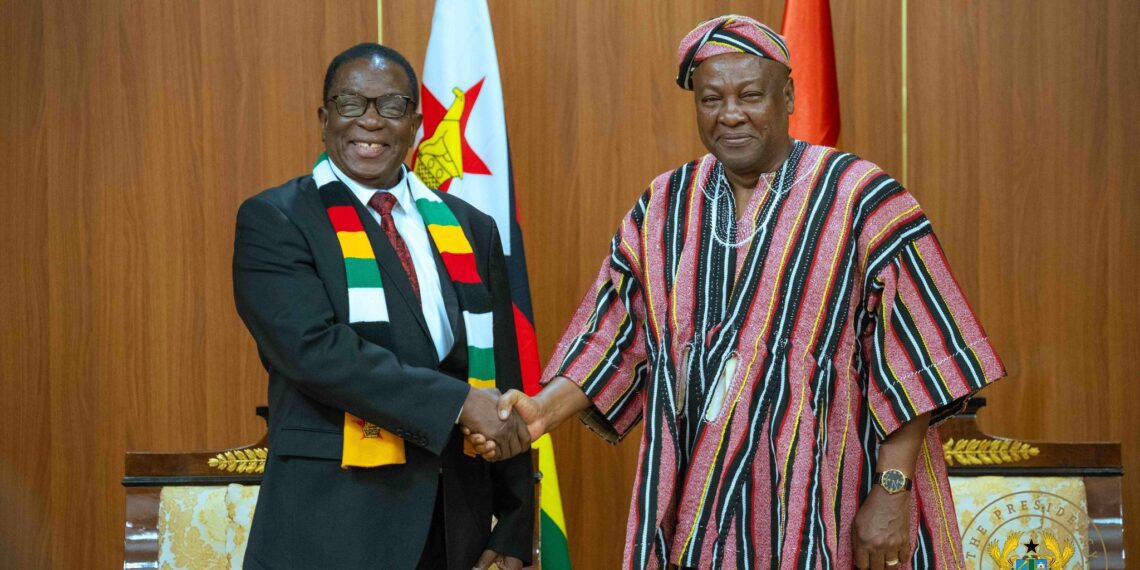
President John Dramani Mahama and Emmerson Mnangagwa have reaffirmed their commitment to strengthening bilateral relations, following high level talks at the Peduase Lodge.
The meeting formed a key part of President Mnangagwa’s three day state visit to Ghana, focusing on expanding cooperation across critical sectors including mining, energy, agriculture, and tourism.
The discussions reflected a shared vision to transform long standing historical ties into practical economic outcomes that benefit both countries. Both leaders emphasized that their partnership, rooted in a common liberation history, must now evolve to address modern development challenges and opportunities.
President Mahama described the engagement as timely, particularly as African nations intensify efforts to enhance intra continental trade under the African Continental Free Trade Area. He stressed that Ghana, as host of the AfCFTA Secretariat, remains committed to fostering economic integration across the continent.
Historical Bonds Shape Modern Relations
Central to the dialogue was a recognition of the deep historical and personal connections between the two nations. President Mahama highlighted the legacy of Robert Mugabe, whose time in Ghana and family ties helped strengthen relations between the countries.
He noted that the longstanding visa free travel arrangement between Ghana and Zimbabwe reflects a relationship built on trust and shared experiences. According to him, these bonds have been further reinforced by agreements such as the General Cooperation Agreement signed in 2023 and the establishment of the Permanent Joint Commission for Cooperation.
President Mnangagwa echoed these sentiments, recalling Ghana’s pivotal role in Zimbabwe’s liberation struggle. He noted that many Zimbabwean freedom fighters received training and support in Ghana, which contributed significantly to the country’s eventual independence.
“It was here in Ghana where our founding father had his ideological consciousness sharpened,” he said, referencing the influence of Ghana’s independence and Pan African leadership on Zimbabwe’s liberation movement.
Expanding Collaboration in Mining and Energy
Both leaders identified mining and energy as priority sectors for enhanced cooperation. President Mahama emphasized the need for African countries to move beyond raw material extraction and focus on value addition and beneficiation.
“In the mining sector, we must work together to promote responsible practices and ensure that Africa retains a greater share of the wealth derived from our resources”.
Zimbabwe’s President agreed, calling for knowledge sharing and the development of Afro centric models for sustainable resource management. He stressed that collaboration in this sector would enable both countries to maximize returns while protecting the environment.
Energy cooperation was also highlighted as a critical pillar for industrialisation. President Mahama pointed to opportunities in renewable energy and power infrastructure development, which are essential for supporting economic growth and transformation.
President Mnangagwa added that joint efforts in energy could help address common challenges and improve access to reliable power, thereby boosting productivity across industries.
Agriculture, Education and Health Cooperation
Beyond mining and energy, the leaders discussed expanding collaboration in agriculture, education, and health. President Mahama acknowledged Zimbabwe’s expertise in irrigation and climate smart agriculture, noting that Ghana could benefit from these experiences as it works to modernize its agricultural sector.
In response, President Mnangagwa expressed Zimbabwe’s readiness to share knowledge and collaborate on initiatives aimed at improving food security and resilience.
Read also:
- Ghana Onion Sellers: Political interference behind truck seizures
- FDA alerts public over ‘falsified’ HIV test kits in circulation
- Kaneshie footbridge: No trading after repairs – AMA
- First batch of 100 buses arrive to ease transport challenges
- Ben Boakye Warns Against Trading Power Stability for Cheaper Pump Prices
The education sector also featured prominently in the discussions. Zimbabwean students have historically benefited from scholarships in Ghana, while Ghanaian professionals have contributed to Zimbabwe’s development in various fields.
President Mnangagwa highlighted the potential for further collaboration in research and innovation, particularly through Zimbabwe’s education model focused on industrialisation and practical skills development.
In the health sector, both countries explored the possibility of manpower exchange programmes to enhance healthcare delivery. This includes collaboration in the training and deployment of medical professionals as well as the local production of medicines and medical supplies.
Tourism and Cultural Exchange Opportunities
Tourism emerged as another key area of interest, with both leaders expressing optimism about the potential for joint initiatives. President Mahama pointed to opportunities in linking Ghana’s historical sites, such as Cape Coast, with Zimbabwe’s iconic destinations like Victoria Falls.
This collaboration, he noted, could attract international tourists while strengthening cultural ties between the two countries. President Mnangagwa supported the idea, highlighting Zimbabwe’s growing global recognition as a tourist destination.
He referenced recent accolades that have positioned Zimbabwe among top travel destinations, while also acknowledging Ghana’s consistent recognition in global tourism rankings.
The leaders agreed that visa free travel and people to people exchanges provide a strong foundation for expanding tourism and cultural cooperation.
Boosting Trade and Private Sector Engagement
A significant focus of the meeting was the role of the private sector in driving economic growth. President Mahama called for increased business to business engagement to unlock the full potential of bilateral relations.
He also highlighted the importance of improving connectivity, including the possibility of establishing direct air links between Accra and Harare. Such measures, he said, would facilitate trade, tourism, and investment.
President Mnangagwa emphasized that trade promotion agencies in both countries must play a proactive role in expanding economic cooperation. He noted that joint ventures and partnerships could enhance industrial development and create employment opportunities.
Both leaders agreed that leveraging the opportunities presented by the AfCFTA would be crucial in boosting intra African trade and strengthening regional integration.
A Shared Vision for Africa’s Future
The meeting concluded with a renewed commitment to advancing a shared vision for Africa’s development. Both presidents emphasized the importance of unity, collaboration, and self reliance in achieving sustainable growth.
President Mnangagwa reiterated Zimbabwe’s commitment to working with Ghana to promote peace, prosperity, and economic transformation. He also expressed appreciation for Ghana’s support on international issues, including advocacy for reforms in global governance systems.
President Mahama, on his part, expressed confidence that the outcomes of the discussions would strengthen bilateral relations and contribute to broader continental goals. “I look forward to productive and fruitful deliberations that will further strengthen the bonds between our two countries,” he said.
As Ghana and Zimbabwe deepen their partnership, the focus now shifts to translating these commitments into tangible results that improve the lives of their citizens and contribute to Africa’s collective progress.