
Read also:
- Government Reaffirms Support for Creative Industry Growth as MUSIGA Celebrates 50 Years of Musical Excellence
- Ghana’s Black Stars Face Tough Opponents in 2026 World Cup Group L
- Performance of Current Crop Season, and Readiness for 24-Hour Operations Launch
- Ghana will progress despite ‘tricky group’- Asamoah Gyan
- 2025 National Best Farmer, Opanin Abraham Kwaku Adusei
El Samuels: MBN360
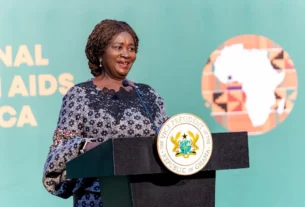
The PLHIV-Led HIV Integration Summit has kicked off in Accra, Ghana, with the launch of the Global Network of People Living with HIV (GNP+) World AIDS Report. The summit, organized by GNP+, brings together PLHIV leaders, researchers, policymakers, and community advocates to advance a stronger, sustainable, and person-centered HIV integration agenda across Africa.
The GNP+ report outlines seven evidence-based minimum requirements for effective integration, including transformative PLHIV participation in decision-making, local context definition and adaptation, and recognition of the diversity of PLHIV communities. The report also highlights significant gaps in integration across countries, including inconsistent care models, weak community involvement, and limited accountability.
1. Transformative PLHIV participation in decision-making
2. Local context definition and adaptation
3. Recognition of the diversity of PLHIV communities
4. Comprehensive care, including accessible self-care
5. Resilient health systems for long-term care
6. Stigma-free and rights-based service delivery
7. Full government responsibility for treatment access and continuity
GNP+ Co-Executive Directors, Sbongile Nkosi and Florence Riako Anam, emphasised that PLHIV must lead health system transformation for integration to succeed. Describing the report as “a hand extended in partnership,” they explained that PLHIV networks worldwide collaborated to produce the standards, partnering with the Ghana PLHIV network for the launch.

They noted that with HIV funding declining globally especially from the US governments are assuming greater responsibility for HIV programming. As such, it is critical for PLHIV to define expectations regarding service delivery, integration into primary healthcare and UHC, and the right of citizens to demand quality HIV services at public facilities. The report provides a blueprint for engagement between PLHIV networks, citizens, and governments, enabling health facilities and policymakers to understand what PLHIV expect as HIV services are integrated into broader public health systems.
GNP+ Co-Executive Directors, Sbongile Nkosi and Florence Riako Anam, emphasized that PLHIV must lead health system transformation for integration to succeed. They stressed that integration “must work for PLHIV, not merely look good on paper.

A presentation by Dr. Mumbi Chola highlighted significant gaps in integration across countries, including inconsistent care models, weak community involvement, and limited accountability. He warned that poorly executed integration could reverse gains made in the HIV response. Dr. Chola also cited global statistics: in 2024, 1.3 million people were newly infected with HIV, and 650,000 people died from preventable or treatable HIV-related conditions, despite major scientific advancements.

He stressed that African countries, historically dependent on donor support, must now adapt public health systems to integrate HIV into primary healthcare, guided by the evolving needs of people living with HIV, many of whom require additional services beyond HIV treatment.

Representing NAP+ Ghana, Abdul Fatawu Salifu reiterated that as countries pursue UHC, PLHIV must not only be beneficiaries but also lead in shaping the systems that serve them. He raised concerns about human rights, complementary social services, and treatment access, calling for stronger financing models and community-led monitoring to ensure quality care. Salifu stressed that integration “must work for PLHIV, not merely look good on paper.”

Across the summit, the central message was clear: integration must be done with people living with HIV, not to them. GNP+ reaffirmed its commitment to strengthening PLHIV organisations, advancing community-led research, and shaping global health policy through meaningful participation.
As Accra prepares to host ICASA 2025, the PLHIV-Led Integration Summit has positioned Ghana as a key hub for advancing person-centred and community-led solutions to sustain global progress toward ending AIDS
The summit is a major pre-conference event ahead of the 2025 International Conference on AIDS and STIs in Africa (ICASA), which will take place from December 3-8, 2025, in Accra, Ghana. ICASA 2025 will bring together over 10,000 delegates from nearly 150 countries to review progress in the HIV response, discuss emerging diseases, and advocate for resilient African health systems.