

ELS: MBN360 NEWS
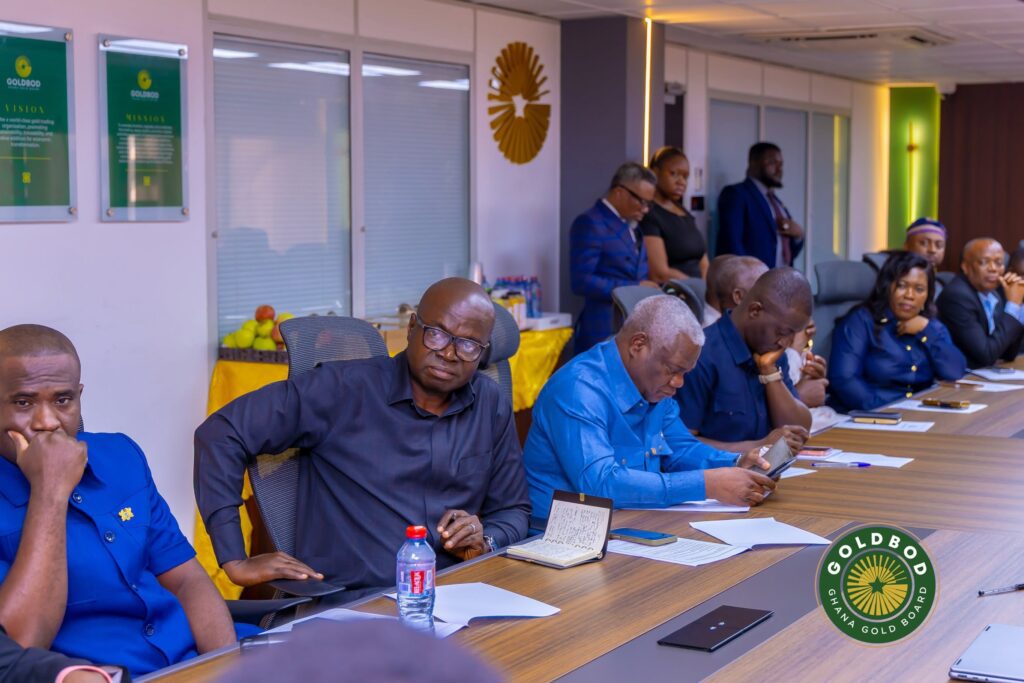
he Parliamentary Select Committee on Economy and Development has undertaken a high-level working visit to the Ghana Gold Board (GoldBod) to execute its legislative oversight mandate and evaluate the state entity’s operational performance, recent achievements, and strategic forward-looking direction.
The engagement served as a vital platform for lawmakers to examine directly how the state regulator is executing its charge of governing national precious mineral resources while driving broader macroeconomic stability.
“The Parliamentary Select Committee on Economy and Development has paid a working visit to the Ghana Gold Board (GoldBod) as part of its parliamentary oversight mandate to assess the institution’s operations, achievements and strategic direction. Chairman of the Committee, Hon. Eric Afful outlined that their visit was to assess the impact of GoldBod’s operations on the economy especially in the aspects of gold trading, foreign exchange inflows, reserve accumulation as well as value addition.”Ghana Gold Board (GoldBod)
Through this interactive session, parliamentary representatives sought first-hand insight into the entity’s regulatory architecture and its broader fiscal contributions to the nation.

Expanding on the scope of the engagement, the parliamentary delegation focused specifically on evaluating how GoldBod’s commercial and regulatory activities directly influence macro-financial indicators.
Chairman of the Committee, Hon. Eric Afful, outlined that the visit was designed to assess the institution’s impact on gold trading, foreign exchange inflows, central bank reserve accumulation, and local value addition.
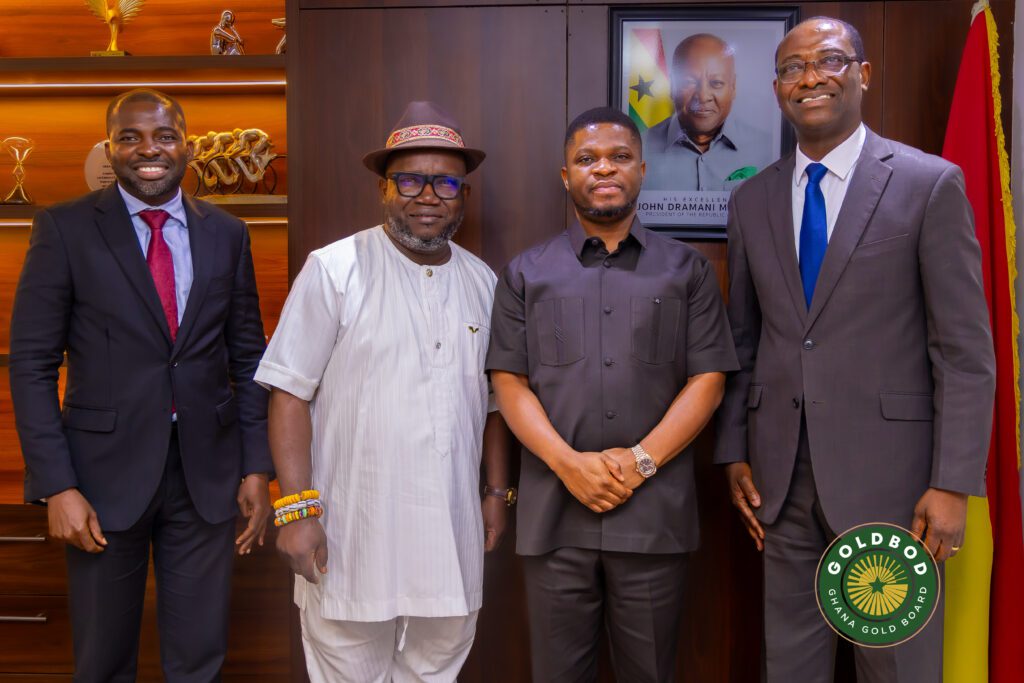
Welcoming the legislative team, Chief Executive Officer of GoldBod, Sammy Gyamfi, Esq., presented a comprehensive briefing detailing the organization’s structural transition from the legacy Precious Minerals Marketing Company (PMMC) into the modern Ghana Gold Board, highlighting its evolving licensing framework, sustainable funding models, the ongoing review of the Ghana Gold Board Act, 2025 (Act 1140), and strategic measures aimed at fostering responsible mining and supply chain transparency.
Institutional Evolution and Operational Frameworks
The institutional transformation of the organization from the Precious Minerals Marketing Company (PMMC) into the Ghana Gold Board marks a decisive structural upgrade in Ghana’s precious minerals sector.
During the briefing session, CEO Sammy Gyamfi, Esq., outlined the entity’s “new trading model” alongside its institutional “partnerships with large-scale mining companies,” while presenting GoldBod’s gold aggregation performance figures spanning 2025 and 2026.
This newly instituted commercial model establishes a structured mechanism for capturing domestic production that was previously vulnerable to informal channels.
By modernizing its regulatory architecture under the Ghana Gold Board Act, 2025 (Act 1140), GoldBod is establishing clear compliance benchmarks for artisanal, small-scale, and commercial operators alike.
Read also:
- CompuGhana Rewards Customers, Opens New East Legon Showroom
- Nearly 1 million Ghanaians lifted out of poverty in a year — Ato Forson
- Ghana’s economy tops $100 Billion for first time, now 8th largest in Africa – Ato Forson
- St Mirren agree deal to sign Ghana U20 winger Abdul Hakim Sulemana
- GPL: Medeama sign highly rated midfielder Etse Dogli from Heart of Lions
Legislative oversight by the Parliamentary Select Committee provides vital external accountability, ensuring that regulatory enforcement aligns with broader statutory objectives.
Regular parliamentary review reinforces institutional governance, helping GoldBod maintain efficient revenue collection, streamline licensing protocols, and build market trust across domestic supply networks.
Strategic Mine-to-Export Traceability Architecture
In a major announcement delivered during the oversight visit, the GoldBod CEO revealed that “by end of August, the GoldBod will procure a traceability system that will make it possible for the outfit to trace all gold purchased from mine to export.“
This upcoming technological acquisition represents a fundamental milestone in the governance of Ghana’s mineral wealth. By introducing real-time digital monitoring from extraction points to international shipment hubs, GoldBod addresses long-standing systemic vulnerabilities associated with unverified supply chains.
The integration of an end-to-end traceability system substantially fortifies GoldBod’s operational effectiveness by validating that all aggregated gold adheres strictly to global Responsible Sourcing Guidelines, such as those established by the London Bullion Market Association (LBMA) and OECD.
Furthermore, it curtails illegal gold trading and smuggling by ensuring that only fully certified bullion enters the state-sanctioned export corridor.
Finally, this automated verification system drives fiscal optimization by ensuring complete tax and duty compliance across all licensed buying centers, directly boosting state revenue capture.
Macroeconomic Fortification: FX Accumulation and Value Addition
The structural alignment between legislative oversight and GoldBod’s commercial operations significantly elevates Ghana’s macroeconomic standing.
By centralizing gold aggregation under formal regulatory mechanisms, GoldBod channels substantial foreign exchange inflows through legitimate banking corridors.
This steady influx directly bolsters the central bank’s reserve accumulation strategies, providing crucial liquidity to buffer the domestic currency against foreign exchange volatility and global financial shocks.

Furthermore, GoldBod’s explicit focus on domestic value addition transitions Ghana away from raw bullion exports toward localized processing and refining. Refining gold locally before export captures higher commercial margins, generates specialized industrial jobs, and builds domestic technological capacity in metallurgy.
Ultimately, the Parliamentary Select Committee’s visit underscores a unified state commitment: strengthening GoldBod’s institutional authority to transform Ghana’s mineral resources into an ethical, fully traceable, and highly lucrative engine of national economic growth.