
Els: MBN360 Health
A leading immunologist has said Ghana’s strengthened malaria control measures, including vaccination, improved treatment and political commitment, are sharply reducing severe cases of the disease and moving the country closer to elimination.
Speaking on the Asaase Breakfast Show on Thursday (30 April), Associate Professor of Immunology at the Noguchi Memorial Institute for Medical Research, Prof Linda Eva Amoah, said malaria remains a parasite-driven disease transmitted by infected female Anopheles mosquitoes, with symptoms triggered when infected red blood cells rupture and spread through the body.
She explained that in Ghana, the predominant parasite is Plasmodium falciparum, which can affect multiple organs in severe cases, including the brain, spleen and bone marrow.
“During the red blood cell phase, the parasites burst out and invade new cells. That is when we see the fever spikes and clinical symptoms,” she said.
Prof Amoah, who appeared on the show’s health segment hosted by neurosurgeon Teddy Totimeh, said her work as an immunologist focuses on understanding why some people develop immunity and remain asymptomatic while others, particularly young children and pregnant women, develop severe disease.
She noted that Ghana has recorded a significant decline in severe malaria cases over the past decade due to earlier diagnosis, prompt treatment and improved access to effective antimalarial drugs.
“From 2011 up to now, we’ve had tremendous strides. Severe malaria has reduced drastically,” she said, adding that researchers now struggle to find sufficient severe cases for clinical studies within the country.
According to her, Ghana’s shift from malaria control to elimination, backed by stronger political commitment, has been central to recent progress.
She highlighted the introduction of malaria vaccination as a key milestone, referencing Ghana’s participation in the pilot rollout of the RTS,S vaccine and the subsequent introduction of the newer R21 vaccine, which is cheaper and more scalable.
Read also:
- Laboratory professional workers declare nationwide strike over removal of Korle-Bu Laboratory Head
- Black Stars have succeeded through poor administration but it’s difficult this time – Herbert Mensah
- Everton fan arrested after alleged racist abuse directed at Man City’s Antoine Semenyo
- AG Office Withdraws Charges in Buffer Stock Case, EOCO Re-arrests Accused
- Cash Circulating in Ghana’s Economy Hits GH¢83.8bn Despite Cuts
Both vaccines target the circumsporozoite protein (CSP) of the malaria parasite and are now integrated into Ghana’s Expanded Programme on Immunisation (EPI), she said.
“Now a baby is assured of having it. There are four doses,” she said, adding that the country is gradually transitioning toward nationwide coverage using R21.
Prof Amoah also stressed that vaccination alone is not sufficient, pointing to ongoing efforts in vector control, including insecticide-treated nets, indoor residual spraying and destruction of mosquito breeding sites.
She warned, however, that insecticide resistance among mosquitoes remains a challenge requiring new chemical interventions and sustained public education.
“Malaria control is a combination of interventions. You cannot tackle mosquitoes one way,” she said.
Offering advice to parents, she urged early testing and strict adherence to treatment protocols.
“Malaria should not kill a child. Not all fevers are malaria. Go and test. If it is positive, complete the treatment,” she said.
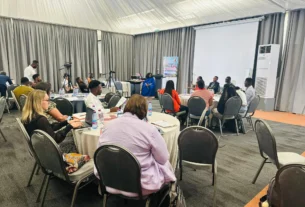
The programme also featured a medical student from the University of Ghana Medical School, who said recent health outreach screenings recorded no positive malaria cases, describing it as an encouraging sign of progress.
He added that lessons from the session underscored the importance of advocacy in translating research into health policy, particularly in strengthening vaccination and public health interventions.
Ghana is among a handful of African countries implementing large-scale malaria vaccination as part of its broader elimination strategy, with health experts saying sustained investment could significantly reduce transmission in the coming years.