ELS; MBN360 AGRIBUSINESS
Ghana is moving to transform its horticulture sector from a scattered farming activity into a fully integrated commercial export industry, with greenhouses, cold-chain systems, logistics and air cargo now at the heart of a new agricultural growth agenda.
The shift is being driven by the government’s 24-Hour Economy and Accelerated Export Development Programme, which seeks to link production directly to processing, storage and international markets.
Presidential Advisor on the 24-Hour Economy, Augustus “Goosie” Obuadum Tanoh, says the plan is to reposition horticulture as a foreign exchange earner that creates jobs and draws in private capital, rather than leaving it as a purely primary production activity.
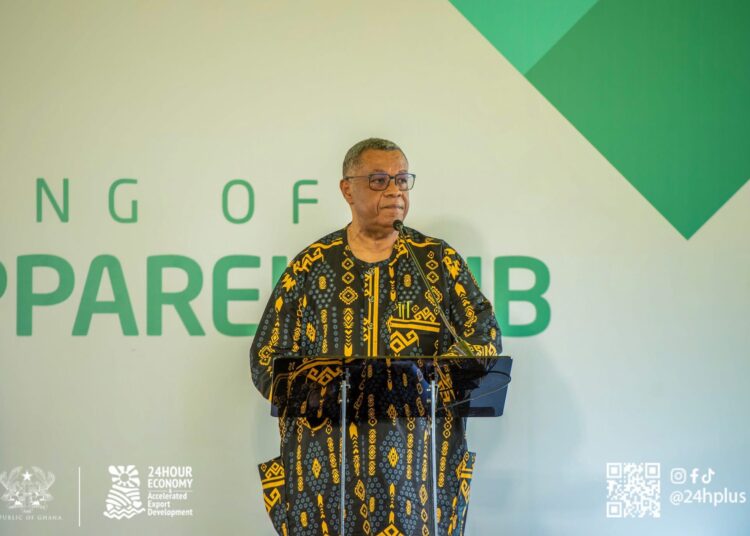
He speaks at the opening of the 14th edition of the Ghana Garden and Flower Show in Accra, where he outlines government’s vision for the sector. “Producing is not the same as building an industry,” Mr. Tanoh tells participants.
According to him, that distinction explains one of the biggest problems facing Ghanaian agriculture. The country continues to record increases in production volumes, yet those increases do not translate into higher incomes for farmers, stronger export performance or growth in industrial capacity.
Producers Cut Off from Key Agricultural Support System
The reason, he notes, is that many producers still operate in isolation from the critical systems that make agriculture commercially viable including storage, processing, transportation, financing and access to global markets.
Government, through the 24-Hour Economy programme, is now attempting to close those gaps.
“This is what we are working at through the 24-Hour Economy and Accelerated Export Development Program, connecting production to processing, logistics, and markets, and building the enabling systems within which competitive industries such as our flower industry can grow.”Mr. Goosie Tanor
Mr. Tanoh says, the centre of the strategy is infrastructure. Government is prioritizing investment in greenhouse technology to allow for year-round cultivation of high value crops such as flowers, vegetables and herbs.
The greenhouses are expected to improve quality control, reduce dependence on seasonal rainfall, and ensure consistent supply to meet export standards. Alongside that, government is focusing on cold chain infrastructure.
One of the major setbacks for Ghana’s horticultural exports has been post-harvest losses. Without proper cold storage and refrigerated transport, perishable produce such as cut flowers, green beans, mangoes and chilies lose value before they reach the market.
The new model seeks to build cold chain facilities from farm clusters to aggregation centres and finally to the airports. Logistics and air cargo form the third pillar.
Mr. Tanoh says efficient movement of perishable goods is non-negotiable if Ghana is to compete with established horticulture exporters such as Kenya, Ethiopia and Colombia.
Read also:
- Communication Gaps Fuelling School Placement Crisis – Dr Anti Partey
- Petrol to sell at GH¢16.26, diesel GH¢19.07 from Wednesday – COPEC
- Pro Ref admits error in Haaland’s controversial winner against Manchester United
- CAF Champions League: ‘Several players were first-timers at this level’ – Ibrahim Tanko on Medeama’s exit
- Ghanaian Players Abroad: Jordan Ayew Debuts for Sheffield United as Boakye Scores Again
Government to Streamline Cargo Handling at KIA FOR 24-Hour Economy
Government is working to streamline cargo handling at Kotoka International Airport, improve turnaround time for perishable exports, and create dedicated horticulture export corridors that operate 24 hours.
The 24-Hour Economy concept, he explains, is critical to this. Horticulture is a time sensitive business. Flowers are harvested in the early morning, need to be cooled immediately, packaged and flown out within hours to maintain freshness in European and Middle Eastern markets. A system that closes at 5 p.m. cannot support such a value chain.
By running key enablers including customs, phytosanitary inspection, cargo handling, and transport on a 24-hour basis, government believes Ghana can significantly cut delays and attract more exporters.
The approach also targets job creation. Mr. Tanoh says building an industry goes beyond the farm. It involves packaging, branding, certification, freight forwarding, irrigation technicians, greenhouse managers, and marketing professionals. Each link in the chain creates employment, particularly for young people.
The Ghana Garden and Flower Show, which has become a leading platform for florists, landscapers, and horticulture entrepreneurs, provides a fitting stage for the announcement.
Over the years, the show has grown from a small exhibition into a movement promoting green spaces, environmental consciousness and commercial flower production.
This year’s edition brings together growers, exporters, input dealers, financial institutions and government agencies, all exploring how to turn Ghana’s climate advantage and available land into a competitive edge.
Ghana’s Horticulture Potential Still Untapped
Ghana currently has huge potential in horticulture. Its climate allows for year-round production, and it sits closer to Europe than many of its East African competitors, giving it a freight advantage.
Yet the country’s share of the global horticulture market remains small compared to Kenya, which earns over $1 billion annually from flower exports.
Under the Accelerated Export Development component, horticulture is being positioned as one of the priority non-traditional export sectors. The plan includes organizing smallholder farmers into cooperatives, linking them to anchor investors who provide technical support, and guaranteeing off-take agreements.
Mr. Tanoh stresses that private investment is essential. Government’s role, he says, is to create the enabling environment providing infrastructure, de-risking the sector through policy, and facilitating access to finance while the private sector drives production and export.
He also points to financing as a key enabler. Many horticulture ventures fail to scale because of lack of affordable long term credit. Through the 24-Hour Economy programme, government is engaging development banks and commercial banks to design products tailored to horticulture businesses that operate on continuous cycles.
Ghana wants to move from growing flowers and vegetables to building a flower and vegetable industry. If implemented effectively, the strategy could reduce Ghana’s dependence on cocoa and gold, diversify export earnings, and turn horticulture into a major pillar of the 24-hour economy vision.