Els: MBN360 Extractives/Energy
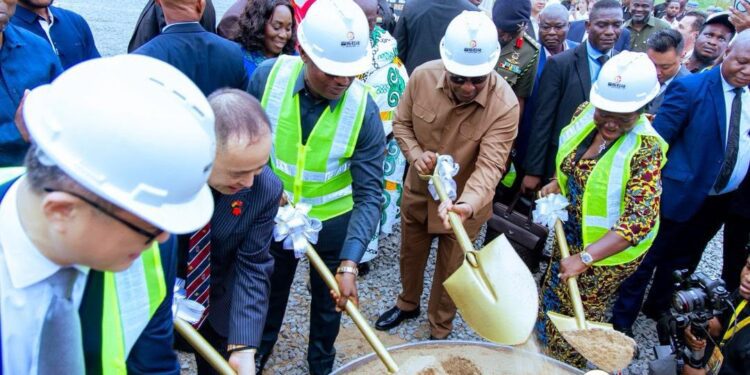
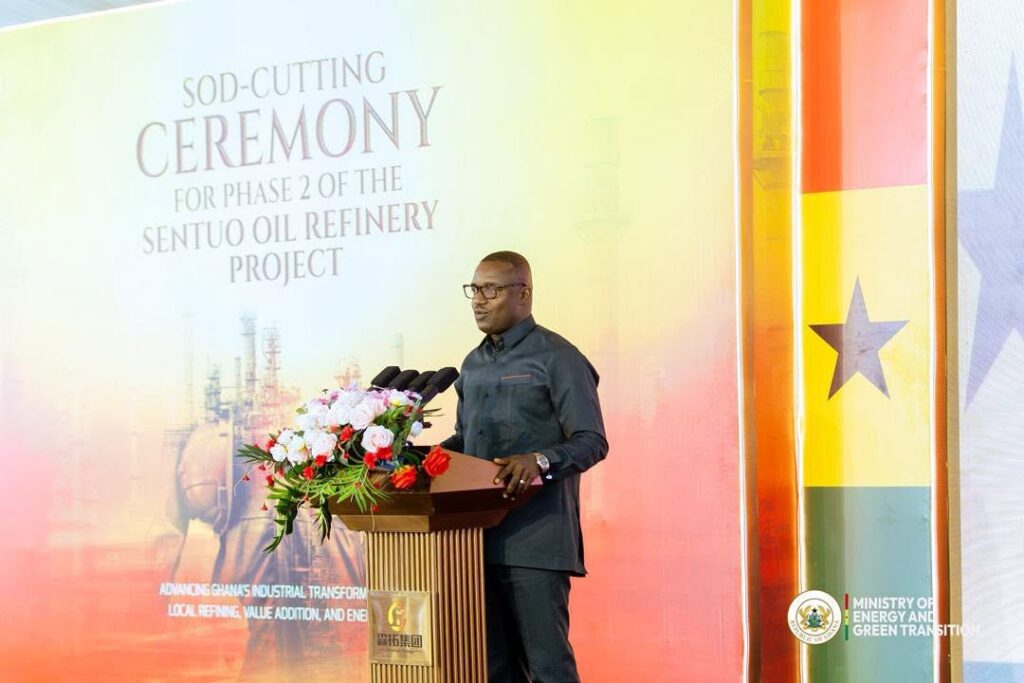
Minister for Energy and Green Transition, Hon. John Abdulai Jinapor, has announced a major economic turning point for Ghana following the historic sod-cutting ceremony for the second phase of the Sentuo Oil Refinery.
This expansive infrastructure project directly addresses the volatile global energy market by scaling up domestic processing capabilities to heavily cushion local consumers and businesses.
By transforming raw local resources into high-value petroleum products right within the country, the government plans to engineer a resilient fiscal cushion that protects ordinary citizens from the devastating macro-economic effects of volatile international fuel pricing.
This structural shift signals an intentional transition away from decades of relying on expensive finished imports, creating a stable framework where domestic refining capacity actively drives down commercial distribution expenses and shields the local currency from sudden speculative attacks.
“But the most important point was when His Excellency directed that we must produce our own crude, process our own crude, consume our own crude, and stabilise the economy. This second phase is even more important because in line with His Excellency’s vision of resetting Ghana and adding value to our own products and resources, we are going to take the central refinery from a refinery capacity of 40,000 barrels per day to 100,000 barrels per day upon completion. So we are anchoring energy security.”Hon. John Abdulai Jinapor

The strategic expansion is set to systematically elevate the installation’s processing capacity from its current output of 40,000 barrels per day up to a staggering 100,000 barrels per day upon its full commercial completion.
This massive jump in productivity will not only ensure a continuous supply of vital petroleum products to the domestic market, but it will also effectively insulate the Ghanaian economy from devastating supply chain disruptions like those experienced globally during previous geopolitical crises.
By processing locally extracted crude on home soil, the state is strategically halting the heavy outward flow of foreign exchange reserves, which helps to sustainably anchor the cedi while generating high-value employment across the entire energy value chain.
Industrial Transformation and Sustainable Job Creation
According to the official project developmental blueprints, this massive infrastructure investment serves as a major driver for sustainable job creation and structural industrial modernization.
Hon. John Abdulai Jinapor emphasized that the industrial expansion will heavily impact homes across the country by providing real employment and real jobs for the people of Ghana.
Corporate human resource projections show that operational employment levels at the site will more than double, rapidly ascending from the previous baseline of roughly 800 workers to over 1,500 full-time technical and administrative staff once the second phase becomes operational.
This expansion of the workforce injects immediate disposable income into local communities, driving a positive economic multiplier effect that strengthens small businesses and stimulates regional commercial development.
Furthermore, this industrial upgrade repositions Ghana as an emerging powerhouse for manufacturing excellence within the West African sub-region, turning the energy sector into a reliable hub for technical capacity building.
Read also:
- Children, elderly, PWDs to receive priority support in flood response – Gender Ministry
- Alajo flood tragedy: Three die from electrocution
- Analyst Predicts More Gains for Resurgent Cedi
- Accra at a Standstill: Floodwaters Expose a City In Crisis
- Ghana Alerts Travellers As South Africa Faces Heightened Protest Security Threats
Local engineers, technicians, and specialized laborers will gain hands-on expertise in managing advanced, world-class refining technologies, creating a highly skilled domestic talent pool.
This large-scale retention of intellectual capital and labor helps reverse the trend of importing foreign experts for high-tech energy operations.
The massive influx of stable industrial wages will lift thousands of households, providing secondary benefits to service providers, food suppliers, and housing markets within the refinery’s economic footprint.
Strengthening Macroeconomic Indicators and Currency Stability
Scaling the refinery’s capacity directly strengthens Ghana’s balance of payments by fundamentally restructuring the nation’s import-export dynamics. When the state stops spending billions of dollars annually to import refined petroleum, it protects its scarce foreign exchange reserves from rapid depletion.
Additionally, this financial stabilization provides a powerful defense against imported inflation, which has historically driven up the cost of living for average citizens.
By controlling the entire production pipeline from the oil well to the commercial pump, the country gains the unique leverage needed to manage internal pricing structures independent of chaotic international trends.
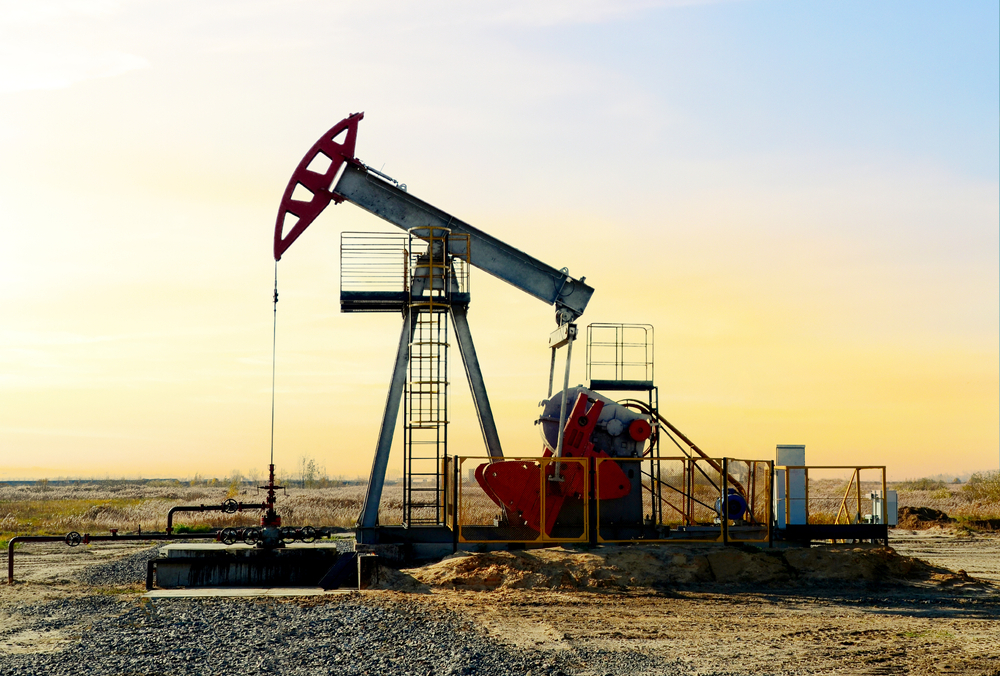
A steadily managed domestic energy supply prevents sudden transport cost spikes, which keeps food items and manufactured consumer goods affordable in local markets.
The resulting predictability in the national currency allows local businesses to plan long-term capital investments without fearing sudden, overnight currency devaluations.
Enhancing Sub-Regional Energy Security and Bilateral Cooperation
This landmark infrastructure expansion heavily reinforces Ghana’s overarching energy security, positioning the country to transition from a vulnerable consumer into a dominant exporter within the West African energy network.
Reflecting on past global crises, the energy minister noted that while a lot of countries witnessed unease and distractions because they did not plan, Ghana proactively set up robust buffers to avoid supply disruptions.
Scaling production to 100,000 barrels per day creates a reliable strategic reserve that ensures local factories, transport grids, and power generation plants run continuously without the threat of unexpected international fuel shortages.
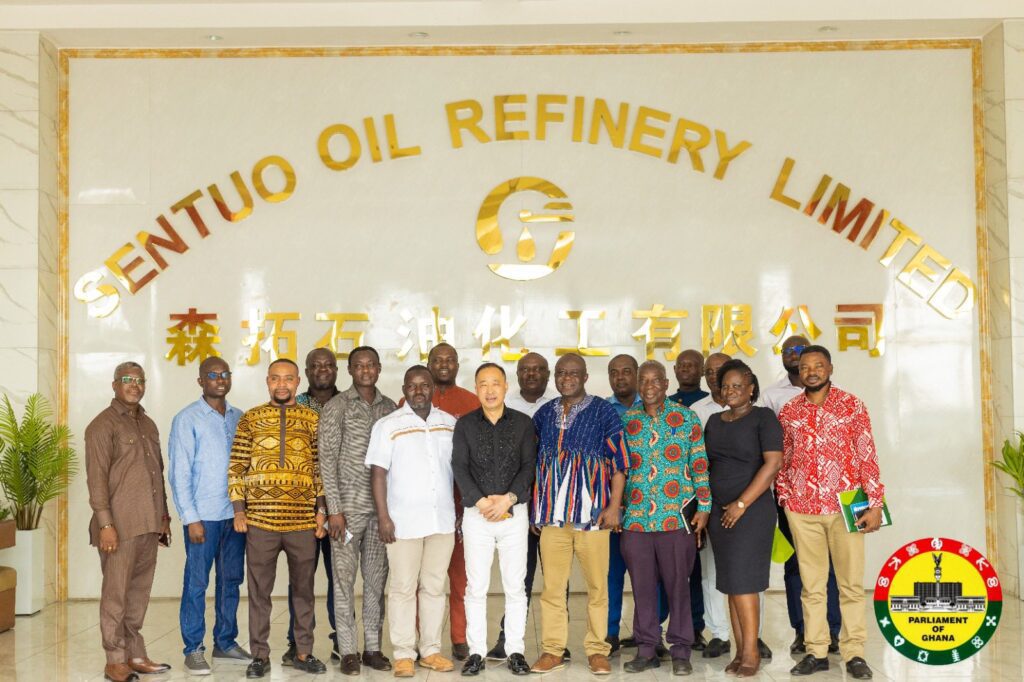
This successful execution highlights the deep economic benefits of strategic South-South cooperation, showcasing how mutual diplomacy can yield tangible industrial infrastructure.
The partnership between Ghana and China on this multi-million-dollar refinery expansion provides a highly effective model for bilateral development that delivers strong financial returns for both nations.
By using international engineering expertise alongside local resources, Ghana successfully creates an independent energy network that shields its people from global shocks while laying a rock-solid foundation for future industrial growth.