ELS: MBN360 NEWS
Ghana has begun a nationwide clean-up exercise in areas affected by recent floods, with security personnel, local authorities and residents joining efforts to clear waste, remove debris and restore public spaces.
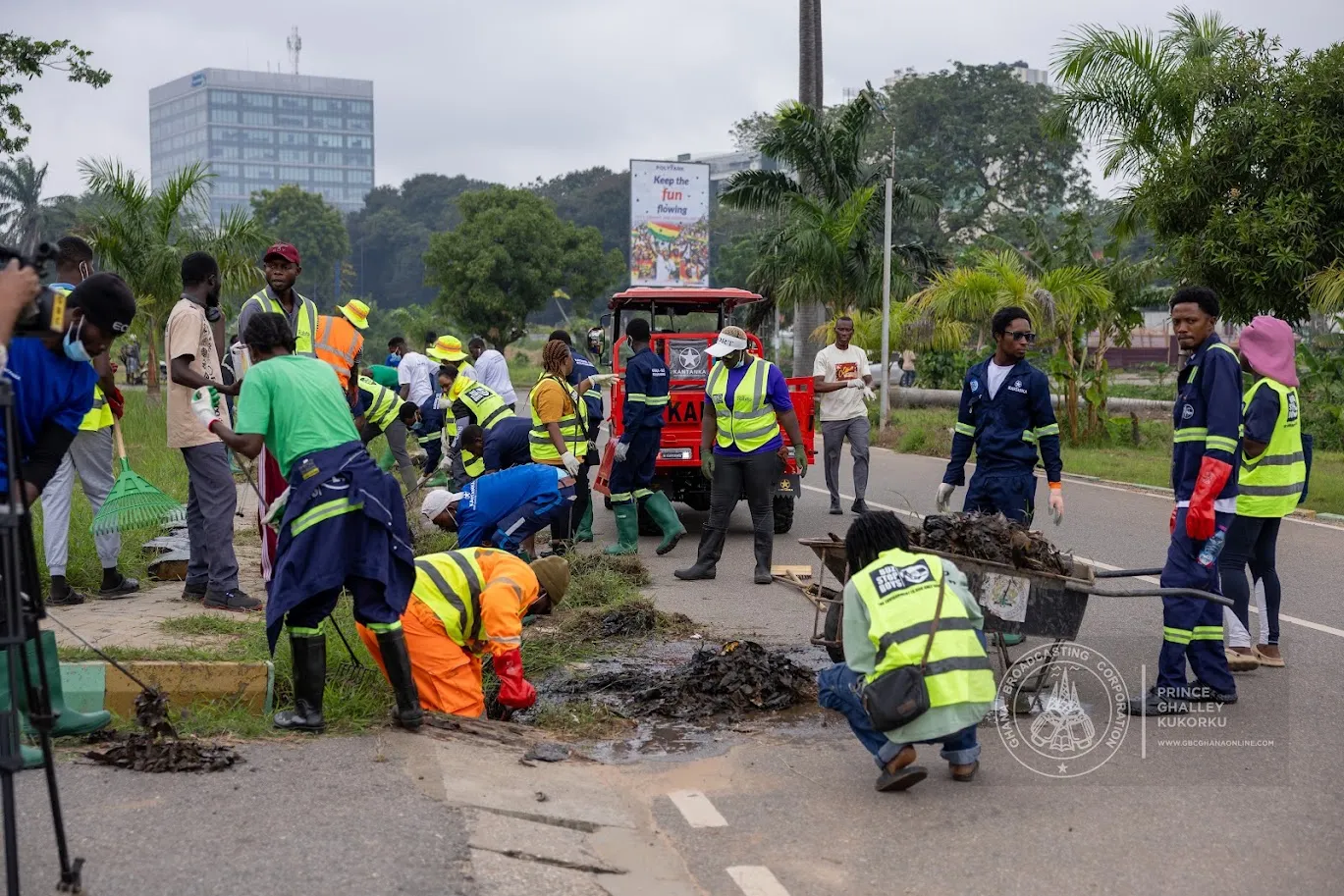
In Accra, military personnel, police officers and other security agencies were deployed Friday morning to support the clean-up operation. Along several routes in the capital, security officers were seen leading activities to clear refuse, desilt blocked drains and remove debris from public areas.
Residents, traders, businesses and community groups have also joined the exercise, sweeping streets, clearing gutters and removing waste from communities as part of efforts to prevent further flooding.
The two-day exercise, themed “Our Actions, Our Future: Cleaning Ghana after the Floods,” is being carried out in the seven regions affected by the recent floods.

The first phase began on Friday, July 10, involving security agencies, Metropolitan, Municipal and District Assemblies (MMDAs) and waste management companies, while members of the public joined the second phase on Saturday.
Read also:
- Community Led Climate Action Deserves Stronger Policy Support -Rt. Hon. Bagbin
- Oil Production Decline Hits Ghana’s Petroleum Revenues
- Google probed by Swiss regulator over Android default search feature
- Petroleum price floors increased for the second half of 2026 July pricing window.
- Ato Forson to Present 2026 Mid-Year Budget Review July 23
President John Dramani Mahama has directed government appointees, including ministers, Members of Parliament, chief executives of public institutions and MMDCEs, to participate in the exercise and lead clean-up activities in their respective communities.
The operation is focused on clearing refuse, fallen trees, abandoned vehicles and other materials blocking roads, drains and waterways.
The clean-up follows recent floods caused by heavy rainfall, which affected parts of Greater Accra, Central and Volta regions, resulting in deaths, displacement of residents and damage to homes, businesses and public infrastructure.
Authorities say poor sanitation, indiscriminate disposal of waste and construction on waterways remain major contributors to flooding in many urban communities.
Government says the clean-up exercise will be followed by longer-term flood prevention measures, including improved drainage systems, enforcement against illegal structures on waterways and increased investment in disaster preparedness.