
Els: MBN360
The Office of the Attorney General has withdrawn all charges against Hanan Abdul Wahab Aludiba and four others in a high profile case involving alleged financial impropriety linked to the National Food Buffer Stock Company.
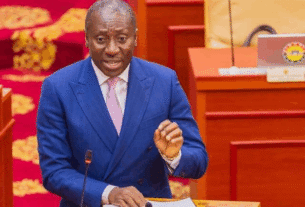
Deputy Attorney General and Minister for Justice, Dr Justice Srem Sai, announced the decision in court, stating that the move was based on the emergence of new evidence that required a reassessment of the prosecution’s case.
“Following the discovery of fresh evidence, we have withdrawn from the prosecution of all the accused persons in the case,” he said, explaining that the decision was intended to ensure that the legal process remains consistent with constitutional guarantees.
He further noted that the withdrawal was necessary to afford the accused a fair and more efficient trial process in line with the principles of justice.
Court Discharges Accused Persons
Following the State’s application, the High Court struck out the charges and discharged all the accused persons. The ruling effectively ended the ongoing proceedings, at least in their current form.

Legal practitioners note that such withdrawals, while not uncommon, often signal a shift in prosecutorial strategy, particularly when new evidence emerges that may affect the strength or direction of the case.
The development marks a significant turn in a case that had drawn considerable public attention due to the scale of the alleged financial misconduct and the individuals involved.
Immediate Re-Arrest by EOCO
Despite their discharge, the legal situation for the accused remains unresolved. Moments after leaving the courtroom, Hanan Abdul Wahab Aludiba and his wife, Faiza Seidu Wuni, were re-arrested by officials of the Economic and Organised Crime Office.
The re-arrest suggests that investigations are ongoing and that the State may be preparing to pursue revised charges based on the newly discovered evidence. While authorities have not publicly detailed the nature of the fresh evidence, the move indicates that the case is far from concluded.

Prior to the withdrawal, the accused persons were facing 24 counts related to the alleged misappropriation of more than seventy-eight million Ghana cedis from the National Food Buffer Stock Company between 2017 and 2025.
The prosecution had alleged that substantial sums were diverted through a private entity known as Sawtina Enterprise, with further transfers reportedly made to other business interests linked to the accused.
In addition to allegations of theft and diversion of funds, the case also included charges of money laundering. Prosecutors claimed that portions of the funds were used to acquire high value properties in Accra and Tamale, including a large boutique hotel.
Other individuals named in the case included a finance director reported to be at large, as well as corporate entities associated with the accused.
Read also:
- GES warns schools against unauthorised fee collection from students.
- Roads Minister satisfied with progress of ‘Big Push’ projects in Upper West, Upper East
- Climate Change is now a National Development Challenge – Seidu Salifu
- New TCDA Pacts Target Soil Recovery And Apiculture Profits
- Black Stars Goalkeepers’ trainer impressed with Hearts of Oak coaching staff
ADVERTISEMENT
Legal Challenges During Trial
The case had encountered several procedural challenges even before the latest development. In late April 2026, the High Court struck out two witness statements submitted by the prosecution after determining that they had been filed without the required permission of the court.
This ruling raised questions about compliance with procedural rules and may have contributed to the State’s decision to reassess its case. Additionally, the bail conditions granted to the accused earlier in the proceedings attracted significant public debate.
Hanan Abdul Wahab Aludiba was granted bail set at one hundred million Ghana cedis, while his wife was granted bail of fifty million Ghana cedis. These figures, described by some observers as unusually high, sparked discussions about fairness and proportionality within the justice system.
Ensuring Fair Trial and Due Process
In explaining the withdrawal, Dr Srem Sai emphasised the importance of upholding constitutional standards in criminal proceedings. He indicated that the decision was guided by the need to ensure that any future trial is conducted fairly and without unnecessary delay.

Legal analysts note that withdrawing charges to allow for further investigation or restructuring of a case can be a prudent step when new evidence emerges. It allows the prosecution to strengthen its position while safeguarding the rights of the accused.
At the same time, such actions must be carefully managed to avoid perceptions of inconsistency or undue delay in the administration of justice.
Implications for the Justice System
The developments in the case highlight the complexities involved in prosecuting high-value financial crimes. They also underscore the role of investigative agencies such as the Economic and Organised Crime Office in continuing to pursue cases even after court proceedings have been halted.
The re arrest of key suspects indicates that the State remains committed to pursuing accountability, although the path forward may involve revised charges or a refiled case.
The case will continue to test the capacity of Ghana’s legal and investigative institutions to handle complex financial crimes while adhering to due process. As the situation evolves, attention will focus on the next steps to be taken by prosecutors and investigators.
The emergence of new evidence suggests that the case could return to court in a different form, potentially with additional or amended charges. For now, the withdrawal marks a pause in proceedings, but not an end to the matter.
The coming weeks are expected to provide greater clarity on the direction of the case and the implications of the fresh evidence cited by the State.