ELS: MBN360 NEWS
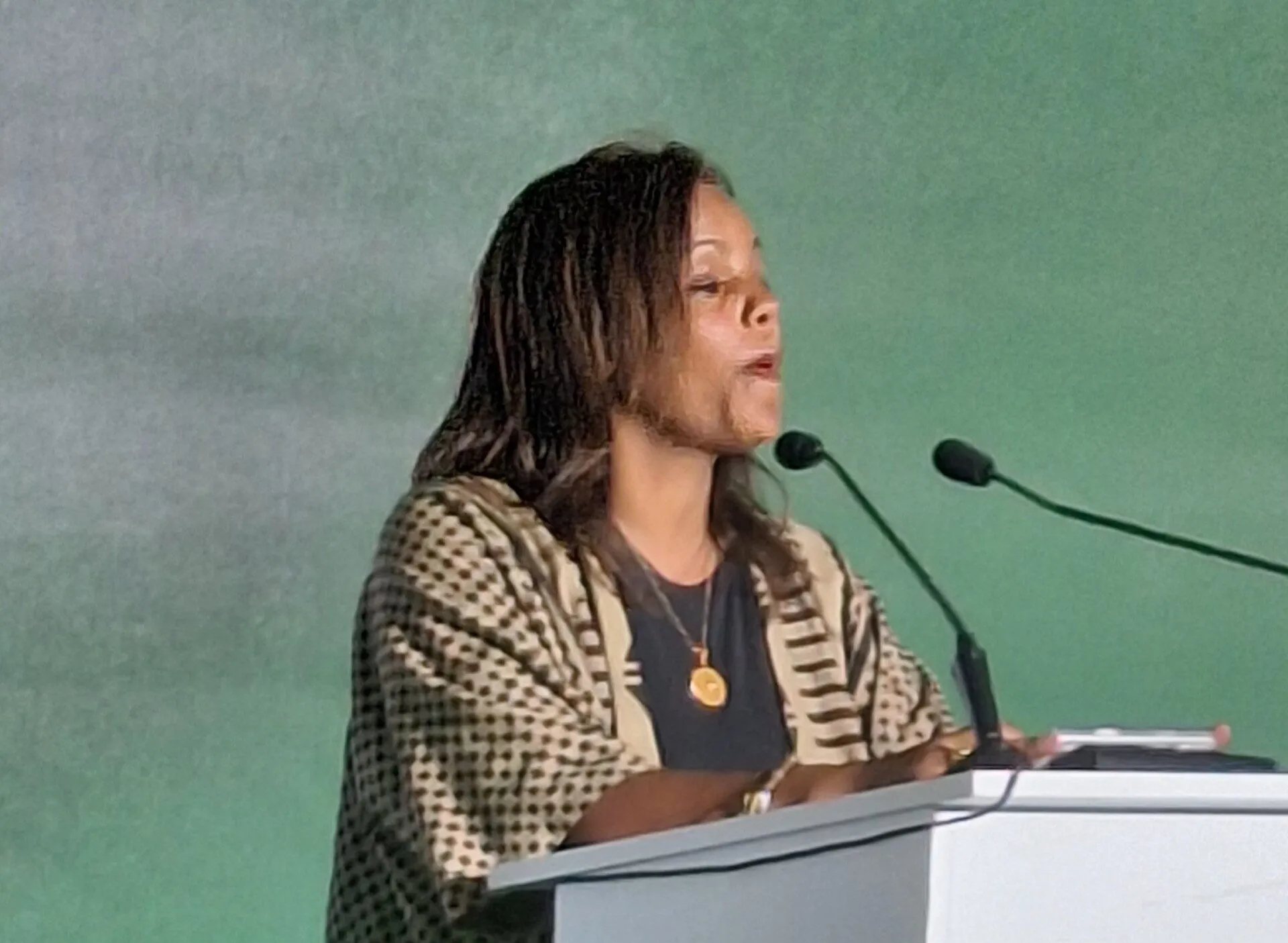
The Director of Economic Affairs at the UN Economic Commission for Africa (UNECA), Dr. Marit Kitaw, has challenged African governments to fundamentally change how they plan energy, warning that the continent will not industrialize if it continues to plan energy only for household consumption.
Dr. Kitaw made the remarks at the 2026 Future of Energy Conference (FEC) in Accra, organised by the Africa Centre for Energy Policy (ACEP).
She opened her presentation with a deliberate reminder of Africa’s weight in the global energy transition. 77% of the world’s cobalt, 65% of manganese, 25% of bauxite, copper 17%, 12% of graphite, and lithium, she said. I’m putting this on purpose so that we understand where we are coming from.

While these resources position Africa as indispensable to the global energy transition, she noted that the continent also possesses huge solar, wind, hydro, geothermal and natural gas potential, as extensively discussed at the conference.
Yet that abundance sits alongside a painful paradox. She referenced data shared by the Minister on the previous day, that of the 660 million people globally without electricity, 600 million are in Africa. Power, she said, is still unavailable at the required scale for industry.
For her, that paradox leads to one clear message.
Africa must stop planning energy only for consumption and begin planning energy for production, Dr. Kitaw said.
She acknowledged that universal energy access remains a moral and development imperative, but stressed that access alone will not drive industrial transformation. What Africa needs is power that is affordable, reliable, scalable and available for productive use.
This means starting with the industries Africa intends to build, and planning energy systems backward from that ambition, she explained.
According to Dr. Kitaw, energy plans must be directly linked to mineral strategies, industrial policies, trade frameworks, infrastructure corridors and skills development. When energy planning and industrial policy are developed in separate rooms, she warned, they remain mere aspirations.
She said it was encouraging that Ghana is beginning to have those conversations together, and praised one of the panelists at the conference who called for aggressive thinking on energy.
Read also:
- Mustapha Hamid dismisses claims of agenda to Islamise Ghana
- Nana Akomea to engage NPP minority MPs as first Vice Chairman campaign begins
- Russian stadium says it will not host Kanye West gigs
- Nigeria launches manhunt after kidnappers release video showing hundreds abducted from mosque
- More than 50 kidnapped and 47 killed in violent gang attack in Haiti, UN says
We talk about minerals a lot, at least where I sit. I sit mostly on the mineral side, but there’s no aggressive thinking around how to really energize and make sure that these industries get forward, she said, echoing the panelist’s call.
Her second imperative was regional integration. Not every African country must build every segment of every value chain, she argued, but every country should be able to participate, otherwise the principles of fairness and equity will be lost.
She said the Africa Continental Free Trade Area Agreement (AfCFTA) offers the opportunity to transform fragmented national markets into a single market of 1.4 billion people. Regional power pools can help countries share generation capacity, reduce system costs and improve reliability, while regional mineral corridors can connect mines to processing hubs, manufacturing centers and markets.
Through the AfCFTA rules of origin, a mineral extracted in one country, processed in another, and manufactured into a component in a third, can become an African product, she said. That is how regional integration creates scale, and that scale is what attracts investments, and that’s how investment can support competitive African industries.
Dr. Kitaw described the Africa Green Minerals Strategy as more than a mining policy. It should be seen as an industrial strategy, and it is also an energy security strategy and an instrument for African bargaining power, she said.
Her third imperative was policy coherence and capable institutions. In too many countries, she observed, energy is developed in one ministry, mining policy in another, industrial policy in a third, and trade and finance planning somewhere else. The result is fragmented institutions, conflicting signals and investments that do not reinforce one another.
She recalled that the Africa Mining Vision, adopted in 2009, already called for mineral resources to support broad-based structural transformation. That was 17 years ago, she noted, and it was advocating for the same principles being discussed today.
The Africa Green Minerals Strategy, she said, advances that ambition for the energy transition era, emphasizing value addition, regional value chains, skills, technology, responsible governance and African capabilities. The challenge, she stressed, is the discipline of implementation.
At the global level, Dr. Kitaw pointed to the findings of the United Nations Secretary-General’s Panel on Critical Energy Transition Minerals as especially important. The transition cannot be considered just if green technologies rest on supply chains that reproduce inequality, environmental harm and dependency, she said.
She highlighted its actionable recommendations, including a proposed high-level expert advisory mechanism for value addition, benefit sharing and diversification, stronger traceability and accountability, support to artisanal and small-scale miners, and greater circularity and material efficiency.
The 2026 Future of Energy Conference continues in Accra, convening ministers, industry players, researchers and civil society under the AFREIKH Summer School platform to chart how Africa can turn its critical minerals from raw exports into drivers of industrialization and jobs.