Els: MBN360 Politics
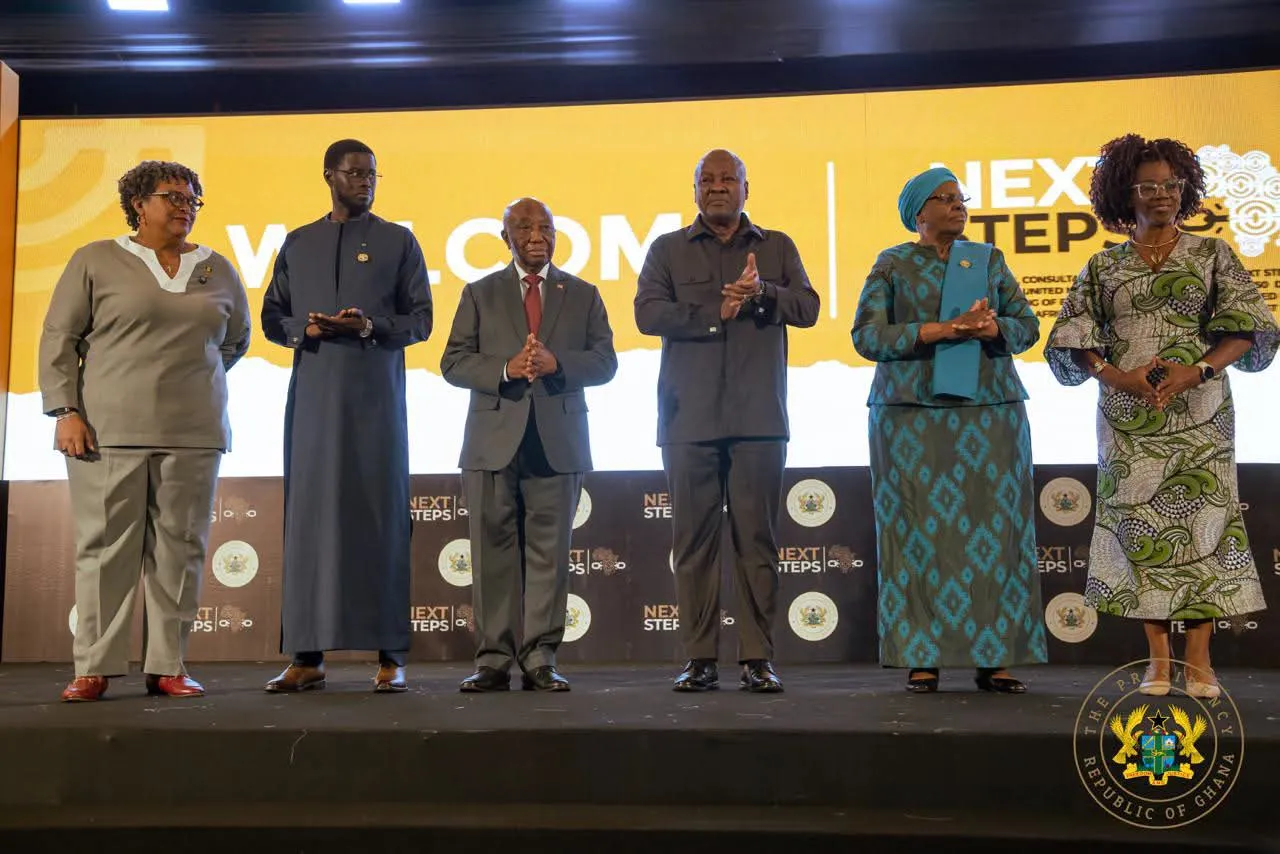
Delegates at the historic Accra Reparatory Justice Conference have adopted the Accra Next Steps Commitment on Reparatory Justice, a comprehensive framework aimed at advancing global efforts to address the enduring consequences of slavery, colonialism, apartheid and other historical injustices against Africans and people of African descent.
The three-day conference, hosted by the Government of Ghana under the leadership of President John Dramani Mahama, brought together heads of state, diplomats, legal experts, academics, civil society actors and representatives from Africa, the Caribbean, Europe, Asia and the Americas.

Following the presentation of the outcome document by the lead rapporteur at the closing session, Minister for Foreign Affairs, Samuel Okudzeto Ablakwa, described the gathering as a major milestone in the global reparations movement, noting that participants demonstrated an unprecedented level of commitment throughout the deliberations.
According to him, the conference produced a 46-paragraph commitment document outlining practical steps toward reparatory justice, including restitution, compensation, rehabilitation, institutional reforms and guarantees of non-repetition.
“The effects of the trafficking of enslaved Africans and the racialised exploitation of African people are not in the past. They continue to manifest in racial inequalities, development disparities, land degradation and other forms of injustice,” he said.
The Accra Next Steps Commitment identifies key pillars for action, including truth and acknowledgement, legal justice, compensatory reparations, restitution of cultural artefacts, global governance reforms, debt relief, financial justice, technology transfer, public health, gender justice, climate justice, psychological rehabilitation and diaspora engagement.

Participants also agreed that reparatory justice extends beyond financial compensation and must include apologies, institutional reforms, historical truth-telling and measures to address ongoing structural inequalities.
A significant outcome of the conference was the establishment of three global bodies to guide the reparations agenda: an Advisory Council on Reparatory Justice, an Expert Panel on the Restitution of Cultural Artefacts, and a Panel of Legal Experts for Reparatory Justice.
The conference further underscored the disproportionate impact of slavery and colonialism on women and girls, recognising their historical role in resistance movements and calling for gender-responsive approaches to reparatory justice.
Addressing delegates, Mr Ablakwa revealed that several countries had already announced concrete actions during the conference. The Netherlands pledged to return about 2,000 identified artefacts to Ghana, while Germany announced its readiness to repatriate cultural artefacts from the Bono Traditional Area.
Denmark reaffirmed its apology for its role in the transatlantic slave trade and expressed commitment to preserving the historic Christiansborg Castle in Accra as a site of remembrance and education.
Read also:
- Israel and Hezbollah agree to ceasefire after intensified fighting threatens US-Iran talks
- NEDCo unveils digital billing revolution to eliminate delays and improve accuracy
- 2026 World Cup: USA beat Australia to sit on top of Group D
- Historic Accra conference adopts landmark Reparatory Justice roadmap as global support grows
- World Refugee Day: Record Displacement Fuels Call for Lasting Solutions
France also signalled its readiness to engage through a scientific commission to establish historical truth and acknowledge past injustices.
The Foreign Affairs Minister said the participation of countries such as China, India and Russia demonstrated that reparatory justice had evolved into a truly global movement.
He stressed that Ghana’s decision to invite countries historically associated with the slave trade and colonialism was deliberate, arguing that meaningful progress could only be achieved through constructive dialogue involving both descendants of victims and those linked to historical systems of oppression.
“We cannot make progress if this is a one-sided affair. Genuine healing and reconciliation require bringing everyone to the table,” Mr Ablakwa stated.
Delegates also called on African leaders to complement demands for external reparations with domestic actions that restore the dignity of citizens and confront contemporary forms of exploitation.
The conference advocated reforms to educational curricula to ensure that the histories of slavery, colonialism and resistance are properly taught, while urging member states to establish museums and memorial institutions to preserve historical memory and house returned artefacts.
Participants further called for reforms to the global financial architecture, including addressing debt burdens, improving access to development financing and tackling systemic inequalities affecting countries in the Global South.
The adoption of the Accra Next Steps Commitment coincided with preparations for the first-ever Juneteenth commemoration held outside the United States, hosted at Christiansborg Castle, a site closely linked to the transatlantic slave trade.
Declaring the outcome document adopted by acclamation, Mr Ablakwa said the conference had succeeded in uniting Africans, the Caribbean diaspora and global partners behind a common agenda.
“Reparation is a legitimate demand. It is not about vengeance but justice. From Accra, we are sending a clear message that the time has come to restore, reform and repent,” he said.
Delegates pledged to transform the commitments into concrete actions and maintain momentum toward achieving reparatory justice for Africans and people of African descent worldwide.