Els: MBN360 Africa
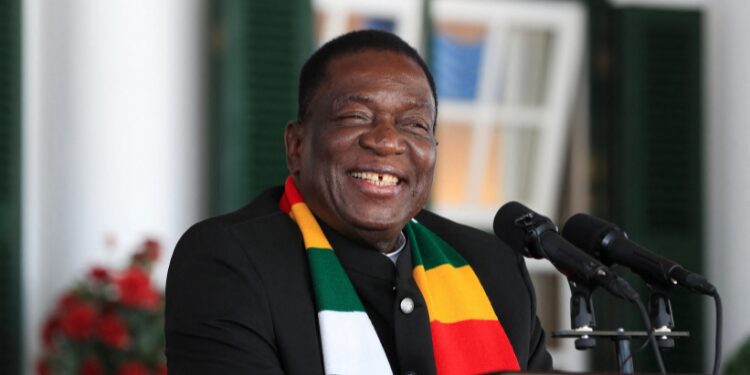
Zimbabwe’s lower house of parliament has approved a controversial constitutional amendment that would extend presidential terms from five years to seven years, a move that could allow President Emmerson Mnangagwa to remain in office until 2030 and has reignited debate over democratic governance in the southern African nation.
The bill, passed with overwhelming support from lawmakers aligned with the ruling Zimbabwe African National Union–Patriotic Front (ZANU-PF), marks a significant step in a political process that is designed to prolong Mnangagwa’s hold on power beyond the limits originally envisaged under the country’s constitution.
A total of 216 legislators voted in favour of the proposed amendment, comfortably surpassing the 187 votes required to secure the two-thirds majority necessary for constitutional changes.
The legislation will now move to the Senate, Zimbabwe’s upper house of parliament, where it is expected to receive similar backing given ZANU-PF’s dominance and the support it enjoys from traditional leaders and allied representatives.
The parliamentary vote represents the latest development in a political debate that has intensified over the past two years, as speculation has grown about Mnangagwa’s future beyond the end of his current and constitutionally permitted second term in 2028.
Supporters of the president began publicly advocating for an extension of his tenure at party gatherings and political rallies, arguing that additional time was needed for him to complete key economic and governance reforms.
Those calls gained momentum within ZANU-PF and eventually culminated in a party resolution last year supporting constitutional changes to lengthen presidential terms.
The proposal subsequently received cabinet approval earlier this year, paving the way for its introduction in parliament.
Government supporters argue that longer presidential terms would promote policy continuity, improve accountability and reduce the frequency of costly national elections. They maintain that extended terms would provide elected leaders with more time to implement long-term development programmes and deliver on campaign commitments.
Opposition figures, civil society groups and governance activists, however, view the measure very differently.
Critics contend that the amendment is primarily aimed at creating a pathway for Mnangagwa to remain in power beyond 2028, despite repeated public assurances that he would respect constitutional limits and leave office at the end of his second term.
The proposal has triggered legal challenges and political opposition, with activists and veterans of Zimbabwe’s liberation struggle seeking court intervention to halt the process. Those challenges were recently removed from the court roll on technical grounds, allowing the legislative process to continue uninterrupted.
The controversy has also exposed divisions within ZANU-PF itself, where rival factions have increasingly disagreed over succession plans and the future direction of the party.
Read also:
- Qatar Discusses US-Iran MoU With Regional Leaders
- Parliament’s Energy Committee Visits Aburi New Energy Plant, Pledges Local Market Support
- Reparatory Justice Demands Truth And Global Action — President Mahama
- Tax Waiver Removal Slowed Afari Hospital Progress — Dapilah
- Gov’t to recover student loans from 4,000 workers through salary deductions
Mnangagwa, who is 83 years old, came to power in 2017 after a military intervention forced the resignation of longtime leader Robert Mugabe. The transition ended Mugabe’s nearly four-decade rule and initially generated hopes of political reform, economic recovery and improved governance.
Yet nearly eight years later, many Zimbabweans continue to face economic hardship, high unemployment, inflationary pressures and concerns about political freedoms.
The Rise of the ‘Crocodile’ and the Battle Over Zimbabwe’s Political Future
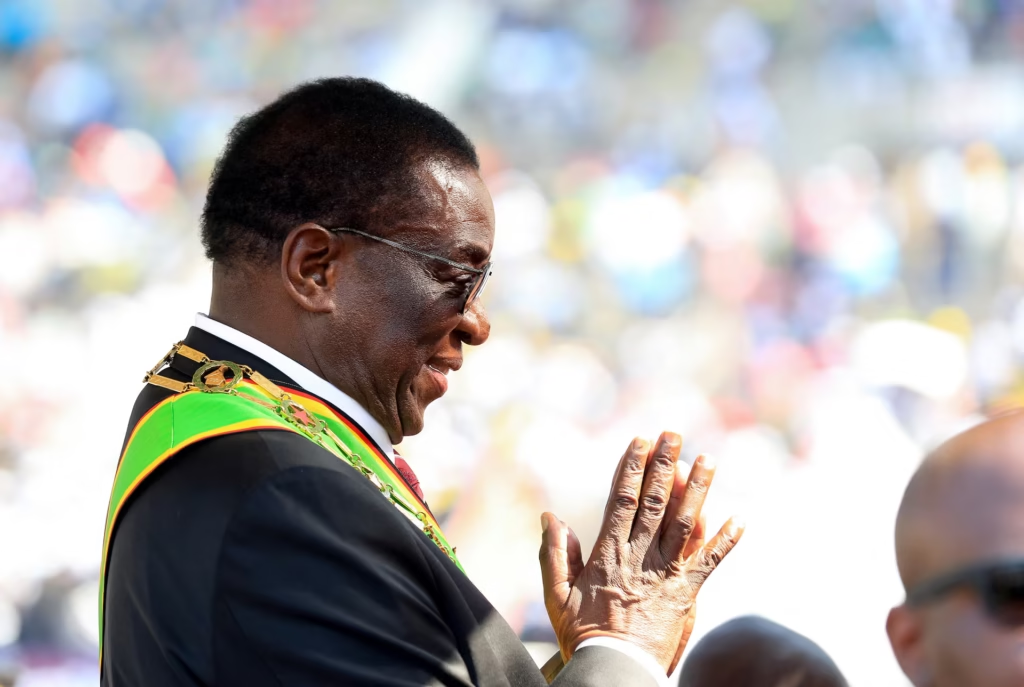
Few figures have shaped modern Zimbabwean politics as profoundly as Emmerson Mnangagwa.
Known by the nickname “The Crocodile,” a reference to both his political survival skills and a reputation for strategic patience, Mnangagwa has been a central figure in the country’s political landscape for decades. He once embraced the comparison, famously remarking that the reptile “strikes at the appropriate time.”
Born in 1942 in what was then Southern Rhodesia, Mnangagwa became involved in the nationalist movement at an early age and later received military training in Tanzania, Egypt and China. His participation in the liberation struggle against colonial rule resulted in imprisonment before Zimbabwe achieved independence in 1980.
Following independence, he became one of Robert Mugabe’s closest allies and served in a series of senior government positions, including ministerial roles and the vice presidency.
His long political career has not been without controversy.
Mnangagwa has repeatedly faced allegations regarding his role during the Gukurahundi campaign of the 1980s, a period in which thousands of civilians, primarily from the Ndebele community, were killed. He has consistently denied responsibility for those atrocities.
When Mugabe’s rule began to unravel in 2017 amid fierce succession battles within ZANU-PF, Mnangagwa emerged as the principal beneficiary of the military-backed transition that removed the veteran leader from office.
His presidency initially generated optimism among investors and sections of the international community, who hoped Zimbabwe would embark on a path of democratic reform and economic revival.
Mnangagwa secured election victories in both 2018 and 2023, but both contests were accompanied by allegations of electoral irregularities and criticism from international observers. Opposition parties rejected the results, while monitoring missions raised concerns about transparency, political freedoms and the overall electoral environment.
The current constitutional amendment has further intensified scrutiny of Zimbabwe’s democratic trajectory.
Analysts note that the proposed extension mirrors developments elsewhere on the continent, where leaders have altered constitutions or electoral laws to remain in power for extended periods. Countries such as Cameroon and Uganda are frequently cited as examples of governments that have modified constitutional frameworks to prolong presidential rule.
For Zimbabwe, the issue carries additional significance because it has exposed growing tensions within ZANU-PF between supporters of Mnangagwa and those aligned with Vice President Constantino Chiwenga, the former military commander widely viewed as a potential successor.